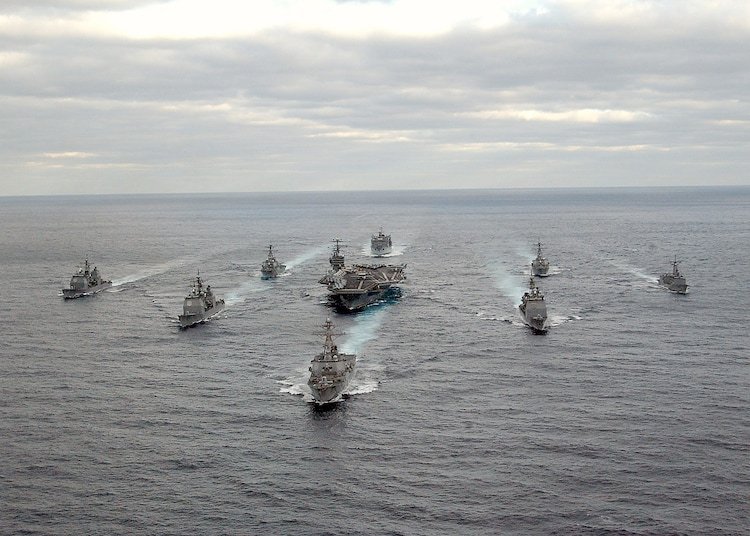
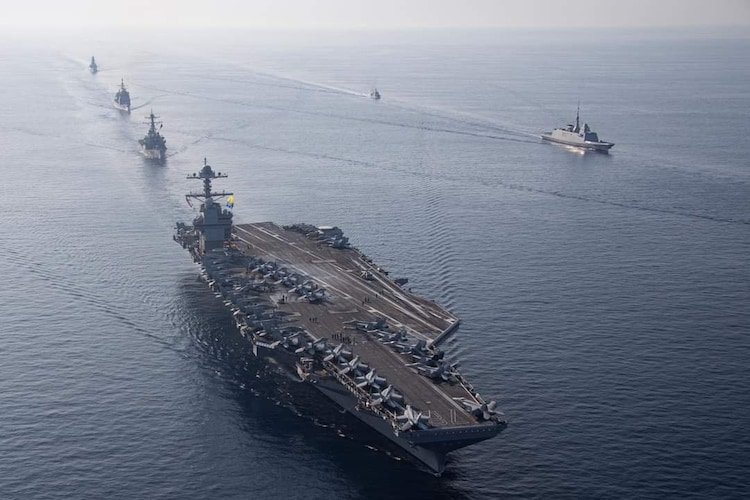
In the ongoing confrontation with Iran, the United States Navy’s aircraft carriers have emerged as a central component of Washington’s military strategy. Even before hostilities escalated, the US had already deployed the USS Gerald R. Ford and the USS Abraham Lincoln, along with their accompanying carrier strike groups, to the Red Sea and the Arabian Sea.
Since the conflict began on February 28, aircraft operating from these carriers have participated in multiple missions targeting Iranian military infrastructure. These floating military bases provide the United States with the ability to conduct sustained air operations far from its homeland while maintaining strong naval protection.
Aircraft carriers are widely considered some of the most complex and expensive defence systems ever created. They function as mobile airbases capable of launching Fighter Jets, reconnaissance aircraft, helicopters, and electronic warfare platforms.
Globally, approximately 15 countries operate aircraft carriers. However, only eight nations—including the United States, china, the United Kingdom, France, Japan, Italy, Russia, and India—operate full-fledged carriers capable of launching both helicopters and fixed-wing combat aircraft.
According to a report by Forbes, the United States is now considering sending a third aircraft carrier, the USS George H. W. Bush, to the Middle East as part of a broader effort to intensify military pressure on Iran.
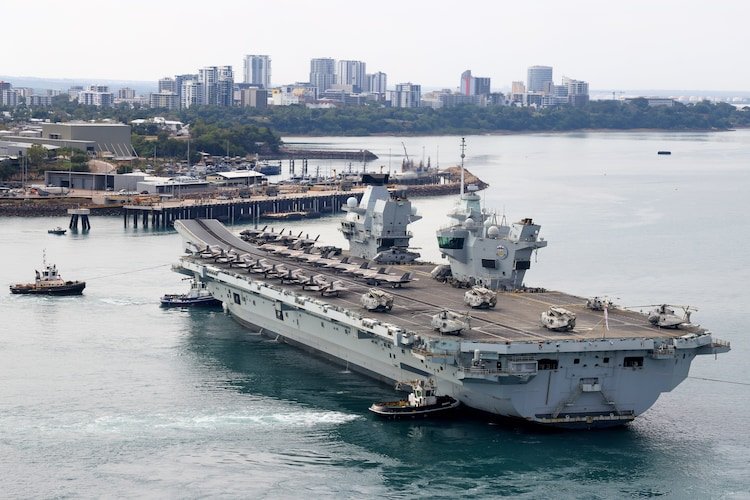
Other Western powers are also increasing their naval presence in the region. The United Kingdom is preparing to deploy its aircraft carrier HMS Prince of Wales, while France has reportedly moved warships and the nuclear-powered aircraft carrier Charles de Gaulle into the eastern Mediterranean to support allied forces amid rising tensions.
Admiral SIR Mark Stanhope, former First Sea Lord of the Royal Navy, once explained the strategic importance of aircraft carriers in simple terms. In a 2012 interview with the BBC, he noted that nations seeking global strategic influence typically rely on aircraft carriers as core elements of their military power.
Aircraft carriers are far more than ordinary warships. They represent some of the largest and most resource-intensive military systems ever constructed. Beyond the carrier itself, a full carrier strike group includes destroyers, frigates, submarines, and logistical support vessels designed to protect the carrier and enhance its combat capability.
Depending on the size and class of the ship, carriers can operate between 20 and 75 aircraft at a time. These aircraft can conduct air superiority missions, ground attacks, reconnaissance operations, and electronic warfare missions.
The ability to sustain long-range air operations allows nations to project military power well beyond their borders. Former US Secretary of State Henry Kissinger famously summarized this capability by saying, “An aircraft carrier is 100,000 tons of Diplomacy.”
This raises an important question: what exactly are aircraft carriers, how do they function, and where does India stand in the global carrier landscape?
What Is an Aircraft Carrier?
An aircraft carrier is a specialized naval warship designed to deploy, maintain, and launch combat aircraft while operating at sea. These vessels function as floating airbases and include extensive facilities for crew accommodation, aviation fuel storage, weapons systems, maintenance workshops, and command centers.
Unlike traditional warships, aircraft carriers feature large flight decks that allow fighter jets and helicopters to take off and land directly on the vessel. Below the flight deck are massive hangars where aircraft are stored, repaired, and prepared for missions.
Modern aircraft carriers also contain advanced radar systems, missile defence platforms, and command-and-control infrastructure that allow them to coordinate large-scale naval and air operations.
Aircraft carriers rarely operate alone. Instead, they form the centerpiece of a carrier strike group. These groups usually include guided-missile destroyers, frigates, submarines, and supply ships that provide protection and logistical support.
Carriers are typically categorized based on factors such as propulsion system, aircraft launch method, and the number of aircraft they can carry.
The largest carriers in the world belong to the United States Navy. These nuclear-powered “supercarriers,” such as those in the Nimitz and Gerald R. Ford classes, can operate up to 75 aircraft and use the advanced Electromagnetic Aircraft Launch System (EMALS) to catapult aircraft into the air.
Other countries operate conventionally powered carriers. These include ships such as China’s Fujian and India’s INS Vikrant, which rely on ski-jump launch systems or arrestor cables to assist aircraft during takeoff and landing.
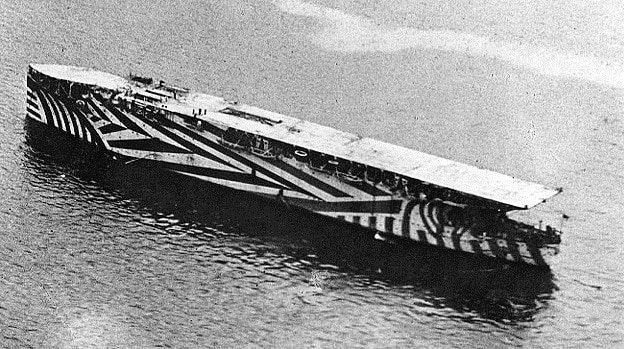
The development of aircraft carriers began shortly after World War I, when naval powers recognized the growing importance of aviation in warfare. Britain built the world’s first operational aircraft carrier, HMS Argus, in 1918.
Other early carriers soon followed, including Japan’s IJN Hosho and the United States Navy’s USS Langley, both commissioned in 1922.
Why Aircraft Carriers Are So Important
Aircraft carriers transformed naval warfare by extending the reach of military operations far beyond the range of traditional naval guns and torpedoes.
Instead of relying solely on ship-based artillery, fleets could now launch aircraft capable of striking targets hundreds or even thousands of kilometers away.
This shift became evident during World War II. In 1940, aircraft from the British carrier HMS Illustrious attacked the Italian fleet at Taranto, crippling several battleships.
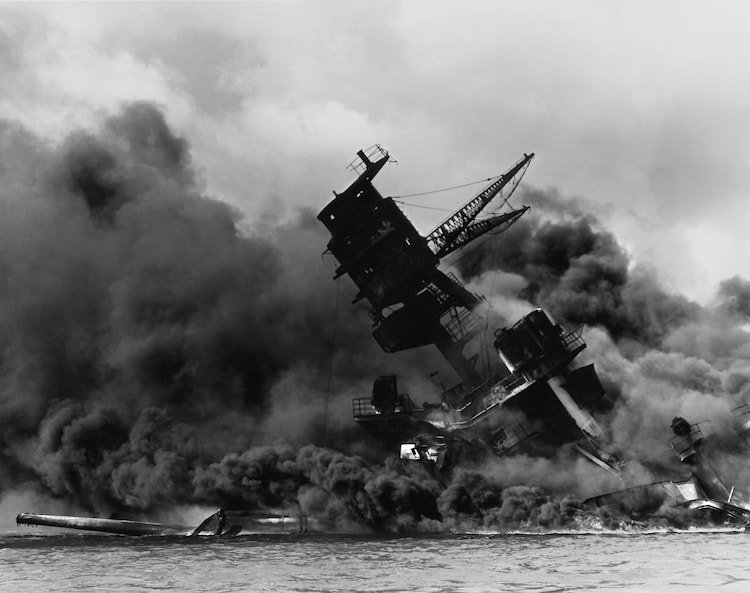
Just one year later, Japanese carrier aircraft launched the devastating attack on Pearl Harbor, sinking or damaging 21 American vessels and drawing the United States into the war.
Throughout the Pacific campaign, carrier battles such as Midway, Guadalcanal, the Philippine Sea, and Leyte Gulf demonstrated the decisive role of naval aviation.
By the end of the war, aircraft carriers had replaced battleships as the dominant capital ships of modern navies.
In the modern era, aircraft carriers remain vital tools of military power projection. They allow countries to maintain a persistent military presence in strategic regions without relying on foreign airbases.
A typical carrier strike group can launch Airstrikes, enforce air superiority, conduct surveillance missions, and coordinate naval operations across vast areas.
Analysts at the Center for Strategic and International Studies describe this capability as power projection—the ability of a nation to deploy military force across long distances while sustaining operations in distant theaters.
Research from the RAND Corporation similarly highlights the flexibility carriers provide. With their ability to operate independently for months, carriers enable rapid military responses during crises.
Which Countries Operate Aircraft Carriers?
Due to their immense cost and complexity, only a limited number of countries possess aircraft carriers. Building and maintaining a carrier fleet requires enormous financial investment, specialized shipbuilding capability, trained personnel, and advanced naval infrastructure.
| Country | Number of Aircraft Carriers | Notable Ships |
|---|---|---|
| United States | 11 | Gerald R. Ford, Nimitz-class carriers |
| China | 3 | Liaoning, Shandong, Fujian |
| United Kingdom | 2 | HMS Queen Elizabeth, HMS Prince of Wales |
| India | 2 | INS Vikrant, INS Vikramaditya |
| France | 1 | Charles de Gaulle |
| Russia | 1 | Admiral Kuznetsov |
The United States remains the world’s largest aircraft carrier operator. Its fleet of 11 nuclear-powered supercarriers allows Washington to maintain a near-permanent naval presence across multiple regions.
The USS Gerald R. Ford, currently operating in the Red Sea as part of the Iran conflict, is the largest warship ever built.
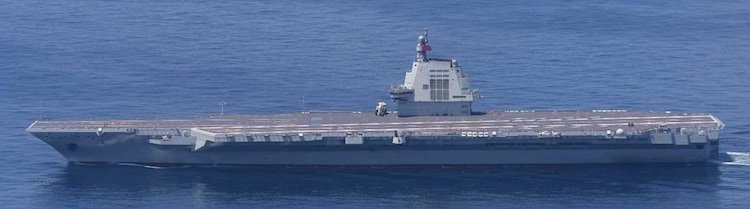
China, meanwhile, has rapidly expanded its naval aviation capabilities. The country currently operates three carriers and is reportedly constructing a fourth nuclear-powered vessel intended to rival American supercarriers.
The United Kingdom operates two Queen Elizabeth-class carriers, while France maintains the nuclear-powered Charles de Gaulle, the only non-American nuclear carrier currently in service.
How Many Aircraft Carriers Does India Have?
India has a long history of operating aircraft carriers and was the first Asian country to deploy such a vessel after World War II.
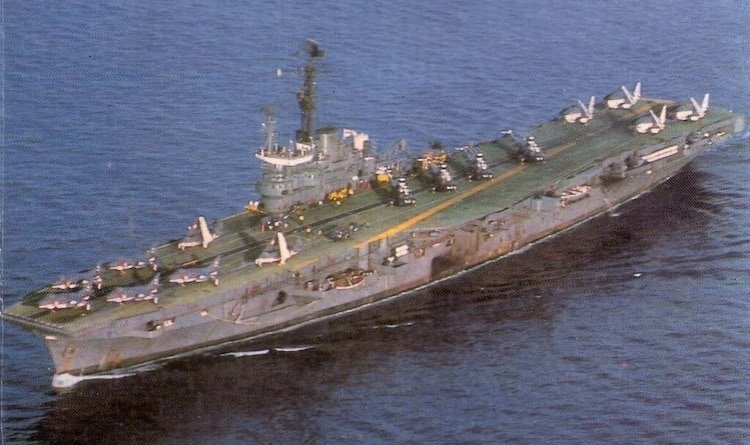
The original INS Vikrant, commissioned in 1961, played a significant role during the 1971 India-Pakistan war, where it helped enforce a naval blockade of East Pakistan.
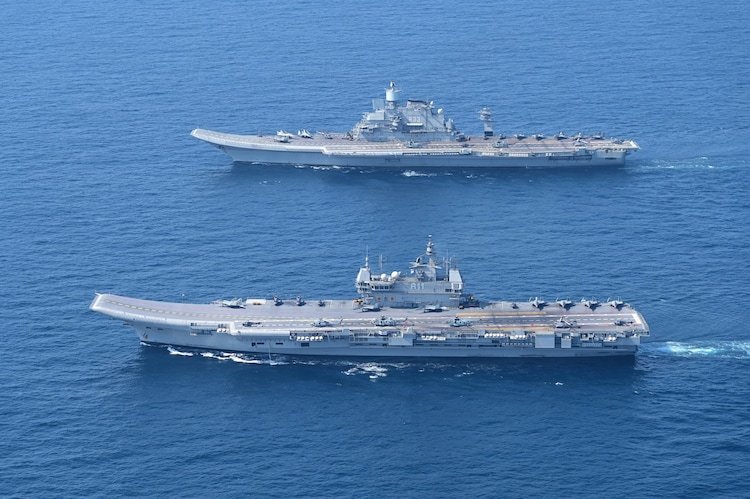
Today, India operates two modern aircraft carriers:
- INS Vikrant (R11) – India’s first indigenously built aircraft carrier, commissioned in 2022.
- INS Vikramaditya – A refurbished Russian-built carrier inducted into service in 2013.
Both ships are capable of operating up to 36 aircraft, including MiG-29K fighter jets and various helicopters used for anti-submarine warfare, surveillance, and logistical missions.
The ongoing 2026 Iran conflict has once again demonstrated the strategic importance of aircraft carriers. Despite the rise of modern threats such as drones, hypersonic missiles, and anti-ship ballistic weapons, carriers continue to play a central role in global military strategy.
By allowing nations to project power across oceans while remaining mobile and difficult to target, aircraft carriers remain one of the most influential military tools available.
Even today, they embody Henry Kissinger’s famous observation: “100,000 tons of diplomacy.”
For breaking news and live news updates, like us on Facebook or follow us on Twitter and Instagram. Read more on Latest World on thefoxdaily.com.






COMMENTS 0