- Who, What, When, Where, Why, How
- Days Behind Enemy Lines: Survival Under Extreme Pressure
- Unseen Factors: Local Dynamics and Intelligence Support
- Race Against Time: A Battle of Reach and Speed
- The Rescue: Firepower Meets Precision
- Extraction Under Fire: When Missions Go Wrong
- Two Rescues, One Secret
- The Downing of the F-15E: A Rare Incident
- Strategic Message: Power, Capability, and Commitment
- Key Elements of the Operation
- Insight: Why Such Missions Matter
- Conclusion: A Mission That Reflects Modern Warfare
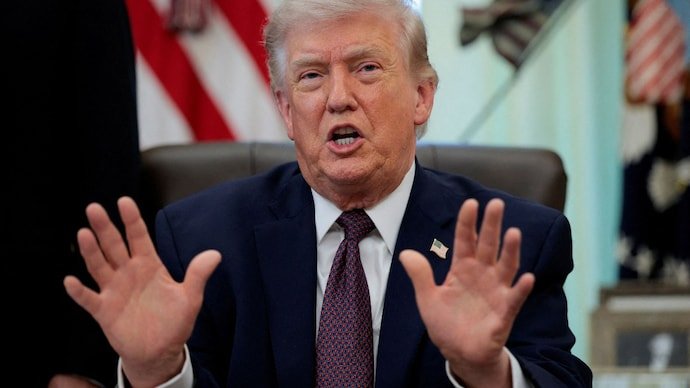
A US airman stranded deep inside Iranian territory for nearly 48 hours has been rescued in one of the most complex and high-risk military operations in recent years, with US President Donald Trump declaring the mission a success with a triumphant “WE GOT HIM!”
The rescue followed the downing of an F-15E Strike Eagle during the ongoing conflict, leaving one crew member initially unaccounted for. While the pilot was recovered shortly after ejecting, the second crew member-a weapons systems officer and senior-ranking Colonel-was forced to survive alone in hostile terrain while evading Iranian forces actively searching for him.
The operation quickly escalated into a high-stakes race against time, as US forces scrambled to locate and extract the airman before he could be captured-an outcome that could have had serious military and political consequences.
Who, What, When, Where, Why, How
Who: A US Air Force weapons systems officer (Colonel rank), supported by US special operations forces.
What: Rescue mission following the downing of an F-15E fighter jet.
When: Over a 48-hour period during the ongoing US-Iran conflict.
Where: Mountainous terrain inside Iran.
Why: To prevent capture and safely recover the downed airman.
How: Coordinated operation involving Airstrikes, intelligence support, special forces, and nighttime extraction.
Days Behind Enemy Lines: Survival Under Extreme Pressure
After ejecting from the downed aircraft, the airman found himself alone in hostile territory, navigating rugged mountainous terrain while being actively hunted by Iranian forces.
According to US officials, he relied heavily on survival training, discipline, and limited equipment to stay alive and undetected.
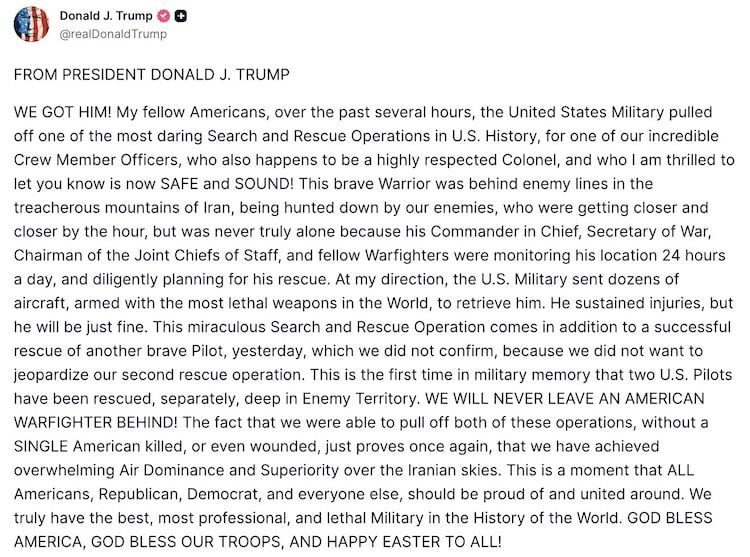
“This brave warrior was behind enemy lines… being hunted down by our enemies, who were getting closer and closer by the hour.”
Armed with a pistol and equipped with a distress beacon, GPS tracker, and secure communication tools, the airman managed to maintain intermittent contact with US forces. These tools were critical-not just for signaling his location, but for coordinating a rescue while minimizing the risk of detection.
He reportedly took refuge on elevated terrain, a tactical choice that offered better visibility but also increased exposure. Every decision-from movement to communication-had to balance survival with stealth.
Meanwhile, Iranian forces intensified their search, combing the region and reportedly seeking assistance from locals, even offering incentives for information.
Unseen Factors: Local Dynamics and Intelligence Support
The region where the crash occurred is believed to have pockets of opposition to the Iranian government. This raised the possibility that the airman may have received some level of assistance, though officials have not confirmed specific details.
US intelligence agencies, including the CIA, are believed to have explored what officials described as “unconventional assisted recovery” methods. While details remain classified, such approaches typically involve leveraging local networks, surveillance, and real-time intelligence.
In modern warfare, survival behind enemy lines is no longer just about endurance-it’s about connectivity. The combination of human resilience and technological support played a decisive role in keeping the airman alive.
Race Against Time: A Battle of Reach and Speed
The mission quickly turned into a race between US and Iranian forces-who would reach the airman first.
For the US military, the stakes were extremely high. Capturing a senior officer could have provided Iran with significant leverage, both strategically and in terms of propaganda.
As a result, the rescue operation became the top priority within a narrow 48-hour window.
Hundreds of special operations troops were mobilized, supported by dozens of aircraft, helicopters, and advanced intelligence systems spanning cyber, space, and surveillance domains.
A senior official described the mission as:
“One of the most complex and difficult operations in the history of US special operations.”
That assessment reflects not just the scale, but the coordination required across multiple domains-air, land, and intelligence.
The Rescue: Firepower Meets Precision
The extraction mission was launched under the cover of darkness-a standard tactic designed to reduce visibility and increase the element of surprise.
According to Trump, the operation involved “dozens of aircraft armed with the most lethal weapons in the world.”
US attack aircraft conducted airstrikes and strafing runs on Iranian convoys approaching the area, effectively creating a protective buffer around the airman’s location.
As special forces moved in, a firefight reportedly broke out near the extraction zone. Despite the danger, pararescue teams and commandos successfully reached the airman and secured him for evacuation.
The officer sustained injuries during the ordeal but is expected to recover.
Extraction Under Fire: When Missions Go Wrong
Even after locating the airman, the mission faced multiple setbacks-highlighting the unpredictable nature of combat operations.
- A US helicopter came under small arms fire, injuring crew members
- An A-10 aircraft providing air cover was hit and forced to eject
- Two transport aircraft became unusable at a remote base inside Iran
In response, commanders adapted quickly. Three additional aircraft were deployed to complete the evacuation, while the disabled planes were destroyed to prevent them from falling into Iranian hands.
This ability to improvise under pressure is often what defines the success or failure of such missions.
Two Rescues, One Secret
In a surprising revelation, Trump disclosed that another US pilot had been rescued a day earlier in a separate operation. That mission was kept secret to avoid compromising the ongoing rescue effort.
“This is the first time in military memory that two US pilots have been rescued, separately, deep in enemy territory.”
This detail adds another layer of complexity to the broader operation, suggesting a coordinated effort across multiple missions.
The Downing of the F-15E: A Rare Incident
The incident began with the downing of an F-15E Strike Eagle by Iranian forces, with the Islamic Revolutionary Guard Corps claiming responsibility.
This marks a significant moment, as it is the first time in over two decades that a US fighter jet has been shot down in combat.
The crash site quickly became a focal point for Iranian military units, which moved swiftly to locate and secure the area.
Strategic Message: Power, Capability, and Commitment
Beyond the immediate rescue, the operation carries a broader strategic message.
Trump used the mission to highlight US military capabilities and reinforce a longstanding principle:
“We will never leave an American warfighter behind.”
He also pointed to the operation as evidence of “overwhelming air dominance,” emphasizing the ability of US forces to operate deep inside hostile territory and execute complex missions successfully.
Such messaging is aimed not only at adversaries but also at allies and domestic audiences, reinforcing confidence in military strength and resolve.
Key Elements of the Operation
| Component | Details |
|---|---|
| Duration | Approximately 48 hours |
| Location | Mountainous terrain inside Iran |
| Forces Involved | Special operations troops, pararescue teams |
| Air Support | Fighter jets, helicopters, A-10 aircraft |
| Challenges | Enemy pursuit, terrain, equipment failures |
| Outcome | Successful rescue, no American fatalities |
Insight: Why Such Missions Matter
Rescue missions like this go beyond tactical success-they are about morale, doctrine, and credibility.
For military personnel, the assurance that they will not be abandoned is critical. It shapes decision-making in combat and reinforces trust in leadership.
From a strategic perspective, successful rescues demonstrate operational reach, coordination, and technological superiority.
And yes, there’s also a human element that’s easy to overlook in geopolitics: behind every mission is an individual fighting to survive-and a team risking everything to bring them home.
Conclusion: A Mission That Reflects Modern Warfare
The rescue of the downed US airman highlights the evolving nature of warfare-where technology, intelligence, and human resilience intersect.
It was not just a mission of firepower, but of precision, coordination, and adaptability under extreme pressure.
While the broader conflict continues, this operation stands out as a reminder of what modern militaries are capable of-and the lengths they will go to protect their own.
Because in the end, beyond strategy and politics, missions like these are defined by a simple promise: bring them back-no matter what it takes.
For breaking news and live news updates, like us on Facebook or follow us on Twitter and Instagram. Read more on Latest World on thefoxdaily.com.




COMMENTS 0