- Pentagon’s Position: “Iran Was Out of Options”
- Operation Epic Fury: Scale and Impact of US Strikes
- Leadership and Strategic Pressure on Tehran
- Ceasefire Terms and Immediate Outcomes
- Contrasting Narratives: A War of Words Continues
- Ongoing Tensions Despite Ceasefire
- Global Impact: Energy Markets and Regional Stability
- Conclusion: A Pause, Not an End
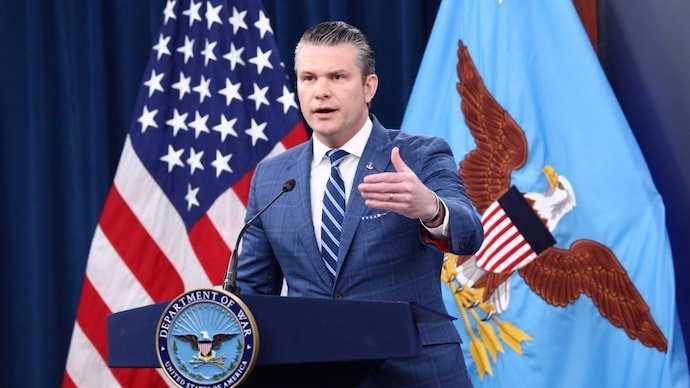
The United States has claimed that Iran agreed to a two-week ceasefire only after facing severe military and strategic setbacks during weeks of escalating conflict. Speaking at a Pentagon briefing, US Defence Secretary Pete Hegseth said Tehran was “humiliated” and left with no viable options, forcing it to come to the negotiating table under pressure.
The ceasefire, announced after nearly six weeks of hostilities, marks a temporary pause in a conflict that disrupted regional stability and Global energy supplies. However, contrasting narratives from both sides suggest the situation remains complex and far from resolved.
Pentagon’s Position: “Iran Was Out of Options”
According to Hegseth, Iran’s leadership agreed to the truce only after suffering what he described as crippling losses. He asserted that the country’s military infrastructure and leadership had been significantly weakened.
“Iran begged for this ceasefire as it was out of options and out of time. The Iranians were humiliated and demoralised,” Hegseth said during the briefing.
He further claimed that US military operations had systematically degraded Iran’s ability to sustain the conflict, pushing it toward negotiations as the only viable path forward.
Operation Epic Fury: Scale and Impact of US Strikes
Hegseth highlighted the scale of US military action, describing it as decisive in shaping the outcome of the conflict. He pointed to a series of large-scale strikes aimed at dismantling Iran’s defence capabilities.
Key Claims by the US
- 800 strikes conducted in a single night
- Defence industrial base targeted and severely damaged
- Missile programme described as “functionally destroyed”
- Drone and UAV capabilities allegedly crippled
The Pentagon maintains that these actions significantly reduced Iran’s ability to continue military operations, ultimately influencing its decision to accept a ceasefire.
Leadership and Strategic Pressure on Tehran
In addition to military losses, the US claimed that Iran’s leadership structure had been weakened. Hegseth stated that key figures were “systematically eliminated,” though specific details were not disclosed.
He also alleged that Iran’s new Supreme Leader, Mojtaba Khamenei, had been injured during the conflict, further adding to the pressure on Tehran’s leadership.
While these claims have not been independently verified, they form a central part of the US narrative explaining why Iran agreed to the truce.
Ceasefire Terms and Immediate Outcomes
The two-week ceasefire agreement includes the reopening of the Strait of Hormuz, a critical global energy route through which a significant portion of the world’s oil supply passes.
The US has indicated that its forces will maintain a presence in the region to ensure compliance with the agreement.
Key Elements of the Ceasefire
| Aspect | Details |
|---|---|
| Duration | Two weeks (temporary truce) |
| Strategic Objective | De-escalation and negotiations |
| Hormuz Status | Reopened for global shipping |
| US Military Presence | Continued monitoring in the region |
Despite these developments, officials have emphasized that the ceasefire is not a permanent resolution but a pause to allow further negotiations.
Contrasting Narratives: A War of Words Continues
While the US has framed the ceasefire as a result of its military dominance, Iran has presented a different narrative, suggesting the truce was part of a broader strategic decision rather than a forced concession.
Such contrasting accounts are common in geopolitical conflicts, where both sides seek to shape public perception and maintain strategic leverage.
In reality, the truth often lies somewhere in between—where military pressure, diplomatic efforts, and economic considerations all play a role.
Ongoing Tensions Despite Ceasefire
Even after the ceasefire announcement, reports of continued hostilities have raised concerns about its durability. An oil refinery on Iran’s Lavan Island was reportedly struck, while missile and drone activity continued in parts of the Gulf region.
Additionally, Israel intensified its operations in Lebanon, targeting Hezbollah-linked positions and making it clear that its actions were not covered by the ceasefire agreement.
These developments highlight the fragile nature of the truce and the risk of further escalation.
Global Impact: Energy Markets and Regional Stability
The conflict has had significant implications beyond the immediate region. Disruptions in the Strait of Hormuz led to volatility in global oil markets, underscoring the strategic importance of the waterway.
A prolonged conflict could have triggered a broader economic impact, affecting fuel prices, supply chains, and global trade.
The ceasefire, even if temporary, provides a window of stability—but uncertainty remains high.
Conclusion: A Pause, Not an End
The US assertion that Iran was “out of options and time” offers one perspective on why the ceasefire came into effect. Whether driven by military pressure, diplomatic negotiations, or a combination of both, the agreement represents a critical pause in a high-stakes conflict.
However, with tensions still simmering and conflicting narratives in play, the situation remains far from resolved. The next phase will likely depend on how both sides navigate negotiations during this temporary truce.
Looking ahead, the ceasefire may serve as an opportunity for de-escalation—or merely a brief intermission before further confrontation. In geopolitics, as recent events have shown, outcomes can shift as quickly as the narratives surrounding them.
For breaking news and live news updates, like us on Facebook or follow us on Twitter and Instagram. Read more on Latest World on thefoxdaily.com.




COMMENTS 0