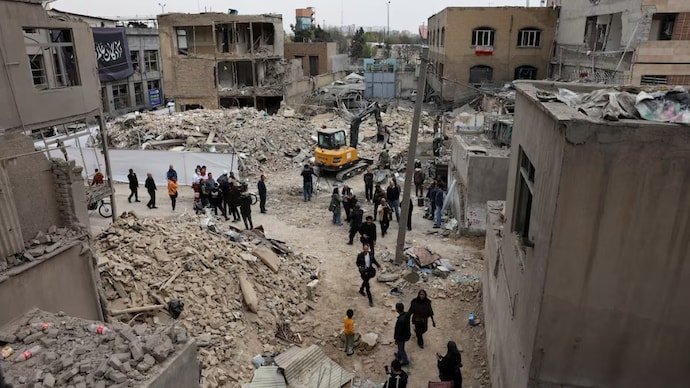
In a significant development in Middle East Geopolitics, Egypt has taken on a pivotal role in quiet, behind-the-scenes diplomacy. By discreetly reaching out to Iran’s powerful Islamic Revolutionary Guard Corps (IRGC), Egyptian intelligence officials proposed a temporary five-day ceasefire aimed at reducing tensions in the Gulf region.
According to reports, this strategic outreach played a crucial role in influencing US President Donald Trump’s decision to step back from earlier threats of targeting Iran’s power infrastructure. Instead of escalating military action, Washington began signaling openness to diplomatic engagement.
As the conflict in the Middle East entered its fourth week, a broader coalition of countries intensified efforts to bridge communication gaps between the United States and Iran. Nations such as India, Turkey, and Oman have quietly contributed to maintaining diplomatic channels, ensuring that dialogue remains possible even amid rising tensions.
This growing cooperation highlights a more coordinated global effort to achieve de-escalation. While these diplomatic moves remain largely behind closed doors, their impact is becoming increasingly visible in shifting political and military strategies.
Trump’s Strategic Shift Amid Rising Diplomatic Pressure
Over the weekend, President Trump had issued a stark warning, threatening to “obliterate” Iran’s electrical infrastructure if the Strait of Hormuz was not reopened within 48 hours. However, as diplomatic inputs from regional intermediaries reached Washington, the administration reassessed its stance.
In a notable reversal, Trump announced a temporary pause on military strikes and expressed willingness to pursue negotiations. This shift was not sudden but followed intense behind-the-scenes discussions involving multiple nations.
Earlier, foreign ministers from Egypt, Turkey, Saudi Arabia, and Pakistan had convened in Riyadh in a pre-dawn meeting to explore diplomatic solutions. These discussions were complicated by the absence of a clear Iranian counterpart, especially after the reported death of Iran’s security chief Ali Larijani in an Israeli strike.
Despite these challenges, Egyptian officials successfully established contact with the IRGC, laying the groundwork for the proposed ceasefire. These early diplomatic efforts ultimately influenced decisions made thousands of miles away in Washington.
US officials indicated that domestic political pressure and economic concerns also contributed to Trump’s decision. The White House described the situation as “fluid,” emphasizing the sensitivity of ongoing negotiations.
Market Reactions to Diplomatic Developments
The possibility of reduced tensions had an immediate impact on global financial markets. Major US indices, including the Dow Jones Industrial Average and the S&P 500, recorded strong gains following news of the diplomatic breakthrough.
At the same time, oil markets reacted sharply. Brent crude prices dropped significantly—falling by over 10–13%—and dipped below the $100-per-barrel mark for the first time in weeks. This decline reflected optimism that supply disruptions in the region might be avoided.
| Market Indicator | Reaction to Ceasefire Talks | Implication |
|---|---|---|
| Dow Jones Industrial Average | Significant rise | Investor confidence improved |
| S&P 500 | Strong gains | Optimism about reduced conflict risk |
| Brent Crude Oil | Dropped 10–13% | Lower fear of supply disruption |
US-Iran Differences Remain a Major Challenge
Despite ongoing diplomatic efforts, substantial differences between the United States and Iran persist. Washington continues to demand strict limitations on Iran’s nuclear program, ballistic missile development, and regional influence through proxy groups.
On the other hand, Iran is seeking firm guarantees against future military attacks, along with compensation for damages incurred during the conflict. These opposing positions continue to complicate negotiations.
Iranian leadership has publicly downplayed the existence of talks. Parliamentary Speaker Mohammad-Bagher Ghalibaf denied any negotiations and accused the US of attempting to manipulate global markets through misleading statements.
Analysts note that despite recent military setbacks, Iran retains strategic leverage. It continues to control the Strait of Hormuz and reportedly maintains access to nuclear materials, even in damaged facilities.
Meanwhile, the United States has reinforced its military presence in the region, deploying two Marine Expeditionary Units. Each unit includes multiple vessels and thousands of Marines, signaling continued readiness despite diplomatic efforts.
Potential Talks and Key Diplomatic Players
Efforts are underway to arrange direct talks between US and Iranian officials. Possible venues include Pakistan or Turkey, both of which have played roles in facilitating communication.
High-level participants may include US Vice President JD Vance, along with senior envoys Steve Witkoff and Jared Kushner. Iran could be represented by Foreign Minister Abbas Araghchi.
Simultaneously, global diplomatic engagement continues to expand. Countries such as Qatar, Oman, France, and the United Kingdom are actively pursuing parallel initiatives, reflecting the complexity and urgency of the situation.
Strait of Hormuz: The Core Issue in Negotiations
At the heart of the negotiations lies the Strait of Hormuz, one of the world’s most critical energy chokepoints. Approximately 20% of global oil supply passes through this narrow passage, making its stability essential for global economic security.
Proposals to place the strait under neutral or international supervision have faced resistance. Iran’s suggestion to impose transit fees has raised concerns among Gulf nations, who fear an expansion of Tehran’s regional influence.
| Key Issue | US Position | Iran Position |
|---|---|---|
| Nuclear Program | Strict limitations | Retention with safeguards |
| Military Activity | Reduce regional influence | Maintain strategic presence |
| Strait of Hormuz | Free navigation | Control with possible fees |
Rising Diplomatic Engagement and Uncertain Future
Recent days have seen a surge in high-level diplomatic interactions. President Trump met with Pakistan’s Army Chief Asim Munir, while Vice President JD Vance held discussions with Israeli Prime Minister Benjamin Netanyahu.
Trump also indicated that the US is in contact with a senior Iranian figure who is well-regarded in Tehran, though he declined to reveal the individual’s identity due to security concerns.
Experts suggest that Mohammad-Bagher Ghalibaf could play a key role in bridging gaps within Iran’s political and security establishment. As a former IRGC commander with administrative experience, he is seen as a figure with both credibility and pragmatism.
However, despite these diplomatic openings, the path to lasting de-escalation remains uncertain. Deep-rooted mistrust between the US and Iran, combined with shifting political dynamics within Iran’s leadership, continues to pose significant challenges.
As global powers intensify their efforts to prevent further escalation, the coming days will be critical in determining whether diplomacy can succeed where confrontation has dominated.
For breaking news and live news updates, like us on Facebook or follow us on Twitter and Instagram. Read more on Latest World on thefoxdaily.com.





COMMENTS 0