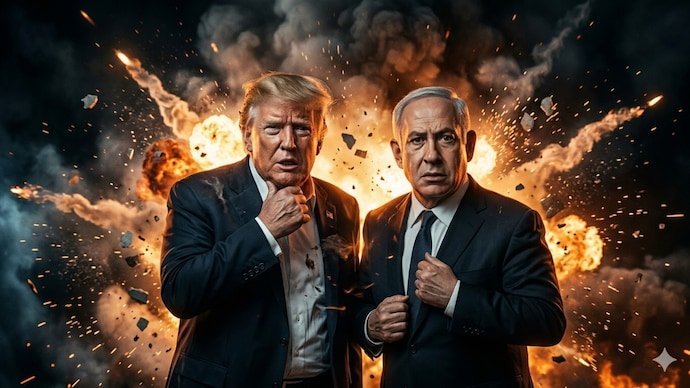
Just hours after the United States and Iran agreed to a two-week ceasefire, fresh missile alerts and Airstrikes across the Middle East have cast serious doubt on the durability of the agreement. From sirens in Gulf nations to continued strikes in Lebanon, the situation on the ground suggests that while a truce exists on paper, the reality remains volatile and unpredictable.
The ceasefire, reportedly brokered with Pakistan’s involvement, came at the last moment after weeks of escalating Conflict. However, conflicting statements from key stakeholders and continued military activity across multiple fronts have raised a critical question: can this ceasefire actually last?
Last-Minute Deal Amid Rising Tensions
The agreement followed a tense standoff, with US President Donald Trump warning of severe consequences if Iran failed to comply with demands, including reopening the Strait of Hormuz. As the deadline approached, diplomatic activity intensified behind the scenes.
Pakistan’s Prime Minister Shehbaz Sharif publicly urged a delay in military action and called for reopening Hormuz, setting the stage for a temporary breakthrough. In a surprising turn, Iran agreed to the truce, despite earlier indications that it would not compromise without meeting its conditions.
Within hours, a ceasefire was announced—but the calm did not last long.
What the Key Players Said
Statements from the US, Iran, and Israel highlight both alignment and disagreement, underscoring the fragile nature of the truce.
United States
Trump announced a temporary suspension of strikes, conditional on Iran reopening the Strait of Hormuz and engaging in negotiations.
“I agree to suspend the bombing and attack of Iran for a period of two weeks,” he said, calling the proposal “workable.”
Iran
Tehran indicated it would halt its defensive operations only if attacks against it stopped, framing the ceasefire as conditional rather than final.
“If attacks on Iran are halted, our powerful armed forces will cease their defensive operations.”
Israel
Prime Minister Benjamin Netanyahu supported the US decision but clarified that the ceasefire does not extend to Lebanon—introducing a major point of contention.
Why the Ceasefire Looks Fragile
Despite the formal agreement, several factors are undermining confidence in the ceasefire’s sustainability.
1. Continued Military Activity
Sirens were reported across multiple Gulf countries, including Saudi Arabia, Bahrain, and Israel, indicating incoming missile threats even after the truce began.
- UAE confirmed interception of missiles and drones
- Qatar reported successful missile defence operations
- Kuwait and Bahrain issued public safety warnings
Such developments suggest that either the ceasefire is not being fully enforced or not all actors are aligned.
2. Ongoing Attacks Across Regions
Reports of explosions and airstrikes emerged from several locations, highlighting the complexity of enforcing a multi-country ceasefire.
| Location | Reported Incident |
|---|---|
| Iran (Lavan Island) | Explosion at oil refinery |
| Lebanon | Airstrikes and casualties reported |
| UAE | Missile and drone interceptions |
| Israel | Incoming missile alerts |
These incidents underline the gap between diplomatic agreements and on-ground realities.
3. The Lebanon Dispute
One of the biggest challenges to the ceasefire is the disagreement over Lebanon. While Pakistan’s leadership suggested the truce applies across all fronts, Israel has explicitly stated otherwise.
This contradiction creates a dangerous grey area where military actions can continue without technically violating the agreement—at least from some perspectives.
Given Hezbollah’s involvement and its ties to Iran, continued conflict in Lebanon could quickly escalate tensions again.
4. Multiple Actors and Proxies
The conflict is not limited to just the US and Iran. Several regional groups and militias are actively involved, making coordination extremely difficult.
- Hezbollah in Lebanon
- Houthi forces in Yemen
- Various militia groups in Iraq
Even if governments agree to a ceasefire, controlling these groups is another challenge altogether.
5. Lack of Unified Command in Iran
Reports suggest inconsistencies in Iran’s messaging, with conflicting statements emerging from different officials and media outlets.
At one point, Iran reportedly claimed all diplomatic channels were closed—only to later contradict that statement. Such mixed signals raise concerns about whether decisions are being centrally coordinated.
In situations where multiple power centers exist, the risk of miscommunication—or even accidental escalation—increases significantly.
Global Stakes: Why the Ceasefire Matters
The importance of this ceasefire extends far beyond the immediate conflict zone. The Strait of Hormuz is a critical Global energy corridor, and any disruption affects oil prices and supply chains worldwide.
Over the past six weeks, the conflict has reportedly resulted in thousands of casualties across multiple countries, along with significant damage to infrastructure.
A sustained ceasefire could stabilize markets and reduce geopolitical risk—but only if it holds.
Will the Ceasefire Last?
The short answer: it’s uncertain.
While the agreement has created a temporary pause, the underlying issues remain unresolved. Continued attacks, conflicting statements, and the involvement of multiple actors all point to a fragile situation.
For the ceasefire to hold, several conditions must be met:
- Clear communication between all parties
- Inclusion of all conflict zones, including Lebanon
- Control over proxy groups
- Consistent enforcement mechanisms
Without these, the truce risks collapsing as quickly as it was formed.
Conclusion: A Pause in Conflict, Not a Resolution
The US-Iran ceasefire represents a critical moment of de-escalation, but it is far from a permanent solution. The continued violence across the region highlights the challenges of implementing peace in a complex, multi-actor conflict.
As events unfold, the next two weeks will be crucial in determining whether this truce can evolve into a lasting agreement—or whether it will simply be remembered as a brief pause before further escalation.
In geopolitics, ceasefires often signal opportunity. Whether this one leads to peace or renewed conflict will depend on what happens next—not just what was agreed upon.
For breaking news and live news updates, like us on Facebook or follow us on Twitter and Instagram. Read more on Latest World on thefoxdaily.com.






COMMENTS 0