
- A War on the Brink: From Escalation to Sudden De-escalation
- China’s Quiet Entry Into the Crisis
- UN Security Council Move: A Critical Turning Point
- Trump’s Acknowledgment—But Not Fully
- Pakistan’s Role: Mediator or Messenger?
- China’s Strategic Interests: Why It Stepped In
- A Calculated Silence: China’s Diplomatic Style
- Conclusion: A Hidden Hand in a High-Stakes Deal?
As tensions between the United States and Iran reached a critical point in early April 2026, a sudden two-week ceasefire surprised global observers. While US President Donald Trump publicly credited Pakistan for mediating the deal, emerging reports suggest that China may have played a far more decisive, behind-the-scenes role. The truce, which included Iran agreeing to reopen the Strait of Hormuz, came just hours after apocalyptic warnings of escalation—raising a key question: what changed in those crucial final hours?
A War on the Brink: From Escalation to Sudden De-escalation
In the hours leading up to the ceasefire, the situation appeared dangerously close to full-scale conflict. The United States issued strong warnings, while Iran signaled it had cut off diplomatic channels.
Yet, within roughly 10 hours, the narrative shifted dramatically—from imminent escalation to a negotiated pause.
What Changed So Quickly?
- US pressure: Final deadline for ceasefire agreement
- Iran’s stance: Initial refusal to negotiate
- Global concern: Risk of disruption to oil supplies
- Outcome: Sudden agreement to a two-week truce
Such rapid shifts in geopolitics rarely happen without significant behind-the-scenes intervention.
China’s Quiet Entry Into the Crisis
For most of the conflict, China maintained a low profile, avoiding direct involvement. However, as tensions escalated, Beijing reportedly stepped in—initially through intermediaries and later via direct engagement with Iran.
Countries like Pakistan, Turkey, and Egypt were already involved in mediation efforts, but China’s entry appears to have added decisive weight to the negotiations.
China’s Diplomatic Approach
- Phase 1: Indirect engagement through regional intermediaries
- Phase 2: Direct communication with Iranian leadership
- Timing: Final hours before ceasefire announcement
This layered strategy allowed China to influence outcomes without taking a visible leadership role—consistent with its broader diplomatic style.
UN Security Council Move: A Critical Turning Point
One of the most significant developments came at the United Nations Security Council (UNSC), where China, along with Russia, blocked a resolution that could have authorized the use of force to reopen the Strait of Hormuz.
This move effectively removed immediate international backing for military escalation, creating space for negotiations.
Impact of the UNSC Block
- Prevented escalation: No authorization for force
- Shifted leverage: Strengthened Iran’s negotiating position
- Opened dialogue: Encouraged diplomatic solutions
In geopolitical terms, this was a subtle but powerful intervention.
Trump’s Acknowledgment—But Not Fully
Interestingly, Donald Trump appeared to indirectly acknowledge China’s involvement when asked about it, responding with a cautious “I hear yes.” However, China was notably absent from his official ceasefire announcement.
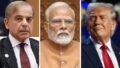
Instead, Trump credited Pakistan’s leadership, including Prime Minister Shehbaz Sharif and military figures, for facilitating the agreement.
Why Was China Not Publicly Credited?
Experts suggest that this omission may have been strategic rather than accidental.
- Domestic optics: Avoid showing reliance on China
- Geopolitical framing: Maintain US leadership narrative
- Diplomatic positioning: Limit China’s visibility as a global broker
In short, acknowledging China’s role could have reshaped perceptions of global power dynamics—something Washington may have preferred to avoid.
Pakistan’s Role: Mediator or Messenger?
While Pakistan was publicly credited, its role appears to have been more of an intermediary rather than a decisive negotiator.
Islamabad reportedly facilitated communication between Washington and Tehran, but questions have emerged regarding its neutrality and influence.
Controversies Around Pakistan’s Mediation
- Draft post issue: A social media message labeled as “draft” raised eyebrows
- External influence claims: Suggestions that messaging was shaped by other actors
- Iran’s stance: Reluctance to engage directly via Pakistan
These factors have led analysts to question whether Pakistan was the primary negotiator—or simply a conduit.
China’s Strategic Interests: Why It Stepped In
Beyond diplomacy, China’s involvement appears closely tied to its economic and strategic interests—particularly in Energy Security.
As the world’s largest crude oil importer, China has a strong incentive to ensure stability in the Middle East.
Key Motivations for China
- Energy security: Dependence on Middle Eastern oil
- Hormuz stability: Critical for global oil supply routes
- Economic impact: Avoid disruption to global trade
- Strategic positioning: Expand influence as a global mediator
While China has managed to cushion short-term oil shocks through reserves and alternative supply channels, a prolonged conflict would pose serious risks.
Risks China Wanted to Avoid
| Risk | Potential Impact |
|---|---|
| Full-scale war | Disruption of Iranian oil exports |
| Hormuz closure | Global energy crisis |
| US control of routes | Interruption of alternative supply channels |
| Economic instability | Reduced global demand for Chinese exports |
In this context, China’s intervention can be seen as both pragmatic and strategic.
A Calculated Silence: China’s Diplomatic Style
Despite growing evidence of its involvement, China has not officially confirmed its role in the ceasefire. This aligns with its long-standing approach of exercising influence without overt visibility.
By staying in the background, China avoids direct confrontation while still shaping outcomes—a strategy often described as “quiet power.”
Interestingly, global observers have taken note of this approach, with some analyses suggesting that China benefits from letting others take the spotlight while it works behind the scenes.
Conclusion: A Hidden Hand in a High-Stakes Deal?
The US-Iran ceasefire may appear, on the surface, to be the result of direct negotiations and regional mediation. However, a closer look suggests a more complex picture—one in which China played a subtle but potentially decisive role.
While Pakistan facilitated communication, China’s strategic intervention—through diplomacy, UNSC actions, and direct engagement—may have been the factor that ultimately brought Iran to the table.
Looking ahead, this episode highlights a shifting Global Order where influence is not always exercised publicly. As geopolitical tensions continue to evolve, China’s role as a quiet power broker may become increasingly significant.
In diplomacy, as in chess, the most important moves are often the ones you don’t immediately see.
For breaking news and live news updates, like us on Facebook or follow us on Twitter and Instagram. Read more on Latest World on thefoxdaily.com.


COMMENTS 0