- Delayed Start, High Stakes, and Fragile Momentum
- Trump Confirms Talks, Signals Uncertainty
- Five-Hour Delay Highlights Deep Mistrust
- From Direct Talks to Written Exchanges
- Key Disputes Continue to Stall Progress
- Conflicting Narratives Over Strait of Hormuz
- Regional Tensions Complicate Diplomacy
- Iran’s Cautious Approach Reflects Deep Skepticism
- Pakistan Pushes for Diplomatic Breakthrough
- Global Implications Extend Beyond Bilateral Relations
- Conclusion: Fragile Progress Amid Uncertain Future
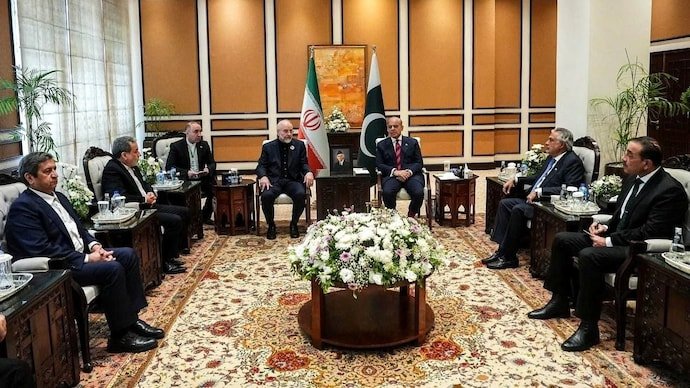
ceasefire talks between the United States and Iran have officially begun in Islamabad after a delay of more than five hours, marking a critical yet uncertain moment in efforts to de-escalate tensions. The negotiations, led by US Vice President JD Vance and Iranian Parliament Speaker Mohammad Baqer Qalibaf, come amid a fragile ceasefire and growing regional instability. US President Donald Trump confirmed the start of talks while warning that Washington is prepared to “reset” its strategy if diplomacy fails.
Delayed Start, High Stakes, and Fragile Momentum
The first round of in-person negotiations unfolded in Pakistan’s capital under tight security and intense global scrutiny. Although delegations from both sides arrived earlier in the day, direct engagement was delayed for hours due to disagreements and preconditions. The talks eventually progressed into a combination of face-to-face discussions and written exchanges, signaling cautious engagement but also highlighting persistent mistrust.
With the Strait of Hormuz, regional conflicts, and economic pressures all in play, the outcome of these talks could shape not just bilateral relations but broader geopolitical stability.
Trump Confirms Talks, Signals Uncertainty
President Donald Trump confirmed that negotiations had begun but struck a notably cautious tone. He acknowledged uncertainty over the outcome and emphasized that the US would quickly evaluate Iran’s intentions.
“I have no idea how negotiations will unfold. We’ll know very quickly if they are acting in good faith,” Trump said.
Trump also reiterated that the Strait of Hormuz would reopen in the near future, while warning that failure in diplomacy could lead to a significant shift in US policy.
“If diplomacy fails, we are prepared to reset,” he added, signaling a tougher approach if needed.
Five-Hour Delay Highlights Deep Mistrust
Before talks officially began, the US delegation—including JD Vance, Steve Witkoff, and Jared Kushner—spent nearly five hours in Islamabad without direct interaction with Iranian officials. This delay underscored the level of distrust and complexity surrounding the negotiations.
Iranian officials have repeatedly stated that they entered the talks without trust, while the US has maintained firm positions on key issues. The delay was not merely logistical—it reflected fundamental disagreements that continue to shape the negotiation process.
From Direct Talks to Written Exchanges
After approximately two hours of initial discussions, the talks shifted from direct dialogue to written exchanges. This procedural step is often used in high-stakes diplomacy to ensure clarity and avoid misinterpretation.
Sources suggest that this transition indicates limited progress, with both sides attempting to formalize areas of tentative agreement while carefully reviewing each other’s positions.
While not a breakthrough, it represents cautious forward movement in an otherwise fragile process.
Key Disputes Continue to Stall Progress
Despite some procedural progress, major disagreements remain unresolved. One of the central issues is the status of Iranian assets frozen abroad, reportedly in locations such as Qatar.
Iranian officials have indicated that participation in talks was linked to expectations of financial relief. However, Washington has not confirmed any such concession, reinforcing the trust deficit between the two sides.
Other contentious issues include:
- Sanctions Relief: Iran seeks easing of economic restrictions.
- regional security: Disagreements over Middle East dynamics persist.
- Strait of Hormuz: Conflicting claims about control and reopening.
These disputes highlight the structural challenges facing the negotiations.
Conflicting Narratives Over Strait of Hormuz
The Strait of Hormuz remains a focal point of both strategic and economic importance. US officials suggested that naval movement through the corridor was underway, while Iranian and Pakistani sources disputed these claims.
Trump asserted that US forces were securing the route and had weakened Iran’s naval capabilities, adding another layer of complexity to the already conflicting narratives.
This information gap reflects broader issues of mistrust and misalignment between the two sides.
Regional Tensions Complicate Diplomacy
Even as talks continue in Islamabad, ongoing violence in Lebanon is casting a shadow over the negotiations. Reports of fresh strikes and casualties have intensified regional tensions, particularly involving Hezbollah and Israel.
Iran has insisted that any broader agreement must include a ceasefire in Lebanon, linking regional stability to the success of US-Iran talks. However, both the US and Israel have maintained that the Lebanon conflict is separate from the current negotiations.
This divergence further complicates efforts to reach a comprehensive agreement.
Iran’s Cautious Approach Reflects Deep Skepticism
Iranian officials have made it clear that their participation in the talks is marked by caution. Government representatives have emphasized that Tehran is negotiating from a position of vigilance, reflecting longstanding distrust of US intentions.
Iran is negotiating “with our finger on the trigger,” a spokesperson indicated, highlighting the tense atmosphere.
This cautious stance underscores the difficulty of building trust even as dialogue continues.
Pakistan Pushes for Diplomatic Breakthrough
As the host nation, Pakistan has played an active role in facilitating the talks. Prime Minister Shehbaz Sharif and senior officials have engaged with both delegations, aiming to create conditions for meaningful dialogue.
Pakistani leaders have expressed cautious optimism, suggesting that even partial progress—such as extending the ceasefire—would be a positive outcome.
For Islamabad, the stakes are high, as the outcome of the talks could significantly impact regional stability and its own strategic position.
Global Implications Extend Beyond Bilateral Relations
The significance of the talks goes beyond US-Iran Relations. The outcome could influence global energy markets, particularly given disruptions in the Strait of Hormuz.
Economic stability, regional security, and international diplomacy are all closely tied to the success or failure of these negotiations.
This broader context adds urgency to the process, even as challenges persist.
Conclusion: Fragile Progress Amid Uncertain Future
The start of US-Iran ceasefire talks in Islamabad, though delayed, marks a tentative step toward de-escalation. However, the shift to written exchanges, ongoing disputes, and regional tensions highlight the fragile nature of the process.
President Trump’s warning of a potential “reset” underscores the high stakes involved. While the willingness of both sides to engage offers a narrow window of opportunity, the road ahead remains uncertain.
Whether these talks lead to a breakthrough or collapse under pressure will depend on the ability of both sides to move beyond entrenched positions and build even a minimal level of trust—something that, so far, remains in short supply.
For breaking news and live news updates, like us on Facebook or follow us on Twitter and Instagram. Read more on Latest World on thefoxdaily.com.





COMMENTS 0