- Who, What, When, Where, Why, How
- The Strategic Logic: Crippling Capability
- Early Signs: Bridge Strike Raises Stakes
- Expert View: Pressure vs Collapse
- Legal and Humanitarian Concerns
- When Civilian Becomes Military: A Legal Grey Zone
- Risk of Escalation: A Regional Domino Effect
- Counterproductive Outcomes: Winning the Battle, Losing the Narrative?
- Contradictions in Policy Signals
- Key Considerations at a Glance
- Insight: Infrastructure Warfare in Modern Conflicts
- What Happens Next?
- Conclusion: A High-Stakes Decision with Global Consequences
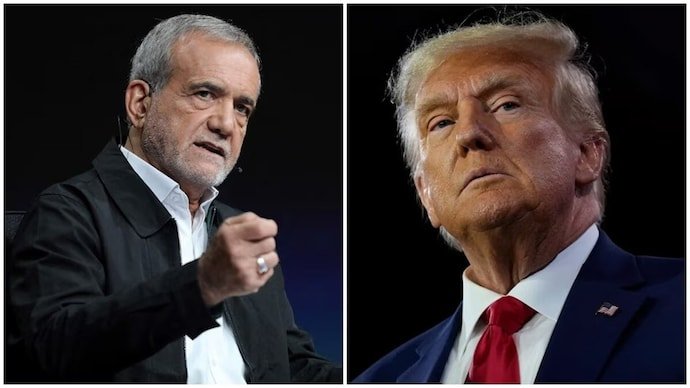
The United States may be preparing for a significant escalation in its conflict with Iran, with reports suggesting that President Donald Trump is considering targeting the country’s power plants and key bridges. The proposed shift in strategy, reportedly backed by senior advisers, could dramatically widen the scope of the war and bring complex legal and humanitarian implications into focus.
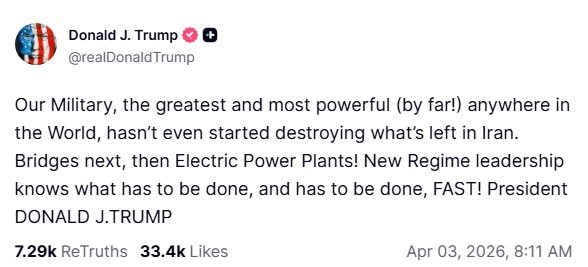
According to reports, top US officials have argued that striking infrastructure such as bridges, roadways, and electric power facilities could weaken Iran’s military capabilities by disrupting the movement of missiles and drone components, while also complicating its nuclear ambitions.
However, such a move if carried out would mark a turning point in the conflict, raising concerns about civilian impact, international law, and the potential for broader regional retaliation.
Who, What, When, Where, Why, How
Who: US President Donald Trump and senior officials including Defence Secretary Pete Hegseth.
What: Proposed targeting of Iran’s power plants, bridges, and infrastructure.
When: Ahead of a stated April 6 deadline for a deal with Iran.
Where: Across Iran, including key transport and energy networks.
Why: To disrupt military logistics and pressure Iran strategically.
How: Airstrikes targeting infrastructure deemed to have military utility.
The Strategic Logic: Crippling Capability
Supporters of the plan within the US administration argue that targeting infrastructure could significantly degrade Iran’s ability to sustain military operations.
Bridges and roadways are critical for transporting missiles, drones, and military supplies. Disrupting these routes could slow down or even halt logistical operations.
Similarly, power plants play a key role not just in civilian life, but also in supporting industrial and potentially military activities.
One senior official reportedly suggested that striking electric infrastructure could complicate Iran’s ability to advance its nuclear programme.
This approach reflects a broader military strategy: instead of targeting only military assets, disrupt the systems that enable them.
Early Signs: Bridge Strike Raises Stakes
The shift may already be underway. A recent US strike targeted a bridge connecting Tehran to Karaj, reportedly killing at least 13 people.
US officials justified the attack by claiming the structure was being used for transporting military materials, including missiles and drones.
This incident signals a move toward infrastructure-focused targeting an approach that carries both tactical advantages and significant risks.
Expert View: Pressure vs Collapse
Some analysts believe that sustained infrastructure attacks could weaken Iran internally.
“The bombing will continue to degrade not just the regime, but the nation, until Iran itself starts to come apart.”
However, this perspective is not universally accepted. Critics argue that such strategies can backfire, strengthening domestic support for the government rather than weakening it.
Legal and Humanitarian Concerns
Targeting infrastructure like power plants and bridges raises serious legal questions under international humanitarian law.
The Geneva Conventions provide protections for civilian infrastructure, including:
- Power grids
- Water systems
- Transportation networks
- Hospitals and schools
Deliberately attacking such infrastructure can be considered a violation of international law unless it can be clearly demonstrated that the targets serve a direct military purpose.
“Even when there may be a military rationale, the law requires extreme caution around places like power plants, water systems and hospitals.”
This highlights the fine line between military necessity and humanitarian responsibility.
When Civilian Becomes Military: A Legal Grey Zone
International law does allow for exceptions. Civilian infrastructure can be classified as a legitimate target if it meets specific criteria:
- It contributes effectively to military action
- Its destruction offers a definite military advantage
For example, a bridge used exclusively for military transport could be considered a valid target. However, proving such use and ensuring proportionality remains a major challenge.
This legal grey zone often becomes a point of contention in modern conflicts.
Risk of Escalation: A Regional Domino Effect
One of the biggest concerns surrounding this strategy is the risk of escalation.
Experts warn that targeting Iran’s infrastructure could provoke retaliation not just against US assets, but also against energy infrastructure across the Gulf region.
There are already indications of this possibility. Iranian media has reportedly identified key bridges and infrastructure in Gulf countries as potential targets.
Such a scenario could transform a bilateral conflict into a wider regional crisis.
Counterproductive Outcomes: Winning the Battle, Losing the Narrative?
Several current and former US military officials have expressed caution, arguing that attacking civilian-linked infrastructure could be counterproductive.
Key concerns include:
- Alienating Civilians: Damage to essential services could turn public sentiment against the US
- Strengthening Hardliners: External attacks often consolidate internal political support
- International Criticism: Allies and global institutions may oppose such actions
In modern conflicts, perception can be as important as performance. Winning militarily does not always translate into strategic success.
Contradictions in Policy Signals
The proposed escalation also comes amid mixed signals from within the US administration.
For instance, Secretary of State Marco Rubio recently suggested that Iran is no longer enriching uranium raising questions about the urgency of targeting infrastructure linked to nuclear development.
Such contradictions can complicate both domestic and international understanding of US objectives.
Key Considerations at a Glance
| Factor | Implication |
|---|---|
| Military Impact | Disrupts logistics and supply chains |
| Legal Risk | Potential violation of international law |
| Humanitarian Cost | Disruption of civilian life and services |
| Strategic Outcome | Possible escalation and retaliation |
| Global Reaction | Risk of international criticism |
Insight: Infrastructure Warfare in Modern Conflicts
Targeting infrastructure is not new but it has become more controversial in recent years.
In earlier wars, such actions were often seen as strategic necessities. Today, they are scrutinized through the lens of international law, Human Rights, and global media coverage.
In simple terms, blowing up a bridge might be easy but justifying it is much harder.
This shift reflects a broader change in how wars are fought and judged in the 21st century.
What Happens Next?
With the April 6 deadline approaching, several scenarios are possible:
- Diplomatic breakthrough leading to de-escalation
- Limited strikes targeting specific infrastructure
- Wider military campaign with regional consequences
The path chosen will depend not just on military calculations, but also on political, legal, and international considerations.
Conclusion: A High-Stakes Decision with Global Consequences
The proposal to target Iran’s power plants and bridges represents a critical juncture in the conflict. While it may offer short-term military advantages, the long-term implications are far more complex.
Balancing military objectives with legal and humanitarian responsibilities is one of the toughest challenges in modern warfare.
As the situation unfolds, the world will be watching closely not just for what actions are taken, but for how they are justified.
Because in today’s conflicts, power is not just about what you can strike but what you can defend, explain, and sustain.
For breaking news and live news updates, like us on Facebook or follow us on Twitter and Instagram. Read more on Latest World on thefoxdaily.com.






COMMENTS 0