- Introduction: Delayed Talks Signal Early Trouble
- Trump Confirms Talks but Signals Uncertainty
- Why the Talks Were Delayed
- Key Sticking Points Between the US and Iran
- Pakistan’s Role as a Diplomatic посредник
- Iran’s Preconditions Complicate Engagement
- US Position Remains Firm
- The Strategic Importance of the Strait of Hormuz
- What Happens If Talks Fail?
- Conclusion: A Delayed Start, an Uncertain Path Forward
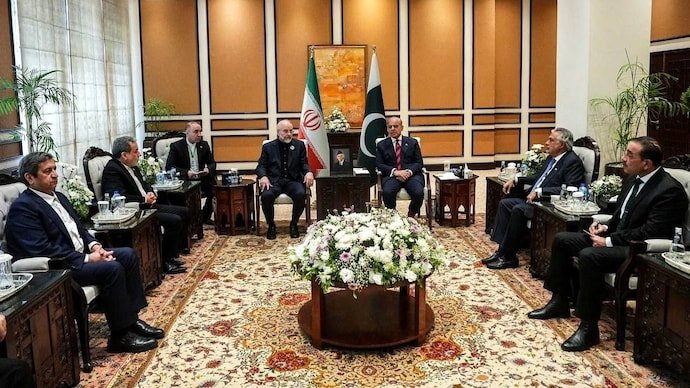
High-stakes talks between the United States and Iran have officially begun in Islamabad after a delay of more than five hours, underscoring the fragile nature of ongoing ceasefire negotiations. US President Donald Trump confirmed the start of discussions while issuing a stark warning that Washington is prepared to “reset” its approach if diplomacy fails. The delay, caused by disagreements and preconditions, reflects deep mistrust between the two sides even before formal negotiations could begin.
Introduction: Delayed Talks Signal Early Trouble
The negotiations, led by US Vice President JD Vance and Iranian officials including Parliament Speaker Mohammad Baqer Qalibaf, were expected to begin promptly after delegations arrived in Pakistan. However, despite being present in Islamabad, the US team reportedly spent nearly five hours without engaging in direct talks with Iranian counterparts.
The delay highlights key questions surrounding the talks: who will compromise, what conditions will be accepted, and whether the fragile ceasefire can evolve into a lasting agreement. With tensions still simmering, the start of negotiations though delayed marks a critical moment in efforts to prevent further escalation.
Trump Confirms Talks but Signals Uncertainty
President Donald Trump confirmed that discussions had officially begun but struck a cautious tone when addressing the media. He acknowledged uncertainty about how the negotiations would unfold and emphasized that the US would quickly assess Iran’s intentions.
“I have no idea how negotiations will unfold. We’ll know very quickly if they are acting in good faith,” Trump said.
While expressing some optimism about reopening key global trade routes, Trump also delivered a warning that failure to reach an agreement could lead to a tougher US stance.
“If diplomacy doesn’t work, we are prepared to reset,” he indicated, hinting at alternative strategies.
Why the Talks Were Delayed
The five-hour delay before talks began was not merely logistical it reflected deeper structural issues. Both sides entered negotiations with a set of preconditions that complicated initial engagement.
Iran signaled that it lacked trust in the process even before discussions began. Officials emphasized that prior experiences and ongoing regional tensions made it difficult to enter negotiations without guarantees.
On the other hand, the United States rejected several of Iran’s demands outright, further contributing to the impasse.
In diplomacy, delays often speak louder than statements and this one clearly pointed to underlying friction.
Key Sticking Points Between the US and Iran
Several contentious issues continue to shape the negotiations:
- Ceasefire Conditions: Iran wants broader guarantees, including a halt to Israeli military actions in Lebanon.
- Frozen Assets: Tehran has demanded the release of funds held abroad.
- Regional Security: Disagreements persist over Middle East security dynamics and alliances.
- Strait of Hormuz: Control and reopening of the strategic waterway remains a major concern.
These issues highlight the complexity of the talks and explain why even initiating dialogue proved difficult.
Pakistan’s Role as a Diplomatic посредник
Pakistan has emerged as a key intermediary in the negotiations, hosting both delegations and facilitating initial contacts. Prime Minister Shehbaz Sharif has actively engaged with US officials, while Pakistani diplomats have maintained communication with Iranian representatives.
Islamabad’s involvement reflects its strategic interest in preventing regional escalation and maintaining diplomatic relevance. However, the country also faces risks if the talks fail, given its geographic and political position.
By hosting the talks, Pakistan is walking a fine line between opportunity and exposure.
Iran’s Preconditions Complicate Engagement
Iran entered the talks with several clear demands, which it views as necessary for meaningful progress. These include broader ceasefire conditions extending beyond bilateral issues, as well as economic considerations such as access to frozen assets.
Tehran has also linked its participation to developments in Lebanon, particularly ongoing military activity involving regional actors.
Such conditions, while strategically important for Iran, have made it harder to establish common ground with the US delegation.
US Position Remains Firm
The United States has taken a more rigid stance, rejecting many of Iran’s initial conditions. Washington’s approach reflects a broader strategy of maintaining pressure while testing the possibility of diplomatic engagement.
President Trump’s comments suggest that while the US is open to negotiations, it is equally prepared to pivot if talks fail to produce results.
This dual-track approach diplomacy backed by pressure adds another layer of complexity to the negotiations.
The Strategic Importance of the Strait of Hormuz
One of the central issues in the talks is the status of the Strait of Hormuz, a critical global energy route. Trump expressed confidence that the strait would reopen soon, though he also hinted at alternative routes being explored.
Any prolonged disruption in the strait has significant implications for global oil markets, making its status a key factor in the urgency of the negotiations.
For both sides, control and access to this route are not just economic concerns but strategic priorities.
What Happens If Talks Fail?
The possibility of negotiations collapsing remains a real concern. Analysts warn that failure could lead to renewed tensions and potentially escalate into broader conflict.
For Pakistan, which is hosting the talks, the stakes are particularly high. A breakdown in diplomacy could increase regional instability and place additional pressure on its already complex geopolitical position.
Experts caution that unresolved disputes and lack of trust could undermine even the initial progress made during the talks.
Conclusion: A Delayed Start, an Uncertain Path Forward
The delayed start of US-Iran talks in Islamabad serves as an early indicator of the challenges ahead. While the initiation of dialogue offers a glimmer of hope, deep-rooted mistrust and conflicting demands continue to cast a shadow over the process.
President Trump’s warning of a potential “reset” underscores the high stakes involved. The coming days will determine whether the talks can move beyond procedural delays and produce meaningful outcomes.
For now, the negotiations represent a fragile step toward de-escalation one that could either lead to a breakthrough or unravel under the weight of unresolved differences.
For breaking news and live news updates, like us on Facebook or follow us on Twitter and Instagram. Read more on Latest World on thefoxdaily.com.






COMMENTS 0