- Pakistan’s High-Stakes Gamble as Diplomatic Host
- Why Failure of Talks Could Trigger a Security Crisis
- The Saudi Factor: A Strategic Dilemma
- Internal Security Pressures Add to the Risk
- US Pressure and Strategic Constraints
- Domestic Political and Social Risks
- Economic Fragility Raises the Stakes
- Impact on Pakistan’s Global Position
- Why Islamabad Needs a Successful Outcome
- Conclusion: A Diplomatic Test with High Consequences
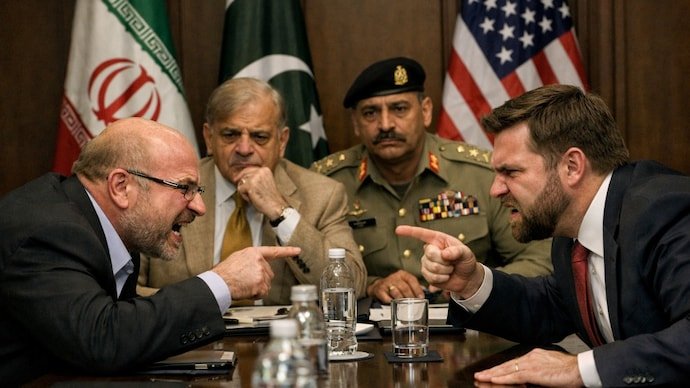
High-level peace talks between the United States and Iran have begun in Islamabad, placing Pakistan at the center of a delicate diplomatic effort. Led by US Vice President JD Vance and Iranian Parliament Speaker Mohammad Baqer Qalibaf, the negotiations aim to stabilize a fragile ceasefire and prevent further escalation. However, experts warn that if these talks collapse, Pakistan could face severe geopolitical, security, and economic consequences. Hosting the talks is not just about diplomacy for Islamabad—it is a matter of strategic survival.
Pakistan’s High-Stakes Gamble as Diplomatic Host
Pakistan’s decision to host the talks reflects a calculated attempt to position itself as a relevant diplomatic player while protecting its own national interests. Prime Minister Shehbaz Sharif has framed the discussions as a significant opportunity for peace, but behind the scenes, Islamabad’s urgency reveals deeper concerns.
From maintaining strong ties with Washington to avoiding tensions with neighboring Iran, Pakistan is navigating a complex web of alliances. Its involvement is also driven by the need to prevent instability from spilling over into its already volatile western regions.
“Islamabad is seeking to reassert diplomatic relevance by positioning itself as a credible interlocutor,” noted a geopolitical analyst.
However, with both the US and Iran entering negotiations with firm positions, the likelihood of a quick or smooth resolution remains uncertain.
Why Failure of Talks Could Trigger a Security Crisis
If the Islamabad talks fail, Pakistan could find itself in a highly dangerous position. Geographically, the country sits at a strategic crossroads connecting South Asia, Central Asia, and the Middle East. Any escalation involving Iran would directly impact Pakistan’s western border.
Security experts warn of a potential “nightmare scenario” where Pakistan could be drawn into a broader regional conflict. This risk is heightened by its defense ties with Saudi Arabia, a key rival of Iran.
Under existing agreements, Pakistan may face pressure to support Saudi Arabia in the event of further escalation. Even if Islamabad tries to remain neutral, its strategic commitments could limit its options.
The Saudi Factor: A Strategic Dilemma
Pakistan’s defense relationship with Saudi Arabia adds another layer of complexity. A mutual defense understanding between the two countries implies that aggression against one could be treated as aggression against both.
This puts Pakistan in a difficult position. On one hand, it seeks to avoid conflict with Iran. On the other, it cannot easily ignore its commitments to Saudi Arabia without risking diplomatic fallout.
Balancing these competing interests would become significantly harder if the ceasefire collapses and hostilities resume.
Internal Security Pressures Add to the Risk
Pakistan’s internal security environment further complicates the situation. The country is already dealing with tensions along its borders, including instability linked to Afghanistan and insurgency challenges in Balochistan.
If conflict escalates with Iran, Pakistan could face pressure on multiple fronts simultaneously. Experts warn that this could stretch its military and security resources, increasing the risk of internal destabilization.
In simple terms, Pakistan cannot afford a scenario where all its borders become active conflict zones at the same time.
US Pressure and Strategic Constraints
As a long-standing US partner, Pakistan could face additional pressure if tensions escalate. In a worst-case scenario, Washington might seek logistical or military support for operations involving Iran.
Such a request would place Islamabad in a strategic dilemma. Refusing could strain relations with the United States, while agreeing could provoke domestic backlash and worsen ties with Iran.
This balancing act underscores the fragile position of Pakistan’s leadership as it tries to manage both external alliances and internal sensitivities.
Domestic Political and Social Risks
Any perceived alignment against Iran could have serious domestic consequences for Pakistan. With a significant Shia population, involvement in actions targeting Iran could trigger public unrest and deepen sectarian tensions.
Political leaders would face criticism from multiple sides, making it difficult to maintain internal stability while managing external pressures.
This domestic dimension adds another layer of urgency to Pakistan’s efforts to ensure the success of the Islamabad talks.
Economic Fragility Raises the Stakes
Pakistan’s economic situation makes the outcome of the talks even more critical. The country is heavily dependent on energy imports from the Gulf region, and any disruption in supply routes has immediate consequences.
The Strait of Hormuz, a key global energy corridor, plays a vital role in Pakistan’s Energy Security. Any prolonged disruption can lead to rising fuel costs, inflation, and economic slowdown.
Recent tensions have already affected daily life, with fuel-saving measures impacting businesses, transportation, and public services.
“If the conflict continues, it will create economic and geopolitical chaos,” warned a policy expert.
For a country already facing financial challenges, sustained instability in the region could worsen economic conditions significantly.
Impact on Pakistan’s Global Position
Pakistan has long positioned itself as a key member of the broader Islamic world while maintaining strategic ties with Western powers. A failure of the talks—and any subsequent involvement in conflict—could damage this carefully balanced image.
Supporting one side over another could expose contradictions in its foreign policy and weaken its credibility on the international stage.
This makes diplomatic success not just desirable, but essential for preserving Pakistan’s global standing.
Why Islamabad Needs a Successful Outcome
For Pakistan, the stakes of the talks go far beyond diplomacy. A successful outcome could help stabilize the region, protect its borders, and ease economic pressure.
On the other hand, failure could trigger a chain reaction of security challenges, economic strain, and political instability.
This explains why Islamabad appears deeply invested in ensuring that negotiations at least produce a framework for continued dialogue.
Conclusion: A Diplomatic Test with High Consequences
The US-Iran talks in Islamabad represent a critical moment for Pakistan’s strategic future. By hosting these negotiations, the country has placed itself at the center of a complex geopolitical equation.
While the talks offer a chance for de-escalation, the risks of failure are significant. From potential military involvement to economic disruption and domestic instability, the consequences could be far-reaching.
Ultimately, Pakistan’s role as a mediator is both an opportunity and a gamble. If diplomacy succeeds, it could strengthen its global standing. If it fails, the fallout may extend far beyond its borders—placing Pakistan in one of the most challenging positions it has faced in recent years.
For breaking news and live news updates, like us on Facebook or follow us on Twitter and Instagram. Read more on Latest World on thefoxdaily.com.






COMMENTS 0