- From Sanctions to Strategy: What Changed?
- Political Context: Why Now?
- Oil at the Core of the Decision
- Economic Impact: What Changes After Sanctions Relief?
- US Strategy: Beyond Venezuela
- Insight: The Role of Timing in Global Decisions
- Analysis: Opportunities vs Risks
- Quotes That Capture the Moment
- Global Impact: A Ripple Effect
- What Happens Next?
- Conclusion: A Calculated Reset with Global Consequences
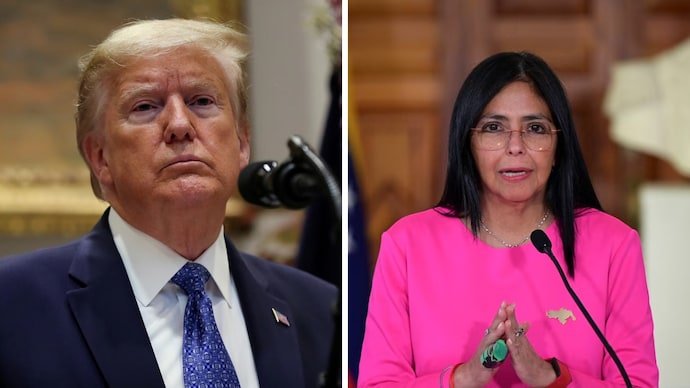
The United States has officially lifted Sanctions on Venezuela’s interim President Delcy Rodríguez, marking a major turning point in diplomatic relations between the two countries. The move comes amid shifting geopolitical priorities and growing Global energy concerns, signaling a transition from years of economic pressure to renewed engagement.
The decision answers key questions clearly. Who is involved? The US government and Venezuela’s interim leadership. What happened? Sanctions targeting a key political figure were removed. When? At a time of global energy instability. Where? Within the broader framework of US foreign policy in Latin America. Why? To enable economic cooperation and stabilize supply chains. And how? By restoring access to financial systems and opening the door for diplomatic and commercial engagement.
This is not just a routine policy update – it is a calculated strategic shift with implications far beyond Venezuela.
From Sanctions to Strategy: What Changed?
For nearly a decade, US policy toward Venezuela relied on sanctions aimed at isolating its leadership and weakening its economy. These measures targeted individuals, financial institutions, and most importantly, the oil sector.
Delcy Rodríguez herself was once a key target of these restrictions. Her removal from the sanctions list represents more than a personal reversal – it reflects a broader change in approach.
“Foreign policy is rarely about permanence; it is about priorities.”
Washington’s new approach suggests that engagement is now seen as more effective than isolation. Instead of pushing Venezuela away, the US is pulling it back into the global system.
Political Context: Why Now?
This shift comes at a moment of political transition in Venezuela. Rodríguez, serving as interim president, represents a new phase in the country’s leadership.
For the United States, recognizing this leadership – even indirectly – creates an opportunity to influence Venezuela’s direction through cooperation rather than confrontation.
Historically, such moments are rare but impactful. When political change aligns with global economic needs, policies can shift quickly.
And right now, the world’s biggest need is energy stability.
Oil at the Core of the Decision
Let’s not overcomplicate it – oil is central to this decision.
Venezuela possesses some of the largest proven oil reserves globally. However, years of sanctions significantly reduced its production and export capacity.
With restrictions now easing, Venezuela has the potential to re-enter global energy markets at a time when supply is tight and demand remains high.
This timing is critical. Global disruptions have made Energy Security a top priority for many countries. Adding Venezuelan oil back into the system helps ease pressure – at least in theory.
In simple terms: when supply drops, even previously sidelined players become essential.
Economic Impact: What Changes After Sanctions Relief?
The immediate impact of sanctions relief is economic access. Venezuela can now reconnect with global financial and trade systems.
Key changes include:
- Restored access to international banking networks
- Ability to attract foreign investment
- Expansion of oil production and exports
- Improved global credibility
To better understand the shift, here is a comparison:
| Aspect | Before Sanctions Relief | After Sanctions Relief |
|---|---|---|
| Financial Access | Restricted banking and frozen assets | Access to global financial systems |
| Oil Exports | Limited and heavily restricted | Potential expansion in exports |
| Foreign Investment | Minimal due to high risk | Renewed interest from global investors |
| Diplomatic Relations | Isolated internationally | Re-engagement with major economies |
This shift is significant, but it does not guarantee immediate recovery. Structural challenges remain, and rebuilding takes time.
US Strategy: Beyond Venezuela
This decision is part of a broader US strategy that extends beyond a single country.
Key objectives include:
- Energy Security: Increasing global supply to stabilize prices
- Geopolitical Influence: Strengthening presence in Latin America
- Economic Opportunity: Opening markets for US businesses
- Policy Flexibility: Using engagement as a tool instead of pressure
This approach reflects a pragmatic mindset – focusing on outcomes rather than rigid positions.
Insight: The Role of Timing in Global Decisions
One of the most important elements in this story is timing.
Sanctions were in place for years. Why remove them now?
The answer lies in a combination of factors:
- Political change within Venezuela
- Global energy disruptions
- Shifting US priorities
When these factors align, decisions that once seemed unlikely suddenly make sense.
In Geopolitics, timing is often everything.
Analysis: Opportunities vs Risks
Like any major policy shift, this move creates both opportunities and risks.
Opportunities
- Revival of Venezuela’s oil sector
- Increased global energy supply
- Improved diplomatic relations
Risks
- Political instability in Venezuela
- Uncertainty around long-term leadership
- Investor caution due to past volatility
The balance between these factors will determine the success of this policy shift.
Quotes That Capture the Moment
“This move opens the door to renewed cooperation and economic engagement.”
This reflects the official perspective – a focus on rebuilding relationships.
“In global politics, interests evolve faster than alliances.”
This highlights the deeper reality behind the decision.
Global Impact: A Ripple Effect
The implications of this move extend far beyond Venezuela.
For energy markets, it introduces a new supply factor. For investors, it creates opportunities. For other countries under sanctions, it signals that policies can change.
This ripple effect is what makes the decision globally significant.
What Happens Next?
The future depends on several key developments:
- How quickly Venezuela can increase oil production
- The level of foreign investment it attracts
- The stability of its political environment
- Future US policy decisions
These factors will shape whether this shift leads to long-term transformation or remains a short-term adjustment.
Conclusion: A Calculated Reset with Global Consequences
The lifting of sanctions on Delcy Rodríguez represents more than a diplomatic gesture – it is a strategic reset driven by changing global realities.
For Venezuela, it offers a path toward economic recovery. For the United States, it provides leverage in energy and diplomacy. For the world, it adds a new dimension to an already complex geopolitical landscape.
But as always in global politics, the real story lies in what comes next.
Because opening the door is one thing – walking through it successfully is another.
For breaking news and live news updates, like us on Facebook or follow us on Twitter and Instagram. Read more on Latest World on thefoxdaily.com.


COMMENTS 0