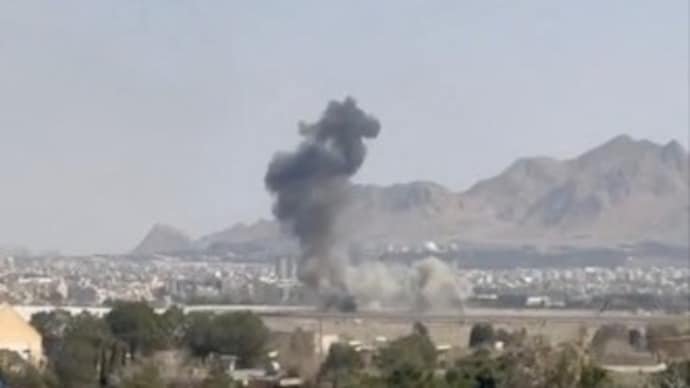
The United States may need to deploy a significant number of ground troops if it attempts to seize Iran’s remaining stockpile of highly enriched uranium, according to several current and former officials familiar with military planning.
Sources who spoke to CNN said discussions have taken place within President Donald Trump’s administration about the possibility of sending forces to secure nuclear material believed to be stored deep underground at Iranian facilities.
Such a mission would represent a major escalation in the ongoing conflict and go far beyond limited special operations raids.
Military planners believe that recovering or neutralizing the uranium stockpile could require a larger deployment to secure the area, protect personnel, and safely transport or destroy the nuclear material.
Underground Uranium Stockpile Remains After Previous Strikes
The concern stems from intelligence assessments indicating that a large portion of Iran’s highly enriched uranium survived earlier US bombing operations targeting Iranian nuclear facilities.
A series of US Airstrikes last year targeted three major nuclear sites, but officials say the attacks did not completely eliminate Iran’s uranium reserves.
Much of the remaining stockpile is believed to be located at the Isfahan nuclear facility, according to three officials familiar with the military planning who spoke to CNN.
Additional uranium may also remain stored at the Natanz nuclear facility, another key component of Iran’s nuclear program.
International Atomic Energy Agency (IAEA) Director General Rafael Grossi has estimated that approximately 200 kilograms of highly enriched uranium may still be present at the Isfahan site.
| Iran Nuclear Facility | Reported Status |
|---|---|
| Isfahan Nuclear Facility | Believed to hold roughly 200 kg of highly enriched uranium |
| Natanz Nuclear Facility | Additional uranium stockpile suspected |
| Other Nuclear Sites | Several facilities damaged during earlier US strikes |
Why Recovering Uranium Is So Difficult
Highly enriched uranium presents both strategic and technical challenges for any military operation attempting to secure it.
Officials say the material is believed to be stored deep inside underground tunnels and reinforced facilities designed to withstand airstrikes.
Iranian authorities have reportedly been working for months to restore access to these underground tunnels and remove debris from buildings damaged during previous attacks.
This means that even if the facilities were bombed, the nuclear material itself may remain intact and accessible through reconstructed tunnel networks.
Any attempt to recover the uranium would therefore require ground forces to enter and secure these heavily fortified areas.
Handling Nuclear Material Requires Specialized Forces
Military experts say that retrieving uranium is not simply a matter of locating it.
The material must be carefully handled, secured, and transported under strict safety conditions due to its radioactive properties.
This would likely require highly trained nuclear response teams along with military units responsible for securing the site and protecting personnel.
According to officials familiar with the planning, the mission could involve dozens or even hundreds of US troops.
Special operations forces would likely lead the effort to locate and secure the uranium, while additional military units would provide protection, logistics, and transport support.
| Possible Military Roles | Purpose |
|---|---|
| Special Operations Forces | Locate and secure nuclear material |
| Support Troops | Protect the facility and surrounding area |
| Nuclear Specialists | Safely handle and transport uranium |
| Logistics Units | Assist with transportation and operational support |
Iran’s Uranium Enrichment Levels Raise Concerns
Highly enriched uranium is considered a “dual-use” material because it can be used for both civilian nuclear energy and nuclear weapons.
Iran has repeatedly stated that its nuclear program is intended for peaceful purposes, including energy production and scientific research.
However, international monitoring agencies have noted that Iran’s uranium enrichment levels have reached approximately 60 percent purity.
Weapons-grade uranium typically requires enrichment levels of about 90 percent.
Because of this relatively small gap, experts warn that highly enriched uranium could potentially be converted into weapons-grade material if further processed.
A Potential Major Escalation in the Conflict
If the United States were to launch a ground mission to seize Iran’s uranium stockpile, analysts say it could dramatically escalate the conflict.
Deploying troops on Iranian soil would likely provoke a strong response from Iran’s military and could expand the war beyond its current scope.
For now, US officials have not confirmed any final decision regarding such an operation.
However, discussions within military and intelligence circles suggest that the option remains under consideration as Washington continues to pursue its stated goal of eliminating Iran’s nuclear capabilities.
For breaking news and live news updates, like us on Facebook or follow us on Twitter and Instagram. Read more on Latest World on thefoxdaily.com.





COMMENTS 0