- How the Operation Unfolded
- Air Armada: The Scale of the Mission
- Deception Tactics: Winning Without Being Seen
- The Critical Moment: “We Have Him”
- Extraction Under Fire
- The Human Element: Survival and Courage
- Strategic Insight: What This Operation Reveals
- Geopolitical Context: Why It Matters
- A Touch of Reality (and a Bit of Humor)
- Conclusion
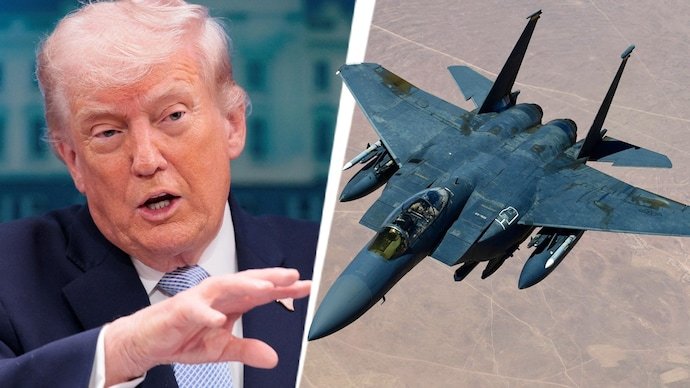
A massive United States military operation involving approximately 176 aircraft and hundreds of personnel was launched to rescue two crew members of a downed F-15E Strike Eagle inside Iranian territory. The high-risk mission, which unfolded over nearly two days, combined advanced intelligence capabilities, deception strategies, and coordinated airpower to bring both officers back safely.
The operation began after the F-15E aircraft was shot down during active operations. The pilot, identified by the call sign “Dude 44 Alpha,” was rescued within hours. However, the second crew member, a weapons systems officer known as “Dude 44 Bravo,” remained stranded in mountainous terrain, injured and evading capture. His rescue required a far more complex and prolonged effort involving search, surveillance, and strategic misdirection.
Senior US officials, including President Donald Trump and top military leaders, described the mission as “incredibly dangerous,” highlighting the challenges of operating deep inside hostile airspace while under potential enemy fire. The rescue not only demonstrated military capability but also underscored the importance of precision coordination in modern warfare.
How the Operation Unfolded
The rescue mission was not a simple extraction. It was a carefully orchestrated operation involving multiple layers of planning and execution. The initial recovery of the pilot was relatively swift, aided by rapid response teams and air superiority. However, locating and rescuing the second crew member proved far more challenging.
The weapons systems officer had been injured during the crash and reportedly moved away from the wreckage to avoid detection. Navigating rugged terrain while bleeding and isolated, he activated a survival beacon device, which played a crucial role in eventually locating him.
Military officials described the search as extremely difficult, comparing it to finding a single moving target in a vast and hostile landscape. Surveillance systems tracked faint signs of movement for extended periods before confirming the presence of the stranded officer.
“It was like searching for a single grain of sand in a desert but one that could move,” a senior official remarked, emphasizing the difficulty of the operation.
Air Armada: The Scale of the Mission
The scale of the rescue operation was extraordinary. Approximately 176 aircraft were deployed, including Fighter Jets, rescue helicopters, refuelling aircraft, and unmanned systems. Each played a specific role in ensuring mission success.
Aircraft involved included A-10 attack aircraft for close air support, HH-60 rescue helicopters for extraction, and HC-130 refuelling planes to sustain long-duration flights. Drones and surveillance systems provided real-time intelligence, allowing commanders to adapt quickly to changing conditions.
The operation required sustained air presence over hostile territory for several hours, demonstrating both endurance and coordination. According to officials, some aircraft encountered enemy fire and sustained damage, adding to the risk.
| Component | Role in Operation |
|---|---|
| Fighter Jets | Provided air cover and neutralized threats |
| Rescue Helicopters | Extracted stranded personnel |
| Refuelling Aircraft | Extended mission duration and range |
| Drones | Surveillance and target tracking |
| Cargo Planes | Transported equipment and helicopters |
Deception Tactics: Winning Without Being Seen
One of the most critical aspects of the mission was the use of deception. Military planners employed multiple strategies to mislead opposing forces and create confusion about the actual rescue location.
Several potential landing zones were prepared, but only one was genuine. This tactic forced adversaries to spread their attention and resources, reducing the likelihood of interception. At the same time, drones and strike aircraft created diversions, drawing focus away from the real extraction point.
In a surprising display of logistical efficiency, helicopters were transported in cargo aircraft, quickly assembled near the extraction site, and deployed within minutes. This rapid deployment capability allowed forces to operate in areas where traditional airbases were unavailable.
Here’s where the logic becomes fascinating: instead of overpowering the situation with brute force alone, the operation relied heavily on confusion and speed. In modern warfare, making the enemy look in the wrong direction can be just as powerful as direct engagement.
The Critical Moment: “We Have Him”
After hours of searching, surveillance systems detected a faint movement in the mountainous terrain. Initially uncertain, operators continued tracking the signal. For nearly 45 minutes, the target remained still, raising doubts about whether it was even a human presence.
Then came the breakthrough. The figure moved again clearly and unmistakably. Confirmation followed quickly: the missing officer had been found.
“And then all of a sudden, he moved… and they said, ‘We have him.’”
This moment marked a turning point in the mission. What had been an uncertain search operation transformed into a focused rescue effort. From that point onward, the priority shifted to extraction under pressure.
Extraction Under Fire
Rescuing the officer was only half the challenge. Extracting him safely from hostile territory presented its own risks. Helicopters moved in under cover of supporting aircraft, while ground teams secured the area.
The extraction was complicated by environmental conditions, including sandy terrain that limited aircraft performance. Heavily loaded cargo planes faced difficulties taking off, forcing commanders to make difficult decisions.
Ultimately, lighter and faster aircraft were used to evacuate the rescued officer and personnel. Equipment that could not be transported was destroyed to prevent it from falling into enemy hands.
While costly, this decision reflects a fundamental military principle: sensitive Technology must never be left behind in hostile territory. Protecting intelligence capabilities often outweighs financial considerations.
The Human Element: Survival and Courage
Beyond the aircraft, tactics, and strategy, this operation was ultimately about people. Both crew members demonstrated remarkable resilience under extreme conditions.
The pilot maintained composure after the crash and was quickly recovered. The weapons systems officer, despite being injured, managed to evade capture, navigate difficult terrain, and use survival equipment effectively.
Military leaders praised their actions, emphasizing that training and discipline played a crucial role in their survival.
“The courage demonstrated while isolated and evading the enemy cannot be overstated,” a senior military official stated.
There is also a subtle but important lesson here: advanced technology matters, but human decision-making under pressure often determines the outcome.
Strategic Insight: What This Operation Reveals
This mission provides valuable insight into modern military strategy. It highlights the increasing importance of integration bringing together airpower, intelligence, and deception into a unified operation.
Key takeaways include:
- Speed and coordination are critical: Rapid response reduces risk and increases success rates
- Deception enhances effectiveness: Confusing the adversary can create decisive advantages
- Technology enables precision: Advanced surveillance and tracking systems are essential
- Human resilience remains vital: Training and adaptability are irreplaceable
Interestingly, operations like this also serve as a message. They demonstrate capability, readiness, and the willingness to act even in challenging environments.
Geopolitical Context: Why It Matters
Conducting such an operation inside hostile territory carries significant geopolitical implications. It reflects not only military capability but also strategic intent.
For global observers, the mission underscores the complexity of modern conflicts, where actions are not limited to direct combat but include intelligence operations, psychological strategies, and rapid-response missions.
At the same time, it raises questions about escalation and risk. Operating deep within contested airspace increases the potential for broader Conflict, making precision and timing even more critical.
In simpler terms, it’s like walking a tightrope one wrong step could have far-reaching consequences, but a successful crossing demonstrates exceptional balance and control.
A Touch of Reality (and a Bit of Humor)
If there’s one thing this operation makes clear, it’s that modern warfare is not just about firepower it’s about outthinking the opponent. Sometimes, the most effective move is not the loudest one, but the smartest.
And let’s be honest: assembling helicopters in minutes, tracking a single moving figure in mountains, and coordinating nearly 176 aircraft sounds less like a routine mission and more like something out of a high-budget action film. The difference? This was real and the stakes were far higher than any script could capture.
Conclusion
The rescue of the downed F-15E crew stands as a remarkable example of modern military capability. It combined advanced technology, strategic planning, and human courage to achieve a successful outcome under extremely challenging conditions.
While the operation involved significant risk and cost, it ultimately demonstrated a clear priority: bringing personnel home safely. In doing so, it reinforced the importance of preparation, coordination, and adaptability in high-stakes environments.
As military strategies continue to evolve, operations like this will likely become more complex but also more precise. And if this mission is any indication, the future of such operations will depend as much on intelligence and Innovation as on القوة (force) itself.
For breaking news and live news updates, like us on Facebook or follow us on Twitter and Instagram. Read more on Latest World on thefoxdaily.com.




COMMENTS 0