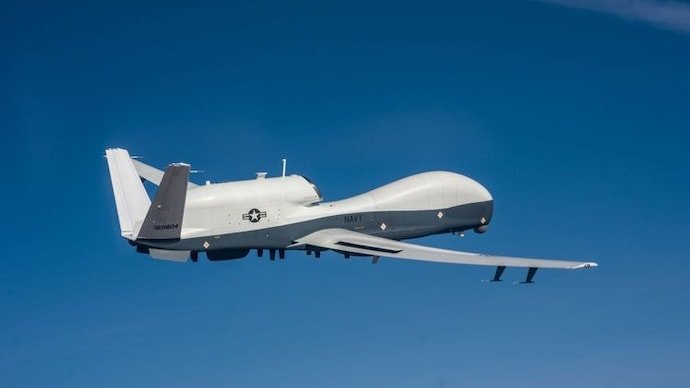
A high-value US surveillance drone, the MQ-4C Triton, has reportedly gone missing during a classified mission over the Strait of Hormuz, one of the world’s most critical energy corridors. The incident, which occurred amid fragile ceasefire conditions between the United States and Iran, has raised serious questions about regional security, military risks, and the future of surveillance operations in contested airspace.
Introduction: Who, What, When, Where, Why, How
Who: The United States Navy’s MQ-4C Triton surveillance drone.
What: Reported disappearance during an aerial mission.
When: Shortly after a ceasefire agreement between the US and Iran in early April.
Where: Over the Strait of Hormuz, near the persian gulf.
Why: Likely conducting intelligence, surveillance, and reconnaissance (ISR) operations.
How: The drone reportedly declared an emergency before vanishing from tracking systems.
While official confirmation is still awaited, open-source flight tracking data suggests the drone encountered a critical issue mid-flight, leading to its sudden disappearance.
What Happened to the MQ-4C Triton?
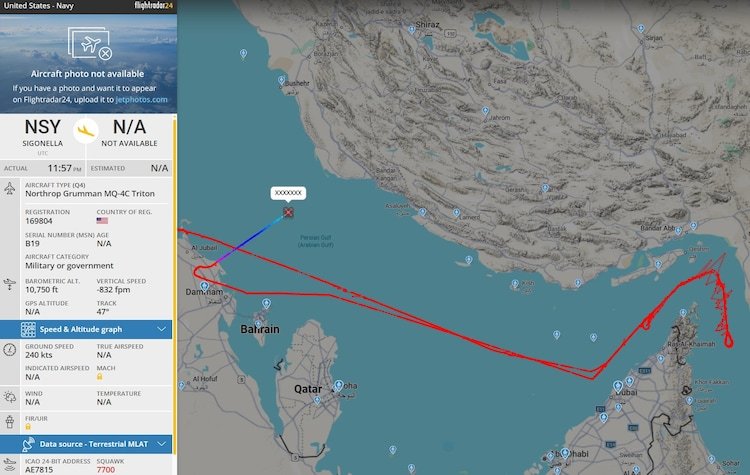
According to available tracking data, the drone was returning to its base in Sigonella, Italy, after a three-hour surveillance mission. During its return, the aircraft reportedly experienced a sudden and rapid descent—from approximately 50,000 feet to below 10,000 feet within seconds—before disappearing from radar.
Moments before vanishing, the drone transmitted a “7700” emergency code, a universal signal indicating a serious in-flight emergency. However, the code does not specify the nature of the issue, leaving multiple possibilities open.
Possible Scenarios
- Technical failure: Mechanical or system malfunction
- Hostile action: Potential interception or attack
- Electronic warfare: Jamming or cyber interference
- Fuel or operational issue: Less likely but possible
At this stage, there is no confirmed evidence pointing conclusively to any single cause.
Why the Strait of Hormuz Matters
The Strait of Hormuz is one of the most strategically important waterways in the world. Roughly 20% of global oil and gas supplies pass through this narrow corridor, making it a critical artery for the Global Economy.
In recent weeks, the region has been under heightened tension. Despite a ceasefire agreement, Iran has reportedly maintained tight control over the waterway, limiting the movement of commercial vessels.
This makes surveillance missions like those conducted by the MQ-4C Triton essential for monitoring activity and ensuring maritime security.
About the MQ-4C Triton: A High-Value Asset
The MQ-4C Triton is among the most advanced unmanned aerial vehicles (UAVs in the US military arsenal. Developed for long-endurance maritime surveillance, it is designed to operate in high-risk environments.
| Feature | Details |
|---|---|
| Cost | Approximately $200 million (₹1,800+ crore) |
| Manufacturer | Northrop Grumman |
| Operational Range | Global maritime surveillance |
| Endurance | Over 24 hours |
| Primary Role | Intelligence, Surveillance, Reconnaissance (ISR) |
Its ability to stay airborne for extended periods makes it ideal for monitoring vast areas like the Persian Gulf and critical Infrastructure such as oil Shipping lanes.
Recent US Military Losses Add Context
If the loss of the Triton is confirmed, it would mark the first known combat-related loss of this platform since its induction in 2018. It would also add to a growing list of US air asset losses in the ongoing Conflict.
Recent reports indicate that multiple aircraft, including Fighter Jets and drones, have been damaged or destroyed during operations in the region. This underscores the increasing risks faced by military assets operating in contested zones.
Why This Matters Strategically
- Financial impact: High cost of advanced military assets
- Operational risk: Increased danger in surveillance missions
- Geopolitical tension: Escalation risks between major powers
Even for a superpower, repeated losses of high-value assets can have both financial and strategic implications.
What Was the Drone Doing?
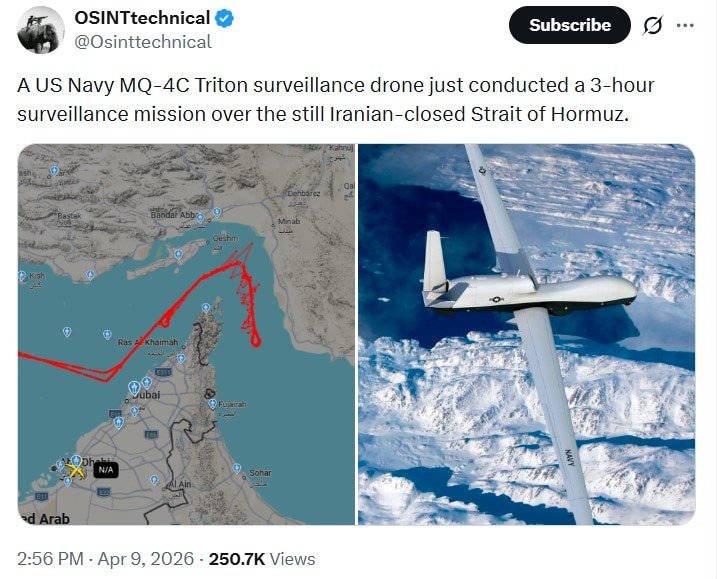
While the mission remains officially undisclosed, the MQ-4C Triton has been actively deployed in recent weeks for monitoring activity in the Persian Gulf.
Notably, the drone was observed near kharg island—one of Iran’s key oil export hubs—shortly before the ceasefire. This suggests it may have been tracking military or energy-related developments in the region.
Additionally, the drone was involved in a recent combat search and rescue (CSAR) operation, highlighting its versatility beyond surveillance.
Unanswered Questions
Despite the available data, several critical questions remain:
- Was the drone shot down or did it malfunction?
- What triggered the emergency signal?
- Was the mission purely surveillance, or part of a larger operation?
- Will the US publicly confirm the loss?
These uncertainties are likely to persist until official statements or further evidence emerges.
Conclusion: A Signal of Rising Risks in Modern Warfare
The reported disappearance of the MQ-4C Triton highlights the increasing complexity and risk of modern military operations, especially in geopolitically sensitive regions like the Strait of Hormuz.
Whether caused by technical failure or hostile action, the incident underscores the vulnerability of even the most advanced systems in contested environments. It also reflects the broader challenges facing global powers as they navigate fragile ceasefires and shifting alliances.
Looking ahead, this event could influence future military strategies, particularly in how surveillance missions are conducted in high-risk zones. As more details emerge, the incident may prove to be a critical moment in understanding the evolving dynamics of modern conflict and technological warfare.
For breaking news and live news updates, like us on Facebook or follow us on Twitter and Instagram. Read more on Latest World on thefoxdaily.com.





COMMENTS 0