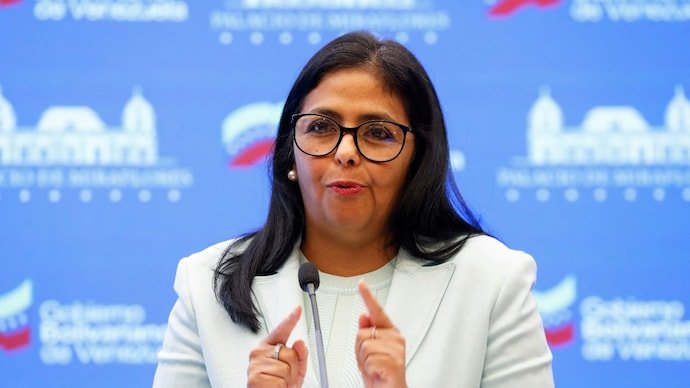
Venezuela’s oil ministry has suspended 19 oil and gas production-sharing agreements that were signed with private companies during the administration of President Nicolás Maduro, according to four individuals familiar with the matter. The development marks a significant shift in Venezuela’s Energy policy as authorities reassess contracts inked during a period of economic pressure and international Sanctions.
Despite the suspension of these production-sharing agreements, the country’s oil and gas output remains unaffected for now, the sources confirmed. They stated that Venezuela’s state-owned oil company, PDVSA, is continuing to market and sell the crude oil produced under those contracts while the agreements remain on hold.
According to the sources, both Caracas and Washington are expected to review the suspended contracts and may recommend canceling some of them entirely. Officials from Venezuela and the United States are examining the background and qualifications of the companies that signed the deals. Several of these firms are relatively unknown, and many of the agreements were finalized at a time when Venezuela was operating under strict U.S. sanctions.
Projects Included in the Contract Review
The contracts currently under review span a variety of oil-producing regions and project types. These include recently activated projects in technically challenging zones as well as large-scale ventures aimed at boosting national output.
| Region / Project Type | Project Description |
|---|---|
| Lake Maracaibo | Recently initiated oil production projects located in technically demanding operating environments. |
| Orinoco Belt | Major ventures designed to expand output in Venezuela’s primary oil-producing region. |
| Mature Oilfields | Smaller, long-established oilfields operating under production-sharing structures. |
The Orinoco Belt remains Venezuela’s most critical oil region, and several of the suspended contracts were intended to increase crude production there. Other agreements covered mature fields that require sustained operational investment, as well as projects in Lake Maracaibo, where extraction conditions can be particularly complex.
Sanctions and Investment Challenges
U.S. sanctions have played a major role in shaping Venezuela’s oil investment landscape. Following earlier expropriations and tightening sanctions, several major international oil companies declined to return to Venezuela or avoided entering into new business arrangements altogether. This made it increasingly difficult for Maduro’s administration to attract large-scale foreign investment under the production-sharing contract model.
As a result, the agreements were signed with a mix of Chinese, American, South American, and Venezuelan companies. According to a list reviewed by sources, some of these companies were registered in jurisdictions commonly regarded as tax havens. Additionally, certain firms were awarded contracts covering more than one geographic region within Venezuela.
Two of the sources also indicated that several of the companies subcontracted their assigned oilfield operations to third parties, adding another layer of complexity to the agreements now under examination.
U.S. Oversight and Licensing Requirements
In January, the United States overthrew President Maduro and assumed control over Venezuela’s oil sales and exports. Since that development, the U.S. Treasury Department has issued general licenses allowing companies to participate in Venezuela’s oil and gas sector and to trade its crude. However, those activities require special authorization from the Treasury’s Office of Foreign Assets Control (OFAC).
This evolving regulatory framework has introduced additional scrutiny into existing contracts, particularly those signed during periods of heightened sanctions. The review of the 19 production-sharing agreements appears to be part of this broader reassessment process.
Hydrocarbon Law Amendment and Contract Review Timeline
In an effort to attract foreign investment into Venezuela’s struggling oil sector, the National Assembly approved amendments to the country’s hydrocarbon law in late January. The updated legislation provides the government with a six-month window to examine and evaluate existing contracts.
The suspension of the 19 production-sharing agreements falls within this legal review period. Authorities are expected to determine whether the contracts meet regulatory standards and strategic objectives under the revised framework.
Requests for comment were sent to the White House as well as Venezuela’s ministries of communications and oil, but no immediate responses were provided.
Separate Negotiations With Major Joint Venture Partners
At the same time, Venezuela’s oil ministry and PDVSA are reportedly holding separate negotiations with several long-standing joint venture partners. These include companies such as Chevron (CVX.N), Repsol (REP.MC), and Maurel & Prom (MAUP.PA).
The discussions aim to allow these established partners to extend operations in oilfields currently allocated to their projects. If successful, such extensions could potentially increase both crude oil and natural gas production in the coming months.
Impact on Venezuela’s Oil and Gas Production
For now, the suspension of the 19 oil and gas production-sharing agreements has not disrupted Venezuela’s energy output. PDVSA continues to handle the sale of crude produced under the halted contracts, ensuring operational continuity.
However, the long-term implications will depend on the outcome of the contract review. Should some agreements be permanently canceled or restructured, the move could reshape Venezuela’s oil sector, influence foreign investment patterns, and alter production growth prospects.
The review represents a critical moment for Venezuela’s energy policy, balancing regulatory oversight, international cooperation, and the urgent need to stabilize and expand oil and gas production in one of the world’s most resource-rich nations.
For breaking news and live news updates, like us on Facebook or follow us on Twitter and Instagram. Read more on Latest World on thefoxdaily.com.





COMMENTS 0