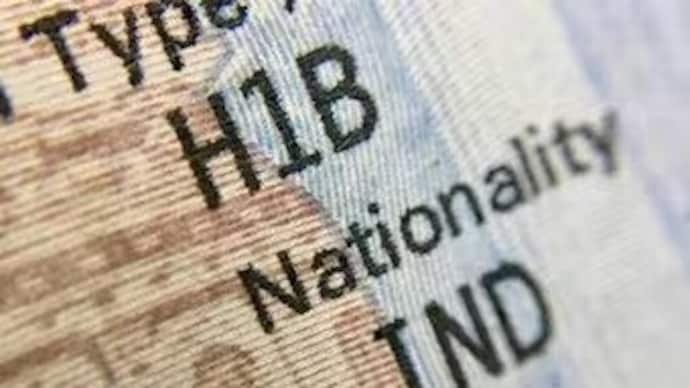
The outlook for H-1B visa holders in 2026 is increasingly fraught as the Trump administration continues to push policies aimed at reducing legal immigration, tightening eligibility criteria, and making it significantly more expensive for US employers to hire foreign professionals. The disruptions that began in 2025—when Donald Trump returned to the White House—are expected not only to persist but intensify in the coming year.
Official data illustrates the shift clearly. Visa cancellations surged to nearly 100,000 in 2025, up sharply from around 40,000 in 2024, the final year of the Biden administration. Of these, roughly 10,000 were work and study visas, underscoring a broader clampdown affecting skilled professionals and international students alike.
While the White House has periodically voiced rhetorical support for high-skilled immigration, regulatory actions suggest a far less welcoming reality for H-1B workers, their families, and the employers that depend on them.
A presidential proclamation issued on December 16 offered a strong signal of the administration’s broader intent to curb legal migration. Though not explicitly targeting H-1B holders, it opens the door to heightened scrutiny of new applications, re-evaluation of previously approved cases, and stricter enforcement standards across employment-based immigration categories.
Further regulations expected in 2026 are likely to restrict employers’ ability to sponsor foreign workers while increasing compliance costs for companies, universities, and research institutions that rely heavily on international talent.
Why Are H-1B Options Narrowing and Costs Rising?
One of the most consequential developments for H-1B applicants is the government’s push to dramatically increase the cost of hiring foreign workers. A proposed annual fee of $100,000 per new H-1B visa—currently under legal challenge—would fundamentally alter the economics of the programme. If implemented, it could discourage even large corporations from sponsoring visas and effectively price smaller firms and startups out of the system.
Alongside the proposed fee hike, the administration is finalising rules that further tighten eligibility and add new compliance burdens, making the H-1B programme more complex and costly to access.
At the same time, a landmark regulatory change will overhaul the H-1B lottery beginning in 2026. According to reporting by Forbes, USCIS will move away from a purely random selection process and instead weight applications based on Department of Labor wage levels.
Under this system, higher-paid, senior-level roles will be favoured. The likelihood of selection for Level IV wage earners—the most experienced and best compensated—will increase by an estimated 107%. By contrast, Level I and Level II applicants, who make up nearly 90% of the H-1B pool and are typically early-career professionals, will see their selection odds plunge to approximately 15.29%.
Immigration analysts warn that this shift will disproportionately disadvantage recent graduates and younger professionals, many of whom enter the workforce at lower wage tiers despite possessing in-demand skills.
Why International Students Face Steeper Odds in 2026
International students seeking to transition from student status to H-1B visas are likely to be among the hardest hit. Most student-linked H-1B petitions fall into the lower wage categories, making them significantly less competitive under the new weighted lottery system.
The outlook is further complicated by proposed restrictions on Optional Practical Training (OPT) and STEM OPT programmes, which currently allow international graduates 12 to 24 months of work experience. These programmes are critical pathways for students to gain US job experience and qualify for H-1B sponsorship.
Pending regulations could shorten or limit OPT periods, while additional proposals—such as fixed timelines for degree completion and stricter oversight of universities—may reduce the ability of foreign students to remain in the US long enough to transition into skilled employment.
Why the White House Sends Mixed Signals on H-1B Visas
President Trump has repeatedly sent contradictory messages on the H-1B programme. Publicly, he has reassured business leaders that he supports high-skilled visas and has argued that the programme is essential for attracting top global talent. He has even cited his own companies’ use of H-1B workers as evidence of its economic value.
However, these statements have rarely translated into policy moderation. According to Forbes, immigration decision-making within the administration is largely driven by senior advisers such as Homeland Security Advisor Stephen Miller, who remain firmly committed to reducing both legal and illegal immigration.
As a result, steep fee hikes, tighter eligibility rules, and the restructuring of the H-1B lottery system continue to move forward, suggesting that curbing foreign professional inflows remains a core objective—regardless of occasional pro-H-1B rhetoric.
How Legal Battles Could Shape the Future of H-1B Visas
US courts are poised to play a decisive role in determining how much of the administration’s agenda survives into 2026. The US Chamber of Commerce has challenged the $100,000 H-1B fee, arguing that the president exceeded his authority by imposing such costs without congressional approval.
The case, initially heard in the District Court for the District of Columbia—where an Obama-era judge upheld the proclamation’s legality—is now before the US Court of Appeals, which has agreed to fast-track proceedings.
Separately, a coalition of US states led by California has filed a lawsuit against the fee increase, warning that exorbitant costs would strain public services and private industry alike. The Los Angeles Times has reported that states such as California increasingly rely on H-1B visas to address acute teacher and Healthcare worker shortages.
Universities, employer groups, and immigration advocates have also mounted challenges against the weighted lottery and wage rules, arguing that the administration has violated administrative law and exceeded statutory authority.
Judicial rulings in these cases could set lasting precedents on whether employment-based immigration can be reshaped through executive action alone. Lawsuits targeting the wage-weighted lottery may determine whether experience-based selection replaces the traditional random draw as early as the next filing cycle.
What H-1B Holders and Applicants Should Prepare for in 2026
For existing H-1B holders, 2025 was marked by chaos and disruption. New rules—including the suspension of third-country visa stamping and expanded social media screening—led US consulates, particularly in India, to push visa interview dates from December 2025 to as late as October 2026, with some cases reportedly delayed until 2027.
These delays stranded many professionals abroad, separated families, and prompted immigration attorneys and employers to advise H-1B holders against international travel altogether.
The year 2026 is shaping up to be even more uncertain. Policy changes that favour seniority over potential, combined with near-prohibitive financial barriers, could significantly narrow access to the H-1B programme—even as US industries continue to rely heavily on foreign talent in technology, engineering, healthcare, and research.
Unless US courts intervene decisively, prospective applicants and current visa holders alike should brace for continued disruption, tighter scrutiny, and an increasingly unpredictable immigration landscape.
For breaking news and live news updates, like us on Facebook or follow us on Twitter and Instagram. Read more on Latest World on thefoxdaily.com.





COMMENTS 0