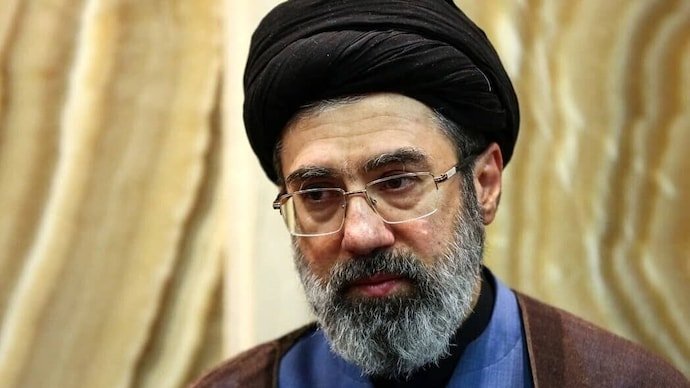
The question surrounding Mojtaba Khamenei’s current whereabouts and authority has become a major topic of global discussion. Multiple international reports suggest that while he is alive, he may not be fully in control of Iran’s leadership. This uncertainty comes at a time of heightened geopolitical tension in the Middle East, making the situation even more critical.
According to a report by Axios, intelligence briefings presented to former US President Donald Trump have specifically addressed Mojtaba Khamenei’s continued absence from public view. Sources cited in the report indicate that the US national security team is still actively assessing the leadership dynamics within Tehran, signaling that even global powers remain uncertain about who is truly in charge.
Mojtaba Khamenei reportedly assumed the position of Iran’s Supreme Leader on March 9, following the death of his father, Ali Khamenei, who was killed in a joint US-Israeli strike on February 28. However, despite taking on one of the most powerful roles in the country, Mojtaba has yet to make a direct public appearance.
Instead of appearing publicly, his initial communications have been delivered indirectly. His first official statement, released on March 12, was read by a presenter rather than delivered by him personally. Similarly, his Nowruz (Persian New Year) message on March 20 was also issued in written form, further deepening speculation about his condition and whereabouts.
Recent reports from US and Israeli media outlets suggest that Mojtaba Khamenei may not be exercising full authority over Iran’s political and military systems. According to sources cited by The Jerusalem Post, the Islamic Revolutionary Guard Corps (IRGC) could currently be playing a dominant role in managing the country’s affairs, potentially limiting Mojtaba’s control over the state apparatus.
Intelligence sources quoted in Israeli publications also claim that Mojtaba Khamenei was injured during the February 28 airstrike that killed his father. While he is believed to be alive and capable of performing certain duties, his physical condition may be restricting his ability to fully govern or even appear publicly.
A US official, speaking to Axios, stated, “We don’t believe the Iranians would have gone to such lengths to designate a deceased man as their supreme commander. However, we don’t have any evidence that he is taking over.” This statement highlights the ambiguity surrounding his leadership status.
Experts on Iran have also weighed in on the situation. Raz Zimmt, a senior analyst at the Institute for National Security Studies in Tel Aviv, suggested that Mojtaba’s absence is likely due to security concerns as well as his physical condition. He noted that even releasing a recorded video could reveal the severity of his injuries, which may explain why no visual confirmation has been provided so far.
Despite his absence, Mojtaba Khamenei’s messaging has maintained a strong and aggressive tone. In his March 12 statement, he reportedly warned the United States and threatened action related to the Strait of Hormuz. He also vowed retaliation for what he described as the blood of Iran’s martyrs, signaling a continuation of hardline policies.
In his Nowruz message on March 20, Mojtaba praised the resilience and determination of the Iranian people. On the same day, Iranian state media released an undated video showing him teaching religious studies at a seminary, which many observers interpreted as an attempt to reassure the public about his condition.
His disappearance from the public eye coincides with a series of targeted Israeli strikes against senior Iranian officials. On March 17, Ali Larijani, a key figure in Iran’s security strategy and a prominent spokesperson during the conflict, was killed. Just a day earlier, on March 16, another senior commander, Gholamreza Soleimani, was also killed in Airstrikes.
Iran’s Foreign Minister Abbas Araghchi has downplayed the impact of these losses. In an interview with Al Jazeera, he emphasized that Iran’s political system remains stable despite the elimination of key figures. He stated, “Iran’s political and economic structure is unaffected by the presence or absence of a single individual.”
Drawing a parallel to the death of Ali Khamenei, Araghchi further added, “Even the Supreme Leader was martyred, yet the system continued its work,” reinforcing the message of institutional continuity.
According to official Iranian sources, the ongoing conflict has resulted in the deaths of at least 1,270 people since it began on February 28. The situation escalated further when Iran expanded the conflict by launching attacks on US military bases across the Middle East.
One of the most significant developments has been Iran’s threat to disrupt Global energy supplies by targeting the Strait of Hormuz. This critical maritime chokepoint handles nearly one-fifth of the world’s oil and liquefied natural gas shipments.
Iran has reportedly taken steps to block the strait and warned of potential attacks on passing vessels. As a result, many shipping companies have avoided the route, raising concerns about a potential global Energy Crisis.
| Key Event | Date | Details |
|---|---|---|
| Airstrike on Iran | February 28 | Ali Khamenei killed in US-Israeli strike; Mojtaba reportedly injured |
| Mojtaba Becomes Supreme Leader | March 9 | Assumed leadership but has not appeared publicly |
| First Public Statement | March 12 | Message delivered via presenter, not directly by Mojtaba |
| Nowruz Message | March 20 | Written statement praising Iranian resilience |
| Senior Leaders Killed | March 16–17 | Gholamreza Soleimani and Ali Larijani killed in strikes |
| Conflict Casualties | Since Feb 28 | Over 1,270 deaths reported by Iranian media |
| Strait of Hormuz Tensions | Ongoing | Shipping disrupted, risk of global energy crisis increases |
In conclusion, while Mojtaba Khamenei is believed to be alive, significant uncertainty remains about his actual control over Iran. His continued absence from public appearances, combined with reports of injury and shifting power dynamics, has raised serious questions about the country’s leadership during a critical period. As tensions continue to rise in the region, the situation remains fluid, with global implications for security and energy markets.
For breaking news and live news updates, like us on Facebook or follow us on Twitter and Instagram. Read more on Latest World on thefoxdaily.com.

COMMENTS 0