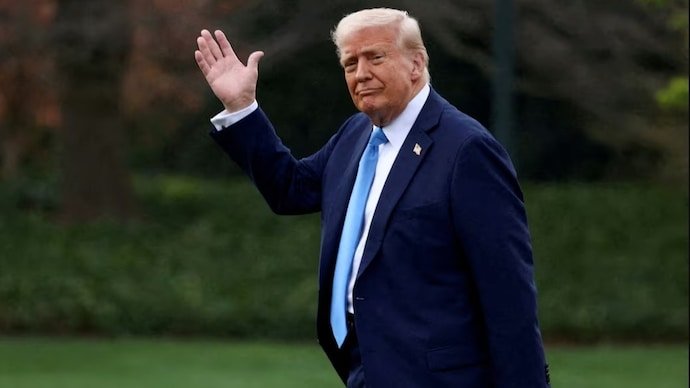
In a major ruling that reshapes US trade policy, the US Supreme Court voted 6–3 to overturn some of former President Donald Trump’s most expansive international tariffs. The court held that Trump exceeded his authority by using the International Emergency Economic Powers Act (IEEPA) of 1977 – a law traditionally applied to Sanctions – to impose broad import taxes on countries around the world.
While the decision eliminates tariffs enacted under emergency powers, several other duties imposed under separate trade statutes remain unaffected. Below is a comprehensive breakdown of the tariffs that were struck down and those that continue to apply.
Tariffs Overturned by the Supreme Court
1. “Liberation Day” Reciprocal Tariffs
In April, under what the administration called “Liberation Day,” Trump invoked IEEPA to introduce sweeping reciprocal tariffs. On April 2, he imposed:
- A 10% baseline tariff on nearly all imports into the United States.
- Higher tariffs – some reaching up to 50% – on dozens of countries.
The administration justified the move by declaring a national emergency tied to the US trade deficit, arguing that America’s long-standing imbalance between imports and exports posed economic risks.
The 10% baseline duty took effect in early April. Higher country-specific rates were adjusted and delayed over time, with many implemented by August 7 after trade negotiations and framework agreements.
Major trading partners affected included the European Union, japan, and South Korea. Key sectors impacted were automobiles, electronics, pharmaceuticals, and auto parts. Many of these goods were subject to 15% tariffs prior to the Supreme Court’s ruling, with threats of further increases to 25% in certain cases.
Status: All “Liberation Day” tariffs imposed under IEEPA have now been declared invalid and nullified.
2. Tariffs on China, Mexico, and Canada Linked to Trafficking Concerns
Trump also used IEEPA to impose new tariffs on the United States’ three largest trading partners – china, Mexico, and Canada – citing trafficking-related concerns.
- Mexican imports were subject to 25% tariffs.
- Canadian goods not compliant with the 2020 US-Mexico-Canada Agreement (USMCA) faced duties of up to 35%.
- China was hit with a fentanyl-related tariff that fluctuated, eventually settling at 10%.
China exports toys, electronics, and apparel to the US. Mexico supplies automobiles, agricultural produce, and beverages, while Canada provides crude oil, auto components, and industrial materials.
Status: These trafficking-related tariffs, enacted under IEEPA, have been overturned by the Supreme Court.
3. Brazil Tariffs Linked to Bolsonaro Dispute
Trump also imposed additional tariffs on Brazil under IEEPA in response to the criminal prosecution of former Brazilian President Jair Bolsonaro.
Brazil had already been subject to the 10% baseline “Liberation Day” tariff. The administration added an extra 40%, raising total duties to 50% on many Brazilian goods – despite the US running a trade surplus with Brazil.
Status: The Brazil-specific emergency tariffs have been invalidated.
4. Tariffs on India Related to Russian Oil Purchases
India was similarly affected by IEEPA-based measures. After Liberation Day, Trump imposed:
- A 25% tariff on Indian imports.
- An additional 25% penalty linked to India’s purchases of Russian energy.
This raised total tariffs on certain Indian goods to 50%. However, a recent trade framework agreement between the US and India had already signaled adjustments, including a planned reduction of tariffs to 18% in exchange for commitments related to energy imports and agricultural market access.
India’s top exports to the United States include pharmaceuticals, textiles, and precious stones.
Status: All India-related tariffs imposed under IEEPA have now been reversed.
Tariffs That Remain in Effect
Despite the ruling, several major US tariffs remain active because they were imposed under different legal authorities.
Section 232 National Security Tariffs
Trump relied heavily on Section 232 of the Trade Expansion Act of 1962 to impose tariffs justified on national security grounds. These include duties on:
- Steel and aluminum
- Automobiles and auto parts
- Copper and lumber
- Expanded categories such as kitchen cabinets, upholstered furniture, and bathroom vanities
These tariffs were not challenged in the Supreme Court case and therefore remain in effect.
Section 301 Tariffs on China
During his first term, Trump also imposed tariffs on Chinese imports under Section 301 of the Trade Act, targeting what the administration described as unfair trade practices.
Although some goods – including coffee, tropical fruits, and certain meats – have seen exemptions or rollbacks due to inflation concerns, the broader Section 301 tariff framework remains intact.
Proposed Section 122 Global Tariff
Following the Supreme Court ruling, Trump announced plans to impose a new 10% global tariff under Section 122 of the Trade Act of 1974. This provision allows temporary tariffs for up to 150 days unless congress extends them.
This indicates that while one legal pathway has been closed, the broader trade policy debate is far from over.
What the Ruling Means for US Trade Policy
The Supreme Court’s decision significantly limits the use of emergency powers to impose sweeping global tariffs. It reinforces Congress’s constitutional authority over taxation and trade while narrowing executive flexibility under IEEPA.
However, the ruling does not dismantle the broader architecture of Trump-era trade policy. National security tariffs and unfair trade practice measures remain operational, and alternative legal avenues are still available to future administrations.
In essence, the court curtailed one of the most aggressive tools in Trump’s tariff strategy – but the larger trade battle continues under different statutory frameworks.
For breaking news and live news updates, like us on Facebook or follow us on Twitter and Instagram. Read more on Latest World on thefoxdaily.com.




COMMENTS 0