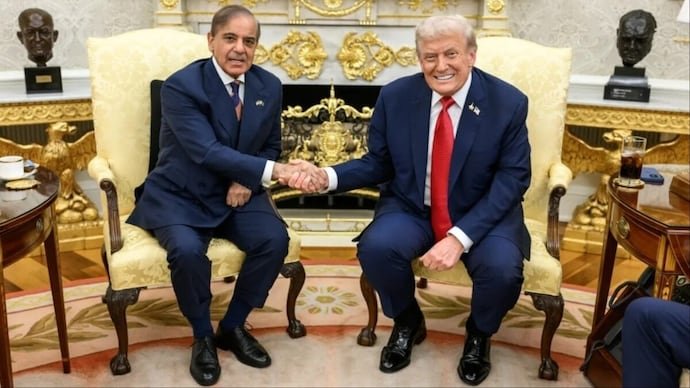
- Behind the Scenes: White House Reviewed Sharif’s Message
- Sharif’s Appeal: Diplomacy Over Escalation
- Trump’s Ceasefire Announcement: Timing Raises Questions
- Draft Controversy: Social Media Sparks Debate
- Pakistan’s Diplomatic Role: Independent or Aligned?
- Strategic Importance of the Strait of Hormuz
- Geopolitical Analysis: Coordinated Messaging in Crisis Management
- Conclusion: Diplomacy in the Spotlight
Pakistan Prime Minister Shehbaz Sharif’s public appeal for a diplomatic pause in the escalating Iran conflict was not an isolated move, but part of a coordinated effort involving the United States, according to a report. The development came just before US President Donald Trump announced a two-week ceasefire window, highlighting behind-the-scenes diplomatic engagement. Sharif’s message, posted on X, urged Washington to extend its deadline on Iran and called for reopening the Strait of Hormuz as a goodwill gesture—signaling a broader push to ease tensions through dialogue.
Behind the Scenes: White House Reviewed Sharif’s Message
The report suggests that Sharif’s statement was reviewed and cleared by the White House before it was made public. This indicates that the appeal was not spontaneous, but part of a carefully crafted diplomatic communication strategy.
According to sources familiar with the matter, the message was aligned with ongoing US efforts to manage the Iran crisis and create space for negotiations. The coordination reflects a deeper level of engagement between Islamabad and Washington than what was visible publicly.
The White House had reportedly reviewed and approved the statement before it was posted, suggesting active diplomatic synchronization.
This revelation underscores how modern diplomacy often unfolds in layers—what appears as a national statement may, in reality, be part of a broader international strategy.
Sharif’s Appeal: Diplomacy Over Escalation
In his message, Shehbaz Sharif called on Donald Trump to extend the deadline imposed on Iran, advocating for a two-week pause in hostilities. The goal was to allow diplomatic channels to operate without the pressure of immediate escalation.
Sharif also urged Iran to reopen the strategically crucial Strait of Hormuz during this period, framing it as a goodwill gesture that could help build trust and reduce tensions.
Key Elements of Sharif’s Proposal
- Extension of US deadline on Iran
- Two-week pause in conflict escalation
- Reopening of the Strait of Hormuz
- Focus on diplomatic resolution over military action
The proposal emphasized that diplomatic efforts were already “progressing steadily, strongly and powerfully,” suggesting optimism about a negotiated outcome.
Trump’s Ceasefire Announcement: Timing Raises Questions
Shortly after Sharif’s appeal, Donald Trump announced a two-week ceasefire window related to the Iran conflict. The timing has drawn attention, with analysts noting the alignment between the two developments.
While the White House denied that Trump personally drafted Sharif’s message, it acknowledged broader diplomatic coordination. This distinction is important—it suggests collaboration without direct authorship.
In diplomatic terms, this is not unusual. Governments often coordinate messaging to ensure consistency and maximize impact, especially during sensitive negotiations.
Draft Controversy: Social Media Sparks Debate
The situation gained further attention after screenshots of an alleged earlier version of Sharif’s post circulated online. The draft was reportedly labeled “Draft – Pakistan’s PM Message on X,” raising questions about whether the message had been pre-prepared.
The draft version included similar themes—calling for a pause in hostilities and continued diplomatic engagement in the Middle East. This added fuel to speculation about the level of external influence in shaping the message.
What the Draft Suggested
- The message was prepared in advance
- Diplomatic language was carefully structured
- Focus remained on de-escalation and negotiation
However, the existence of drafts is not uncommon in high-level communications. Leaders and their teams often refine messages multiple times before publication, especially when dealing with international crises.
Pakistan’s Diplomatic Role: Independent or Aligned?
The episode has sparked broader debate about Pakistan’s role in Global Diplomacy. Critics have questioned whether Islamabad’s messaging is independently shaped or influenced by its strategic partners.
Supporters, however, argue that coordination with major powers like the United States is a practical necessity in complex geopolitical situations. In this view, collaboration does not diminish sovereignty—it enhances effectiveness.
In reality, both perspectives hold some truth. Modern diplomacy is rarely conducted in isolation, and alignment with allies is often essential for achieving meaningful outcomes.
Strategic Importance of the Strait of Hormuz
One of the key elements of Sharif’s proposal was the reopening of the Strait of Hormuz. This narrow waterway is one of the most critical oilroutes in the world, handling a significant portion of global oil shipments.
Why the Strait of Hormuz Matters
| Factor | Significance |
|---|---|
| Global Oil Supply | Major transit route for oil exports |
| Economic Impact | Disruptions can affect global markets |
| Geopolitical Tension | Frequent flashpoint in Iran-related conflicts |
| Diplomatic Leverage | Reopening signals willingness to de-escalate |
By calling for its reopening, Sharif aimed to introduce a tangible confidence-building measure that could support broader diplomatic efforts.
Geopolitical Analysis: Coordinated Messaging in Crisis Management
The coordination between Pakistan and the United States reflects a broader trend in International Relations—synchronized messaging during crises. This approach helps create a unified narrative and reduces the risk of miscommunication.
Benefits of Coordinated Diplomacy
- Clarity: Ensures consistent messaging across nations
- Credibility: Strengthens the impact of public statements
- Efficiency: Speeds up decision-making processes
- Stability: Reduces uncertainty in volatile situations
However, it also raises questions about transparency and autonomy—issues that are now being debated in the context of Sharif’s statement.
Conclusion: Diplomacy in the Spotlight
The revelation that the White House reviewed Shehbaz Sharif’s message before its release sheds new light on the dynamics of modern diplomacy. What appeared to be a national appeal now seems part of a coordinated international effort to manage a high-stakes conflict.
While the move highlights effective collaboration between Pakistan and the United States, it has also sparked questions about independence and influence in diplomatic communication.
Looking ahead, the success of such coordinated efforts will depend on their ability to deliver tangible results—namely, de-escalation and lasting peace. In a region where tensions can rise as quickly as a trending hashtag, carefully crafted messages may be just as important as the actions that follow.
For breaking news and live news updates, like us on Facebook or follow us on Twitter and Instagram. Read more on Latest World on thefoxdaily.com.





COMMENTS 0