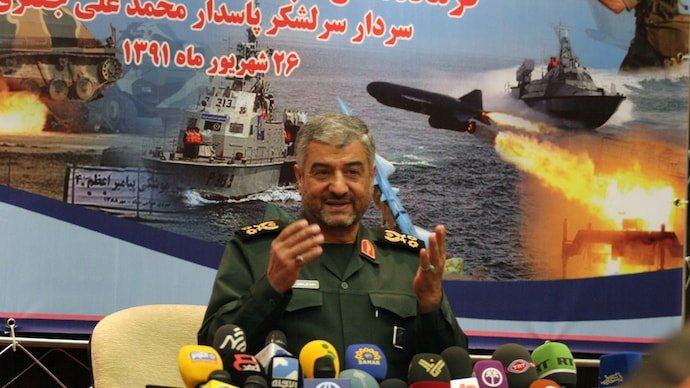
When the United States invaded Iraq in 2003, Saddam Hussein’s military collapsed in just 26 days of active combat operations. Washington may have believed that a similar strategy could dismantle Iran’s military system in 2026. However, Iran had already studied the Iraq War in depth and prepared a different approach to avoid the same fate.
The architect behind this strategic preparation was Major General Mohammad Ali Jafari, a former commander of the Islamic Revolutionary Guard Corps (IRGC). By closely analyzing the weaknesses that led to Iraq’s rapid defeat, Jafari designed a military doctrine intended to ensure Iran’s military could continue fighting even if its central leadership was destroyed.
On February 28, 2026, the United States and Israel launched a large-scale decapitation campaign known as Operation Epic Fury. The coordinated assault involved fighter jets, drones, and precision-guided missiles targeting Iran’s top military and political leadership.
The strikes reportedly killed several high-ranking figures including Supreme Leader Ayatollah Ali Khamenei, IRGC Commander-in-Chief Major General Mohammad Pakpour, Defense Minister Brigadier General Aziz Nasirzadeh, and Armed Forces Chief of Staff Lieutenant General Seyyed Abdolrahim Mousavi.
According to a report by the Institute for the Study of War, the objective of the strikes was to destroy Iran’s command-and-control infrastructure and prevent retaliation. However, the expected collapse of Iran’s military structure never occurred. Instead, nearly two weeks after the attacks, Iran continued launching missile and drone strikes across the Middle East.
This unexpected resilience is widely attributed to the Decentralized Mosaic Defense Doctrine developed by Mohammad Ali Jafari. The strategy distributes operational authority among semi-independent military units that can act according to pre-planned directives without waiting for orders from central leadership.
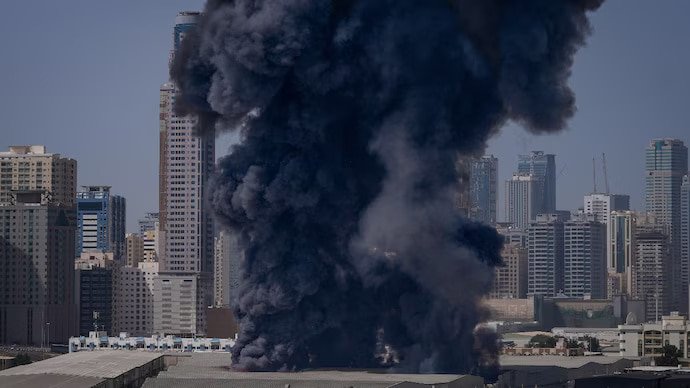
Iranian retaliation began within hours of the February 28 strikes. US military bases in Bahrain, Qatar, Kuwait, Jordan, and the United Arab Emirates were targeted by waves of ballistic missiles and drones. At the same time, Israel and several Gulf infrastructure facilities were also attacked.
Although Iranian President Masoud Pezeshkian later apologized for strikes hitting neutral states such as Oman and Bahrain and promised to respect Gulf sovereignty, missile barrages continued as the conflict progressed. By March 13, the war had entered its fourteenth day with no signs of Iran’s military operations slowing down.
Iranian Foreign Minister Seyed Abbas Araghchi highlighted the strategy behind the country’s resilience in a post on X on March 1. He stated that Iran had spent two decades studying US military operations in Iraq and Afghanistan and had integrated those lessons into its defense planning.
According to Araghchi, Iran’s military structure now allows units to operate independently and follow pre-established strategic directives. This structure ensures that military capabilities remain intact even if central command nodes are destroyed.
Major General Mohammad Ali Jafari spent years refining this decentralized doctrine. His objective was not necessarily to guarantee victory in a conventional war, but rather to ensure that Iran could not be defeated quickly. Under the Mosaic Defense framework, even the loss of top leadership would not paralyze the country’s military response.
Who is Major General Mohammad Ali Jafari?
According to a 2013 analysis by the RAND Corporation, Mohammad Ali Jafari is a senior Iranian military officer who began his career in the Islamic Revolutionary Guard Corps shortly after the 1979 Islamic Revolution that overthrew the Pahlavi monarchy.
Early in his career, Jafari served in an intelligence unit operating in Iran’s Kurdistan province. During the Iran–Iraq War, which lasted from 1980 to 1988, he steadily rose through the ranks and gained significant battlefield experience.
In 1992, Jafari was appointed commander of Sarallah Headquarters, an elite IRGC unit responsible for defending the Iranian capital Tehran. He also held leadership positions within the IRGC ground forces.
In 2005, he became director of the IRGC’s Center for Strategic Studies. During this period, Jafari began developing the Mosaic Defense Doctrine by analyzing lessons from both the Iran–Iraq War and the US-led invasion of Iraq in 2003.
Two years later, in 2007, he was appointed Commander-in-Chief of the IRGC. During his tenure, he fully implemented the Mosaic Doctrine, fundamentally restructuring Iran’s military command structure to ensure greater resilience against external attacks.
Lessons Behind the Creation of the Mosaic Doctrine
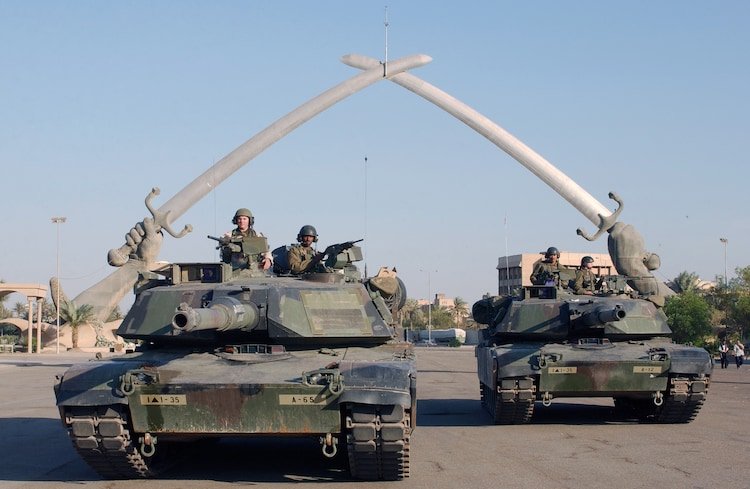
According to a 2010 report by the US Institute of Peace, the Mosaic Defense Doctrine was shaped by two major historical experiences: the Iran–Iraq War and the 2003 US invasion of Iraq.
During the Iran–Iraq War, Iraq launched large-scale ground offensives, fired missiles at Iranian cities, and used chemical weapons against Iranian troops. Iran responded with mass mobilization tactics, including large human-wave attacks using Basij paramilitary volunteers.
Although Iran suffered heavy casualties, the strategy allowed Tehran to absorb losses and gradually force Iraqi forces into a prolonged stalemate. This experience demonstrated that sustained attrition could prevent defeat against a stronger adversary.
The second key lesson came from the US-led invasion of Iraq in 2003. Iraqi military forces were highly centralized under Saddam Hussein’s authority. Senior officers could not conduct major operations without direct approval from the leadership.
As a result, Iraqi units failed to coordinate effectively during the invasion. Coalition forces rapidly defeated Iraqi troops and captured Baghdad within weeks.
Iranian strategists concluded that excessive centralization had crippled Iraq’s military response. Jafari therefore designed a decentralized command structure that would allow Iranian forces to operate independently even if communications with central leadership were disrupted.
What is the Mosaic Defense Doctrine?
The Mosaic Defense Doctrine was first formally developed around 2005 when Iranian strategists recognized two major threats to the country: a potential US military invasion and internal destabilization efforts aimed at triggering a political revolution.
The doctrine focuses on a layered and decentralized defense structure designed to exploit Iran’s geographical advantages, including mountainous terrain, large territory, and dispersed population centers.
One of the key elements of the strategy was restructuring the IRGC into 31 semi-autonomous provincial commands, with each province operating its own command infrastructure.
| Key Component | Description |
|---|---|
| Provincial Commands | Iran divided IRGC operations into 31 autonomous provincial military commands. |
| Independent Command Centers | Each region has its own headquarters and decision-making authority. |
| Local Weapons Stockpiles | Missiles, drones, and ammunition are stored within each province. |
| Basij Integration | Paramilitary Basij forces are embedded within each provincial defense structure. |
| Decentralized Operations | Local commanders can act independently using pre-approved operational plans. |
Each command possesses its own missile systems, drone units, intelligence networks, naval assets, and ammunition reserves. These units are also integrated with Basij militia formations responsible for internal security and mobilization.
The doctrine allows local commanders significant operational freedom while still pursuing overarching national objectives. This approach resembles the German military concept of Auftragstaktik, which allows subordinate commanders to determine how to accomplish a mission as long as the overall goal is achieved.
The 2026 Iran–US–Israel Conflict: Mosaic Doctrine in Action
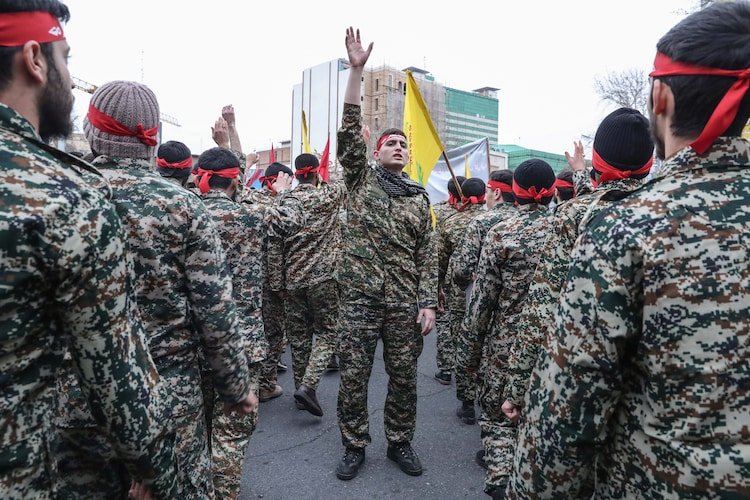
The ongoing 2026 conflict, which Tehran refers to as the “Ramadan War,” has demonstrated how the Mosaic Defense Doctrine functions in real combat scenarios.
Despite losing key leadership figures in the opening hours of the war, Iran’s 31 autonomous military commands launched coordinated retaliatory attacks across the region. Military targets as well as infrastructure such as airports, oil facilities, desalination plants, and logistics hubs were struck in countries including the United Arab Emirates, Qatar, Saudi Arabia, Bahrain, and Oman.
Defense analyst Farzin Nadimi of the Washington Institute explained that under the Mosaic Doctrine, every province effectively acts as a self-sufficient military unit. Even if commanders lose contact with Tehran, they retain the authority to continue operations.
This structure allowed Iran to maintain sustained missile and drone campaigns across the Middle East despite the decapitation of its top leadership.
Analysts note that the Mosaic Doctrine was never designed to guarantee a decisive victory. Instead, its objective is to make Iran extremely difficult to defeat quickly by forcing adversaries into a prolonged and costly conflict.
By combining ideological mobilization, decentralized command structures, and large missile and drone arsenals, the doctrine ensures that Iran can continue resisting even under intense military pressure.
Ultimately, Mohammad Ali Jafari’s Mosaic Defense Doctrine transformed Iran’s military strategy. Built from lessons learned in the Iran–Iraq War and the collapse of Saddam Hussein’s forces in 2003, the doctrine ensures that Iran’s military remains operational even after losing its central leadership.
Rather than seeking immediate battlefield victory, the doctrine aims to guarantee survival. By making rapid defeat nearly impossible, Jafari’s strategy forces opponents into a long and costly confrontation rather than a quick military triumph.
For breaking news and live news updates, like us on Facebook or follow us on Twitter and Instagram. Read more on Latest World on thefoxdaily.com.






COMMENTS 0