- Calls for India to Act as a Mediator
- India’s Neutral Diplomatic Position
- Strong Relations with Both Israel and Iran
- India’s Expanding Influence in the Middle East
- India’s “Vishwa Mitra” Diplomacy
- Previous Diplomatic Efforts by Modi
- Economic Stakes for the World
- India’s Balanced Approach to the Current Conflict
- A Potential Mediator — But No Official Role Yet
The conflict involving the United States, Israel, and Iran has intensified over the past two weeks, with no clear path toward negotiations. Military actions and retaliatory strikes have increased regional instability, while global leaders search for a neutral mediator who could help de-escalate the crisis.
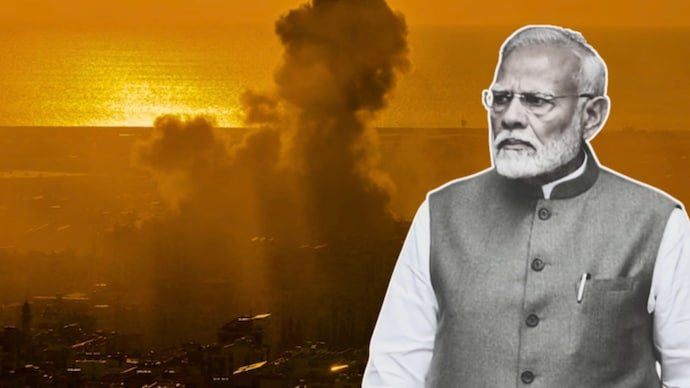
In recent days, several diplomatic voices have suggested that Indian Prime Minister Narendra Modi may be one of the few leaders capable of facilitating dialogue between the rival nations.
Two notable figures — retired US military officer Colonel Douglas MacGregor and former UAE Ambassador to India Hussain Hassan Mirza — have publicly stated that India’s leader could potentially help initiate peace talks.
Calls for India to Act as a Mediator
Speaking on a podcast hosted by American commentator Tucker Carlson, Colonel Douglas MacGregor argued that an intermediary is urgently needed to prevent the conflict from escalating further.
“We need an intermediary, and preferably the Prime Minister of India, Narendra Modi, to stop the US-Israel-Iran war,” MacGregor said during the discussion.
Before MacGregor’s remarks, Hussain Hassan Mirza — the first UAE ambassador to India — also suggested that India’s diplomatic influence could help calm tensions in the region.
In an interview with India Today TV, Mirza said that Modi’s strong relationships with both Israel and Iran could make him an effective mediator.
“A single call from PM Modi to Israeli Prime Minister Benjamin Netanyahu and Iranian leaders can stop the war,” Mirza said.
India’s Neutral Diplomatic Position
Analysts believe India’s long-standing policy of strategic neutrality gives it a unique advantage in mediating international conflicts.
Unlike many major global powers, India has traditionally avoided aligning fully with any single geopolitical bloc during conflicts.
Since gaining independence in 1947, the country has often followed a non-aligned diplomatic approach — maintaining relations with competing powers while promoting dialogue and peaceful resolution.
This approach has allowed India to maintain positive relationships with nations that often stand on opposite sides of global conflicts.
| Country | India’s Relationship |
|---|---|
| Israel | Strong defense and technology partnership |
| Iran | Energy trade and long civilizational ties |
| United States | Strategic and economic partnership |
| Gulf Nations | Major trade, energy, and diaspora connections |
Strong Relations with Both Israel and Iran
One of the primary reasons analysts believe Modi could serve as a mediator is India’s balanced relationships with both Israel and Iran.
India and Israel share strong cooperation in defense technology, agriculture, cybersecurity, and intelligence sharing.
At the same time, India maintains longstanding cultural and economic ties with Iran, including energy imports and infrastructure cooperation.
Because India maintains dialogue with both countries, it is seen as a relatively neutral player capable of communicating with each side without being perceived as hostile.
India’s Expanding Influence in the Middle East
India’s diplomatic presence in the Middle East has grown significantly over the past two decades.
The country has developed strong partnerships with Gulf states including Saudi Arabia, the United Arab Emirates, Qatar, and Kuwait.
These relationships are supported by extensive trade ties and the presence of millions of Indian workers across the Gulf region.
The UAE alone is home to more than 3.5 million Indians, making stability in the region a major priority for New Delhi.
India’s wide network of partnerships across the Middle East allows it to communicate with multiple stakeholders during regional crises.
India’s “Vishwa Mitra” Diplomacy
Indian foreign policy has increasingly promoted the idea of India as a “Vishwa Mitra,” or “friend of the world.”
This philosophy emphasizes maintaining cooperative relations with diverse nations while advocating peaceful solutions to international disputes.
Because of this approach, India often positions itself as a bridge between competing global powers.
Supporters of this strategy believe that India’s neutral image could allow it to act as a trusted intermediary in conflicts where Western powers or regional actors may be viewed with suspicion.
Previous Diplomatic Efforts by Modi
Prime Minister Modi has previously called for dialogue and peaceful resolution during major international conflicts.
During the Russia–Ukraine war, Modi spoke directly with both Russian President Vladimir putin and Ukrainian President Volodymyr Zelenskyy.
At a 2022 meeting with Putin, Modi famously stated, “This is not an era of war,” urging diplomacy and negotiation.
Both Russia and Ukraine acknowledged India’s calls for dialogue, with Zelenskyy thanking Modi for India’s support for peace and communication.
Economic Stakes for the World
The ongoing conflict in the Middle East is not only a regional crisis but also a global economic concern.
Energy markets are highly sensitive to instability in the region, particularly because key oil shipping routes pass through nearby waters.
At one point during the current crisis, crude oil prices briefly approached $100 per barrel, while Iranian officials warned prices could potentially rise as high as $200 if supply disruptions worsen.
Such increases could have major consequences for the global economy, including higher inflation and disruptions to international trade.
India’s Balanced Approach to the Current Conflict
India has largely maintained a careful diplomatic stance regarding the current crisis.
While expressing condolences following the death of Iranian Supreme Leader Ayatollah Ali Khamenei, New Delhi avoided directly condemning military actions taken by the United States or Israel.
Indian Foreign Secretary Vikram Misri signed the condolence register at the Iranian Embassy in New Delhi, expressing sympathy on behalf of the Indian government and people.
Meanwhile, Indian External Affairs Minister S. Jaishankar also held a phone conversation with Iranian Foreign Minister Seyed Abbas Araghchi, reflecting ongoing diplomatic engagement.
A Potential Mediator — But No Official Role Yet
Despite suggestions from analysts and diplomats, there is currently no indication that India has formally offered to mediate the conflict between the United States, Israel, and Iran.
However, India’s diplomatic relationships, neutral positioning, and growing global influence have led some observers to view the country — and its prime minister — as a possible bridge between rival powers during one of the most volatile crises in the Middle East in recent years.
For breaking news and live news updates, like us on Facebook or follow us on Twitter and Instagram. Read more on Latest World on thefoxdaily.com.




COMMENTS 0