- A Shift from Tribal Uprising to Ideological Insurgency
- Personal Loss, Collective Grief, and the Turn to Violence
- Profiles That Shocked Pakistan
- This Is Not an Isolated Trend
- Why Are Baloch Women Joining the BLA?
- Strategic Importance of Female Fighters
- Exploitation or Empowerment?
- A Conflict with No Easy End
The Baloch insurgency escalated sharply over the weekend as separatist groups launched coordinated strikes on Pakistani security forces, police units, and key civilian infrastructure at more than a dozen locations across Balochistan. At least 10 security personnel were killed, according to official figures, underscoring the growing intensity of the conflict in Pakistan’s largest but most underdeveloped province.
Visibly shaken by the scale of the attacks, Balochistan Chief Minister Sarfaraz Bugti was seen struggling to hold back tears during a press interaction. Yet what truly dominated headlines was not only the scale of the violence, but the revelation that several of the attackers were women—an unprecedented development in Pakistan’s long-running internal conflict.
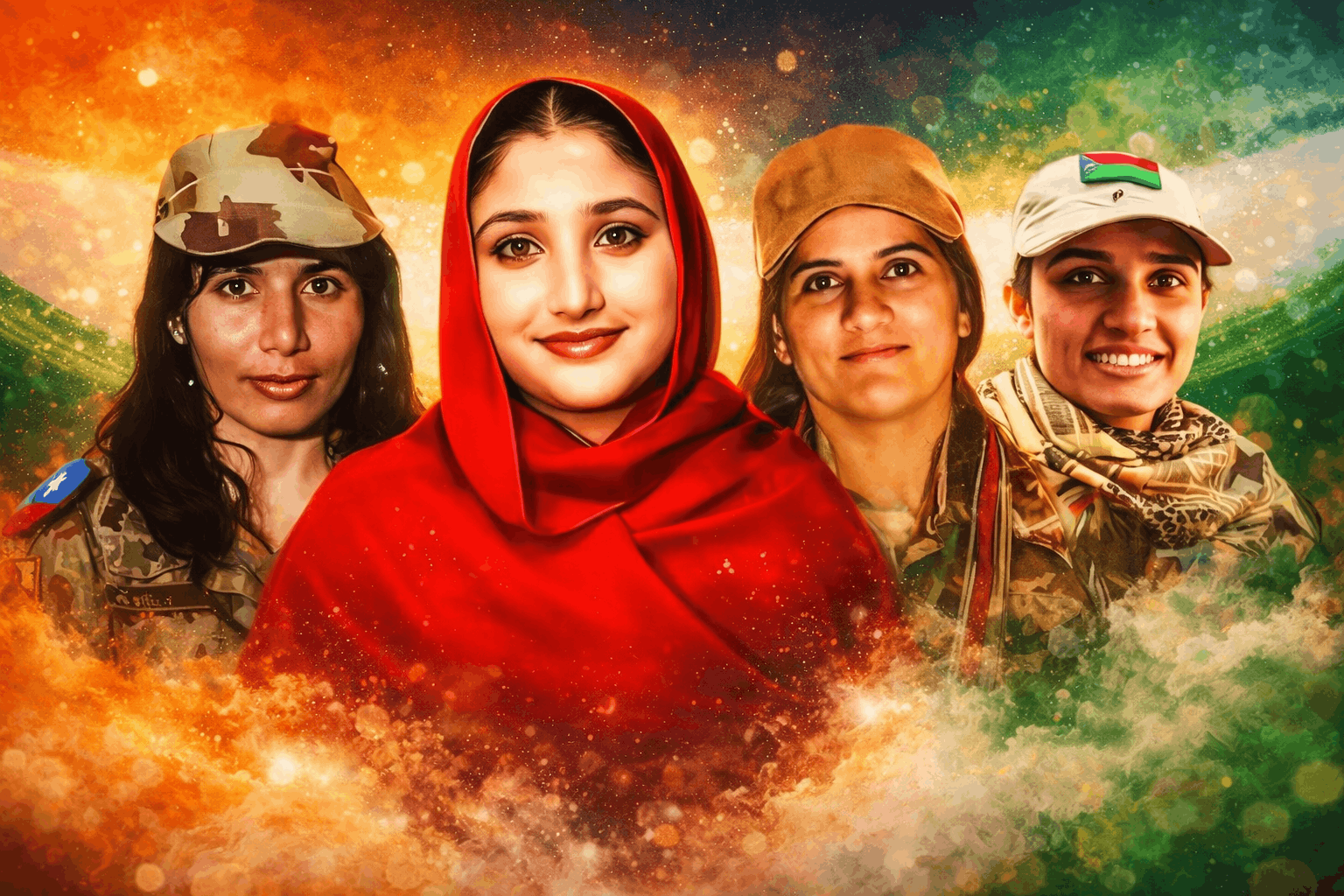
Images released by the Baloch Liberation Army following the attacks showed two female fighters, immediately igniting debate and raising deeper questions. Militancy, armed resistance, and suicide attacks have traditionally been perceived as male domains, particularly in conservative and tribal societies. How, then, did Baloch women—once largely confined to silent suffering—emerge as active participants in armed resistance?
A Shift from Tribal Uprising to Ideological Insurgency
For decades, the Baloch resistance was largely led by tribal chieftains and male fighters, rooted in grievances over autonomy, political marginalization, and resource exploitation. Over time, however, the movement has evolved. Analysts argue that the current phase of the insurgency is driven less by tribal hierarchy and more by educated, urban, middle-class actors—both men and women.
The Pakistani state’s heavy-handed response to dissent in Balochistan has played a central role in this transformation. Security operations, enforced disappearances, extrajudicial killings, and prolonged detentions have hollowed out peaceful political space, leaving anger, despair, and radicalization in their wake.
Pakistani political scholar Ayesha Siddiqa has emphasized the symbolic and strategic implications of women joining armed insurgencies. “It’s important to examine what it signifies when women become active participants in violence,” she has noted, arguing that such participation reflects deep social and political breakdown rather than empowerment alone.
Personal Loss, Collective Grief, and the Turn to Violence
At the heart of this phenomenon lies personal tragedy. Thousands of Baloch families claim their male relatives—sons, husbands, brothers—were forcibly disappeared by Pakistani security agencies. According to the advocacy group Voice for Baloch Missing Persons, more than 5,000 people have vanished since 2000, leaving families trapped in uncertainty and grief.
Women initially stepped forward to lead peaceful protests, long marches, and sit-ins demanding accountability. When these non-violent efforts failed to yield justice and protest leaders were detained or silenced, some women crossed a psychological threshold—from protest to armed resistance.
This emotional rupture, experts argue, explains why grief has increasingly translated into militancy. “When loss is met only with silence and impunity, desperation takes over,” Siddiqa told Al Jazeera. “Women who have lost their loved ones with no path to justice may ultimately embrace violence.”
Profiles That Shocked Pakistan
Following the recent attacks, the BLA released photographs of two alleged female assailants. Pakistani Defence Minister Khawaja Asif later confirmed that women were involved in at least two of the operations, identifying one as 24-year-old Asifa Mengal.
According to BLA statements, Mengal joined the group’s elite Majeed Brigade on her 21st birthday and volunteered as a fidayee in January 2024. She was reportedly involved in the attack on an ISI-linked facility in Nushki, highlighting the group’s strategic intent to strike high-value security targets.
Videos circulated on social media showed a female BLA fighter navigating cautiously near a security installation, firing bursts of ammunition, and openly mocking the Pakistani state. Her relaxed demeanor alongside male fighters challenged long-standing stereotypes about women’s roles in conflict zones.
This Is Not an Isolated Trend
The involvement of Baloch women in militant activity is not new. The first major case emerged in April 2022, when Shari Baloch, a highly educated mother of two, carried out a suicide bombing at Karachi University’s Confucius Institute, killing three Chinese nationals and a Pakistani driver.
Subsequent attacks reinforced the trend. Banuk Mahikan Baloch, a science graduate, joined the Majeed Brigade in 2021 and later attacked a Frontier Corps patrol in Kalat. Such cases illustrate the growing participation of educated women in violent resistance.
Why Are Baloch Women Joining the BLA?
As the insurgency evolved, leadership shifted from tribal elites to ideologically driven actors. Women, many of whom are educated and professionally trained, have taken on both violent and non-violent roles within the movement.
The Baloch armed struggle differs significantly from religious extremist groups. It is largely secular and ethno-nationalist, allowing women to serve as frontline fighters and suicide attackers—roles typically denied in Islamist movements.
In a 2019 interview, Yasmeen Baloch, wife of slain BLA leader Aslam Baloch, publicly urged women to join the struggle, arguing that liberation required breaking patriarchal norms within Baloch society itself.
Strategic Importance of Female Fighters
Strategic affairs analyst Brahma Chellaney has pointed out that the increasing use of women in suicide attacks reflects growing desperation. “Female attackers are harder to profile and generate disproportionate psychological impact,” he noted in interviews.
Baloch militant groups have also used female fighters to target Chinese interests linked to the china–Pakistan Economic Corridor (CPEC), which many locals view as exploitative and exclusionary.
Exploitation or Empowerment?
Pakistani officials argue that militant groups exploit vulnerable women, grooming them through propaganda, emotional manipulation, and personal trauma. From this perspective, the surge in female attackers represents coercion rather than choice.
Michael Kugelman, a South Asia analyst, has described the insurgency as the product of systemic policy failures. “The real question is why there are so many fighters in the first place,” he wrote, pointing to the state’s inability to address long-standing grievances.
A Conflict with No Easy End
Since 2011, more than 350 people have died in suicide attacks linked to Baloch separatists, with women responsible for a growing share. In 2024 alone, 685 Pakistani security personnel were killed, according to the Centre for Research and Security Studies.
The Pakistan Institute for Conflict and Security Studies reported that 2025 marked the deadliest year in over a decade, with a 74% spike in conflict-related fatalities. As the military faces pressure on multiple fronts, including Islamist militancy, Baloch insurgents continue to adapt.
Ultimately, the rise of Baloch women fighters reflects a deeper political failure. As peaceful avenues shrink and grief compounds, more women are stepping into roles once unimaginable—seeing armed resistance as the only remaining path to reclaim dignity, justice, and what they describe as their “motherland.”
For breaking news and live news updates, like us on Facebook or follow us on Twitter and Instagram. Read more on Latest World on thefoxdaily.com.






COMMENTS 0