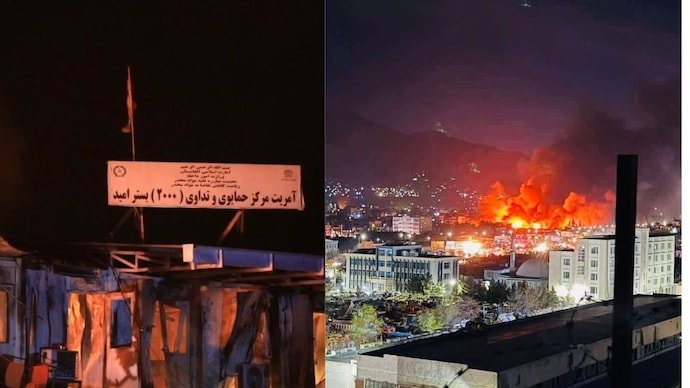
China’s recent diplomatic intervention in the escalating Pakistan–Afghanistan conflict is not случай or purely humanitarian—it is a calculated move shaped by strategic, economic, and security priorities. As tensions spike following fresh Airstrikes in Kabul and allegations of mass civilian casualties, Beijing has stepped forward to mediate, aiming to prevent a localized conflict from spiraling into a wider regional crisis.
The latest escalation began after Pakistan launched strikes under Operation Ghazab Lil Haq, targeting what it described as militant infrastructure. However, the Afghan Taliban strongly rejected this claim, alleging that civilian sites, including a rehabilitation facility, were hit, with reports suggesting hundreds of casualties. Islamabad has firmly denied these accusations, maintaining that only terrorist hideouts were targeted.
Rising Tensions and Historical Fault Lines
The current crisis is rooted in long-standing distrust between the two neighbours. Pakistan has repeatedly accused the Taliban-led government in Kabul of sheltering the Tehrik-i-Taliban Pakistan (TTP), a militant group responsible for increasing attacks inside Pakistan. Kabul, in turn, denies these allegations and accuses Islamabad of unjustified aggression.
The disputed Durand Line—a colonial-era border—continues to fuel friction. Frequent cross-border skirmishes, retaliatory strikes, and unresolved territorial claims have kept relations fragile, with recent events pushing them dangerously close to open confrontation.
Why China Is Getting Involved
China’s intervention is driven by a combination of strategic imperatives rather than mere diplomatic goodwill. As instability grows near its western periphery, Beijing sees an urgent need to stabilize the situation before it threatens its broader regional ambitions.
| Key Reason | Explanation |
|---|---|
| Economic Investments (CPEC) | China has invested over $65 billion in Pakistan through the China-Pakistan Economic Corridor, which depends on regional stability. |
| Border Security Concerns | Rising instability could enable extremist groups to operate near China’s Xinjiang region. |
| Afghanistan’s Mineral Wealth | Afghanistan holds untapped resources worth over $1 trillion, making stability economically important for China. |
| Regional Influence | China aims to position itself as a key peace broker in South and Central Asia. |
| Belt and Road Initiative | Conflict threatens connectivity projects critical to China’s global trade ambitions. |
Protecting the China-Pakistan Economic Corridor (CPEC)
One of China’s biggest concerns is the safety of the China-Pakistan Economic Corridor (CPEC), a flagship project under the Belt and Road Initiative (BRI). The corridor connects China’s Xinjiang province to Pakistan’s Gwadar port, serving as a crucial trade and energy route.
Ongoing instability along the Pakistan-Afghanistan border threatens infrastructure, logistics networks, and investor confidence. Any prolonged conflict could disrupt supply chains and delay key projects, directly impacting China’s economic ambitions in the region.
Security Concerns Near Xinjiang
China is deeply concerned about the possibility of extremist groups exploiting the chaos. Beijing fears that militant networks operating in Afghanistan or along the border could influence separatist elements in its Xinjiang region.
A prolonged conflict could create safe havens for such groups, increasing the risk of cross-border terrorism. This makes stability in Afghanistan and Pakistan not just a regional issue for China, but a domestic security priority.
Afghanistan’s Untapped Economic Potential
Afghanistan’s vast mineral reserves—estimated to be worth over $1 trillion—represent a long-term economic opportunity for China. These include lithium, rare earth elements, and other critical resources essential for modern industries.
However, exploiting these resources requires stability, infrastructure, and international cooperation—conditions that are impossible in a conflict zone. By mediating peace, China is effectively safeguarding future economic prospects.
China’s Diplomatic Strategy and Global Positioning
China’s involvement also reflects its broader ambition to position itself as a global mediator. Chinese Foreign Minister Wang Yi has actively engaged with both Islamabad and Kabul, urging restraint, dialogue, and an immediate ceasefire.
Beijing has even deployed a special envoy to shuttle between the two capitals, signaling a more proactive diplomatic approach. This aligns with China’s strategy of expanding its influence in regions traditionally dominated by Western powers.
Challenges to Mediation Efforts
Despite China’s efforts, the situation remains volatile. The timing of recent strikes—occurring shortly after diplomatic outreach—suggests that ground realities and military priorities may be overtaking political negotiations.
national security concerns, domestic pressures, and mutual distrust continue to hinder progress. Both Pakistan and Afghanistan appear unwilling to make significant concessions, complicating China’s mediation role.
What Lies Ahead?
The risk of further escalation remains high. While China’s intervention may temporarily ease tensions, a lasting resolution will require sustained dialogue, trust-building measures, and possibly broader international involvement.
For Beijing, the stakes are clear: protecting investments, ensuring border security, and reinforcing its role as a global power broker. Whether it can successfully bring both sides to the negotiating table will not only shape regional stability but also define China’s diplomatic credibility on the world stage.
For breaking news and live news updates, like us on Facebook or follow us on Twitter and Instagram. Read more on Latest World on thefoxdaily.com.





COMMENTS 0