- Escalation Signals: A War That Seemed Imminent
- Iran’s Demands: A Tough Negotiating Position
- Domestic Pressure: The Real Battlefield at Home
- Economic Costs: A Rapidly Expanding Burden
- Strategic Reality: Limited Gains, Rising Risks
- Pattern of Deadline Extensions: A Gradual Walk-Back
- Conclusion: A Calculated Retreat, Not Just a “Blink”
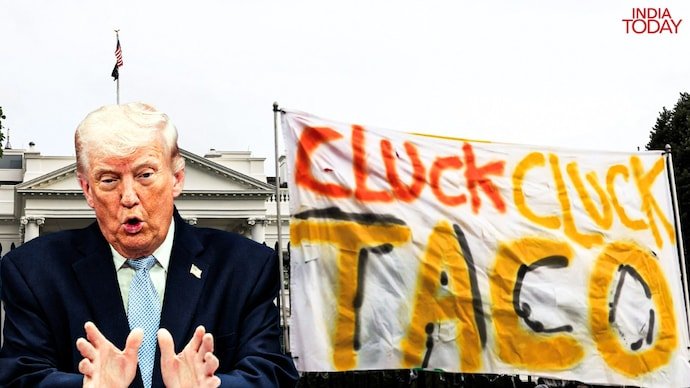
In a dramatic turn of events in early April 2026, US President Donald Trump appeared to step back from the brink of a potential large-scale Conflict with Iran, despite issuing strong warnings and military signals just hours earlier. The sudden shift-from threats of devastating strikes to announcing a ceasefire-raised a critical question: why did Trump “blink”? The answer lies in a complex mix of domestic political pressure, economic concerns, military realities, and geopolitical risks that made escalation increasingly difficult to sustain.
Escalation Signals: A War That Seemed Imminent
In the 24 hours leading up to the ceasefire announcement, all indicators pointed toward a possible military escalation. The United States appeared to be preparing for a significant strike, with visible military activity and heightened rhetoric.
- Military drills: US Marines conducted firing exercises aboard the USS Tripoli
- Strategic deployment: A B-52 bomber took off from a UK airbase
- Political messaging: Strong warnings issued against Iran’s infrastructure
- Deadline pressure: A final ultimatum was approaching
At the same time, Iran was reportedly preparing responses targeting energy infrastructure across the Middle East, increasing the risk of a broader regional conflict.
Then, unexpectedly, the tone shifted. Instead of escalation, a ceasefire was announced-prompting widespread analysis of what changed behind the scenes.
Iran’s Demands: A Tough Negotiating Position
One of the most surprising aspects of the ceasefire was the set of demands reportedly put forward by Iran. These conditions appeared to significantly challenge US and allied strategic objectives.
Key Reported Demands from Iran
| Demand | Implication |
|---|---|
| Controlled passage in Strait of Hormuz | Greater Iranian influence over global oil routes |
| Reparations for war damage | Financial burden on the US and allies |
| Release of seized Iranian assets | Economic concessions |
| Withdrawal of US forces from Middle East | Reduced US military footprint |
| End to sanctions | Major shift in US foreign policy |
| Termination of IAEA resolutions | Reduced international oversight |
Accepting even part of these demands would represent a significant compromise. Yet, the urgency of the situation appeared to push negotiations toward de-escalation rather than confrontation.
Domestic Pressure: The Real Battlefield at Home
While international tensions were rising, a parallel “battle” was unfolding within the United States. Public opinion and political pressure played a crucial role in shaping the administration’s decisions.
Across the political spectrum, opposition to the conflict was growing. Both Republican and Democratic voices, along with public figures and ordinary citizens, questioned the necessity of the war.
Mass Protests and Public Sentiment
One of the clearest indicators of domestic resistance was the scale of protests across the country. Demonstrations labeled “No Kings 3.0” reportedly drew millions of participants nationwide, signaling widespread dissatisfaction.
- Scale: Thousands of organized events across the US
- Participation: Millions of protesters
- Message: Strong opposition to military escalation
For any administration, sustained public opposition-especially on this scale-creates significant political risk.
Midterm Elections Looming
Timing also mattered. With midterm Elections just months away, escalating an unpopular war could have serious electoral consequences.
- Political risk: Potential loss of congressional support
- Recent trends: Opposition gains in legislative seats
- Voter sentiment: War fatigue and economic concerns
In such a scenario, continuing the conflict could weaken political standing at a critical moment.
Economic Costs: A Rapidly Expanding Burden
Wars are not only fought on battlefields-they are also fought on balance sheets. The financial cost of the conflict quickly became a major concern.
Estimated Military Spending
| Timeframe | Estimated Cost |
|---|---|
| First 6 days | $11.3 billion |
| Day 12 | $16.5 billion |
| Daily cost | $500–900 million |
| Five-week estimate | $30–40 billion |
These figures fueled criticism from both policymakers and the public. A recurring question gained traction: why is there always funding for war, but not for domestic priorities like Healthcare?
At a time when economic pressures were already affecting American households, the prospect of prolonged military spending added to the urgency for de-escalation.
Strategic Reality: Limited Gains, Rising Risks
Beyond politics and economics, there were strategic considerations. Military actions had not produced the decisive outcomes initially expected.
Instead of forcing quick concessions, the conflict appeared to be creating new challenges:
- Regional instability: Increased tensions across the Middle East
- Energy disruptions: Impact on global oil supply chains
- Escalation risk: Potential for broader conflict involving multiple actors
In some cases, actions intended to pressure Iran-such as targeting infrastructure-risked backfiring by further disrupting critical routes like the Strait of Hormuz.
The Limits of Military Pressure
Defense analysts noted that when initial objectives are not met quickly, prolonged engagement often leads to diminishing returns. This can create a scenario where continuing the conflict becomes more costly than stepping back.
In such situations, even strong rhetoric can give way to pragmatic decision-making.
Pattern of Deadline Extensions: A Gradual Walk-Back
Trump’s approach to the conflict also followed a recognizable pattern-setting firm deadlines and then extending them.
- March 21: Initial ultimatum issued
- 48-hour deadline: First demand to reopen Strait of Hormuz
- Pause: Cited “productive talks”
- March 26: Extended deadline by 10 days
- Further delays: Additional short-term extensions
Each extension signaled a shift from immediate confrontation toward ongoing negotiation. By the time the ceasefire was announced, the pattern suggested a gradual move away from escalation rather than a sudden reversal.
Conclusion: A Calculated Retreat, Not Just a “Blink”
While critics may frame the decision as a retreat, the reality is more complex. Donald Trump’s move toward a ceasefire appears to be the result of converging pressures-domestic opposition, economic costs, strategic challenges, and geopolitical risks.
In high-stakes situations, leaders often balance multiple competing priorities. In this case, the costs of continuing the conflict-politically, financially, and strategically-seem to have outweighed the potential benefits.
Looking ahead, the situation remains fluid. Negotiations may continue, and tensions could rise again depending on how both sides respond. However, this episode highlights an important reality of modern geopolitics: even the most aggressive rhetoric can give way to restraint when the broader consequences become too significant to ignore.
In the end, what appeared to be a sudden “blink” may actually have been a calculated pause-one shaped as much by pressures at home as by dynamics abroad.
For breaking news and live news updates, like us on Facebook or follow us on Twitter and Instagram. Read more on Latest World on thefoxdaily.com.






COMMENTS 0