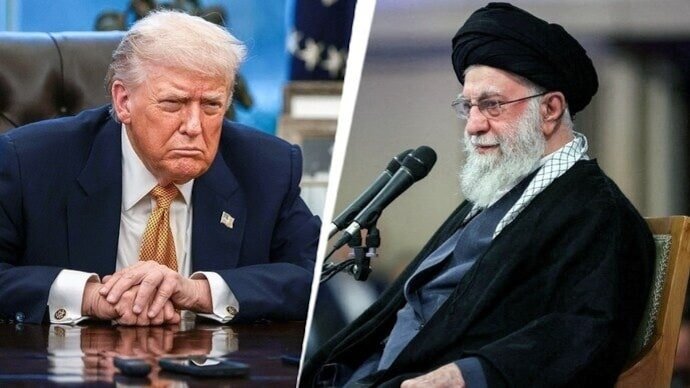
Iran today appears surrounded by crisis on every front. Years of Western sanctions have crippled its economy and stalled development. Spiralling inflation and unemployment have triggered widespread protests driven by economic despair. Decades of repression of personal freedoms have produced repeated uprisings, often met with brutal force. Ethnic and religious minorities face sustained persecution. Looming over all this is the constant threat of military action by the United States and Israel.
Last year alone, Iran was bombed by both countries. Yet, despite the weight of these pressures, Tehran has not collapsed. It has not surrendered. It has not rewritten its foreign policy to please Washington.
This is not a defence of a regime that has fired at demonstrators demanding basic rights, jailed students for dissent, or enforced strict social codes with lethal consequences for women. Iran’s ruling system remains authoritarian and deeply repressive. But geopolitics, like history, is rarely black and white. Understanding Iran requires stepping beyond moral binaries and examining the deeper forces that shape its resilience.
In a world where most nations either align with or quietly accommodate American power, Iran stands out for openly defying Washington’s threats of regime change, assassination, and bombardment. It does so despite lacking the economic, technological, and military parity to confront the United States or its closest ally, Israel. This is not a fair fight. It is a confrontation between a superpower and a sanctioned state that refuses to submit.
The authoritarian nature of the Iranian regime is undeniable. Yet, Iran’s defiance also draws from something older than its current rulers. Persians are heirs to one of the world’s oldest continuous civilizations. That historical memory, combined with nationalism and resistance to foreign domination, shapes Iran’s refusal to bend.
As American poet Charles Bukowski once wrote, “The nights you fight best are when all the weapons are pointed at you.” Iran’s future remains uncertain, but its ability to endure pressure is rooted in both state control and civilizational identity.
WHY THE UNITED STATES HESITATES TO LAUNCH A FULL-SCALE ATTACK
During the 12-day conflict in June last year, US and Israeli strikes reportedly killed senior Iranian generals and nuclear scientists. There were even public threats against Supreme Leader Ayatollah Ali Khamenei himself. Yet, those threats stopped short of execution. There are several reasons for this restraint.
The first is logistical and operational. Khamenei operates under the tight protection of the Islamic Revolutionary Guard Corps. Eliminating him would not resemble limited operations elsewhere. It would require a massive escalation, with unpredictable consequences. The US may talk about bombing Iran, but defining clear, achievable targets remains a challenge.
The second reason lies in regional constraints. The US maintains over 40,000 troops across the Middle East, yet its footprint also makes it vulnerable. Countries like Qatar and Oman have actively pushed for diplomatic engagement between Washington and Tehran. Saudi Arabia, despite its rivalry with Iran, has urged caution, wary of the fallout.
Unlike conflicts fought far from home, Gulf nations sit within immediate range of Iranian retaliation. Any strike launched from their soil could invite direct counterattacks. According to CNN, Saudi Arabia, Qatar, and Oman intensified diplomatic efforts after reports suggested communication between Tehran and Washington had broken down. Bahrain and Kuwait have also been drawn into these talks.
The third and perhaps most critical concern is the question of succession. If the US were to strike decisively and remove Khamenei, who would rule Iran next? Even Donald Trump has acknowledged that Reza Pahlavi, the exiled crown prince, lacks sufficient domestic support.
A sudden power vacuum could plunge Iran into chaos similar to what followed US interventions in Iraq, Syria, and Afghanistan. In such a scenario, the aftermath could prove far more destabilising than the regime Washington seeks to overthrow.
As Iran-based analyst Muhammad Hussain Bakari noted earlier this week, protests alone have historically failed to topple the system. He has witnessed four major protest movements over three decades, none of which led to regime change.
US BLUFFS, ALLIED PRESSURE, AND STRATEGIC CONFUSION
Mixed messaging from Washington has further exposed uncertainty. The US quietly walked back claims that 12,000 people had been killed in Iran, suggesting conditions had improved. Trump asserted that executions had stopped and that Tehran had assured his administration that detained protesters would not face death sentences.
At the same time, the Pentagon announced the redeployment of the USS Abraham Lincoln carrier strike group from the South china Sea to the Middle East under CENTCOM’s command, signalling preparedness for escalation.
As of January 16, Trump has paused plans for a direct military strike. US officials emphasised that this was a delay, not a cancellation. Strikes remain on the table if circumstances shift.
The situation grows more complex when oil markets and Israeli security calculations enter the equation. Internal US reviews this week reportedly debated strategies for achieving “maximum effect,” though officials themselves appeared unsure of the outcome.
Ongoing consultations between Washington and Tel Aviv underline these tensions. Israeli assessments suggest that Iran’s harsh crackdown has, for now, stabilised the regime, stopping short of the tipping point where a single strike could bring collapse.
Iran, though weakened, retains enough capacity to retaliate and destabilise the entire region, a reality Trump cannot afford to ignore.
WHAT IRAN AND THE KHAMENEI REGIME CAN STILL DO
The 86-year-old Supreme Leader and his advisers have warned of swift and severe retaliation if the United States launches a direct military attack.
Iran’s core strength lies in its missile arsenal, including cruise missiles and short- and medium-range ballistic missiles with ranges of up to 2,000 kilometres.
These weapons could strike US bases across Iraq, Syria, Qatar, Bahrain, and naval assets in the Persian Gulf, as demonstrated during Iran’s 2020 response to the killing of General Qasem Soleimani.
The Strait of Hormuz remains Tehran’s most potent leverage. Over one-fifth of the world’s oil passes through it. Iran could temporarily disrupt shipping using naval mines, fast-attack boats, submarines, and anti-ship missiles, driving up energy prices and imposing economic costs on the US and its allies.
While the US Navy holds overwhelming superiority, even brief disruption could have global repercussions.
Iran’s proxy networks, though weakened after Israel’s Operation Rising Lion, still retain the capacity to strike US interests through allied militias in Iraq or remaining Houthi forces.
Cyber warfare is another tool at Tehran’s disposal, with the ability to target communications, infrastructure, and financial systems.
Senior figures like Ali Shamkhani have echoed Khamenei’s stance that Iran will not yield and will respond in ways adversaries cannot easily anticipate.
Despite weakened air defences following the June 2025 strikes, Iran shows no signs of capitulation.
The Iranian regime may never earn sympathy for its repression, and rightly so. But it represents one of the few states openly resisting American coercion. Any lasting change in Iran, as history suggests, will come from within its borders.
As columnist Kamlesh Singh recently wrote, real transformation in Iran will be driven by Iranians themselves, just as it was in 1979. External pressure may bruise the nation, but it cannot bend it.
For breaking news and live news updates, like us on Facebook or follow us on Twitter and Instagram. Read more on Latest World on thefoxdaily.com.




COMMENTS 0