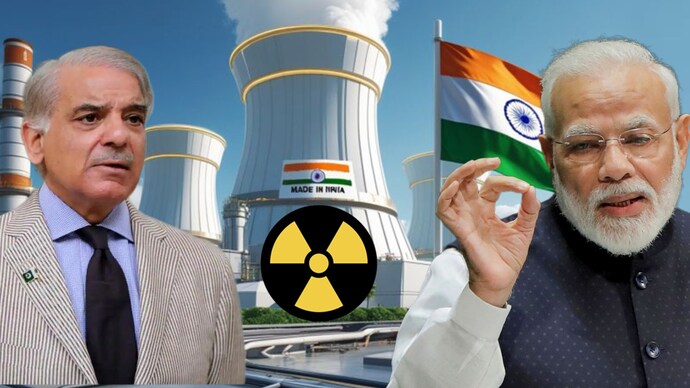
India’s nuclear sector has long been among the most tightly guarded and state-controlled domains in the country. That decades-old status quo has now begun to shift with the introduction of the Sustainable Harnessing and Advancement of Nuclear Energy for Transforming India (SHANTI) Bill, tabled in the Lok Sabha on December 15, 2025. The proposed legislation marks the most significant overhaul of India’s nuclear governance framework in over six decades.
For more than 60 years, India’s atomic energy ecosystem has operated under strict laws and institutional controls designed in the early years of the republic. The SHANTI Bill seeks to modernize that framework, recalibrating the balance between state control, safety oversight, and innovation-driven growth, while maintaining national security red lines.
If fully implemented, SHANTI will repeal two major laws—the Atomic Energy Act of 1962 and the Civil Liability for Nuclear Damage Act of 2010. Both statutes have often been criticized by industry experts as barriers to private investment, advanced technology transfer, and faster nuclear capacity expansion. The government has positioned SHANTI as a strategic reform aimed at strengthening energy security, meeting climate commitments, and unlocking India’s long-underutilized nuclear potential.
At the heart of the Bill lies a carefully calibrated opening of the nuclear sector to Indian private companies. Activities that were once the exclusive preserve of state-run entities such as the Nuclear Power Corporation of India Limited (NPCIL) will now see limited private participation. Domestic firms will be allowed to engage in fuel fabrication, spent-fuel management, and the import and export of approved nuclear equipment.
Crucially, the most sensitive aspects of the nuclear fuel cycle—such as uranium enrichment, reprocessing, and heavy water production—remain under strict government control. Foreign-owned or foreign-controlled entities are explicitly barred from licensing. Liability caps have been fixed at 300 million Special Drawing Rights (SDRs), aligning India with international nuclear liability norms, while the Atomic Energy Regulatory Board (AERB) is set to gain statutory authority, strengthening safety oversight and regulatory independence.
Government officials argue that nuclear energy is indispensable for India’s long-term climate and development goals. India has committed to achieving net-zero emissions by 2070 and plans to expand nuclear power capacity from the current ~8.2 gigawatts to nearly 100 gigawatts by 2047. Policymakers believe such an ambitious target cannot be met without technological innovation, private capital, and global collaboration.
Yet, even before the Bill could be debated in detail, Pakistan reacted with visible alarm. A spokesperson from Islamabad’s foreign ministry expressed “concerns,” claiming that private sector involvement under SHANTI could undermine international nuclear safeguards. The criticism stood out not for its substance, but for its source—Pakistan’s own nuclear track record has long been under intense international scrutiny.
The shadow of Dr. Abdul Qadeer Khan continues to loom large over Pakistan’s nuclear credibility. In the 1980s and 1990s, Khan not only enabled Pakistan’s uranium enrichment program but also ran a global proliferation network that supplied centrifuge designs and components to Iran, Libya, and North Korea. Many international investigations concluded that this network operated with at least tacit support from elements within Pakistan’s establishment.
India’s trajectory, by contrast, has been marked by restraint, institutional discipline, and compliance. In 2008, India received a historic waiver from the Nuclear Suppliers Group (NSG) after demonstrating a spotless non-proliferation record, a clear separation between civilian and military nuclear facilities, and adherence to global safety norms—privileges Pakistan has never been granted.
Islamabad has repeatedly alleged radioactive incidents and safety lapses in India, claims that New Delhi has consistently rebutted. Indian authorities have reiterated that SHANTI does not dilute safety standards or international obligations, and that all civilian nuclear activities remain under rigorous regulatory oversight.
In contrast, serious concerns persist about Pakistan’s nuclear governance structure. Over time, civilian oversight has steadily eroded as the military has consolidated control over strategic and nuclear decision-making. Field Marshal Asim Munir now wields unprecedented authority across military branches and nuclear policy.
Statements attributed to Munir—such as threats to “take half the world down” if Pakistan is threatened—have been widely interpreted by analysts as nuclear sabre-rattling. These remarks fit into a broader pattern of ideological, religious, and militaristic messaging aimed largely at domestic audiences, raising alarms internationally.
Experts argue that Pakistan’s nuclear command-and-control system faces serious challenges amid political instability, internal divisions, and competing power centers. These vulnerabilities stand in stark contrast to India’s transparent, accountable, and institution-driven nuclear governance model under SHANTI.
| Aspect | India (Under SHANTI) | Pakistan |
|---|---|---|
| Transparency | High, with regulatory oversight and global safeguards | Low, marked by secrecy and limited civilian oversight |
| Private Sector Role | Controlled, domestic-only participation | Minimal, military-dominated framework |
| Proliferation Record | Clean and internationally recognized | Marred by A.Q. Khan network |
| Global Acceptance | NSG waiver granted | NSG access denied |
Interest in SHANTI is already visible across India’s industrial landscape. Major conglomerates such as Tata Power, Adani Power, and Reliance Industries have expressed preliminary interest, alongside global nuclear technology leaders including Westinghouse, GE-Hitachi, and EDF. The Bill offers India a pathway toward economic transformation, technological leadership, and strategic autonomy.
Pakistan’s objections, therefore, appear less about genuine safety concerns and more about deeper anxieties—loss of narrative control, declining credibility, and fear of strategic irrelevance. As India moves forward with reforms rooted in transparency and accountability, Islamabad remains stuck defending an opaque and militarized nuclear posture.
By enabling responsible private participation and strengthening regulation, India is signaling to the world that it is ready to scale up nuclear energy, attract investment, and assume a larger role in the global clean-energy and strategic order. Pakistan’s reactions only underscore the growing contrast between vision and brinkmanship.
For international observers, the takeaway is unambiguous: India’s nuclear reforms are structured, safeguarded, and future-oriented, while Pakistan’s history of proliferation, concealment, and ideological militarization poses a far greater risk to regional and global security.
For breaking news and live news updates, like us on Facebook or follow us on Twitter and Instagram. Read more on Latest World on thefoxdaily.com.






COMMENTS 0