The United States has presented Ukrainian President Volodymyr Zelenskyy with a detailed 28-point draft peace framework aimed at rapidly ending the nearly four-year war with Russia. The plan-formulated without Ukrainian participation-has triggered unease within Kyiv and among several European governments. Zelenskyy has not yet endorsed or rejected the proposal.
Sources familiar with the document say the plan could require Ukraine to reduce the size of its armed forces and give up control of the eastern Donbas region in exchange for security guarantees from washington. US officials, however, stressed that any final agreement would demand concessions from both Kyiv and Moscow-not only Ukraine.
With Ukraine heavily dependent on American security and financial aid, Zelenskyy is expected to hold a phone conversation with US President Donald Trump in the coming days to discuss the proposal.
After meeting a senior US military delegation in Kyiv on Thursday, Zelenskyy said he was prepared for “constructive, honest, and swift work” with Washington to explore the plan. His administration confirmed it had received the proposal but insisted that Ukraine remains committed to pursuing a “just peace” alongside the US and European allies.
European capitals reacted cautiously, expressing unease over a proposal that appears to demand significant concessions from Ukraine without any clear reciprocal commitments from Russia. EU foreign policy chief Kaja Kallas noted that there is no evidence Moscow is being pressed to surrender anything comparable, while France reiterated that “peace cannot be a capitulation.”
EU foreign ministers meeting in Brussels earlier in the day declined to endorse any demands requiring Kyiv to make punitive territorial or military concessions, though they stopped short of directly criticizing the US plan.
French Foreign Minister Jean-Noel Barrot highlighted European concerns, stating, “Ukrainians want peace-a just peace that respects sovereignty and ensures a durable future free from renewed aggression. But peace cannot be a capitulation.”
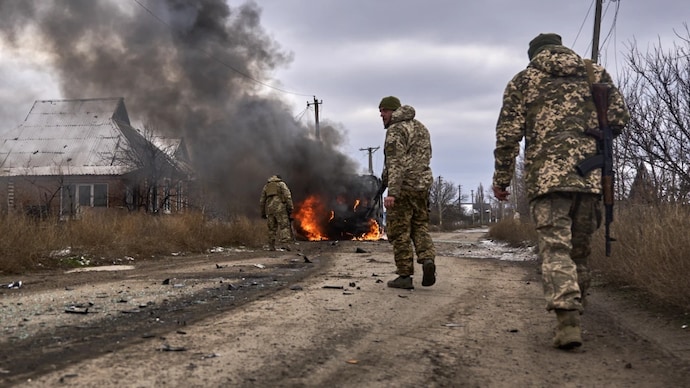
As the pressure for diplomacy intensifies, Ukraine faces a worsening battlefield situation. Russian forces are advancing toward Pokrovsk, threatening what could become their first major urban breakthrough in nearly two years. As winter approaches, Moscow is intensifying strikes on critical infrastructure, causing civilian casualties and widespread outages.
Zelenskyy is also grappling with political challenges at home. A corruption scandal recently led to the dismissal of two cabinet ministers and sparked renewed calls for stronger accountability and reforms from opposition parties.
In a surprise move, a US Army mission led by Secretary Daniel Driscoll arrived in Kyiv earlier than expected to streamline coordination. As part of Washington’s renewed push for negotiations, US officials suggested that Driscoll may also attempt to open communication channels with Russian counterparts.
Despite repeated assertions from Ukrainian officials that the public will not accept territorial concessions, Zelenskyy told Driscoll that Kyiv would work with the Trump administration to refine the proposal.
US Secretary of State Marco Rubio backed the effort, saying that achieving a long–term settlement would require “serious and realistic ideas” and inevitably “difficult compromises” from all parties involved.
The 28-point draft has already generated friction with Europe and introduced fresh uncertainty into Ukraine’s military planning. Washington’s diplomatic push underscores the complexity-and urgency-of securing any path toward a sustainable peace deal.
For breaking news and live news updates, like us on Facebook or follow us on Twitter and Instagram. Read more on Latest World on thefoxdaily.com.






COMMENTS 0