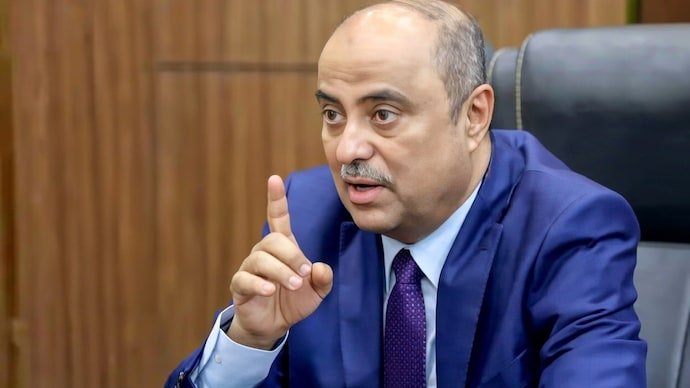
Yemen’s Saudi-backed Presidential Leadership Council (PLC) has formally accepted the resignation of Prime Minister Salem bin Braik, according to a report published Thursday by state news agency Saba. The decision brings an end to bin Braik’s tenure at a time of heightened political and security instability in the war-torn country.
Following the acceptance of the resignation, Foreign Minister Shaya Mohsen Zindani was named Yemen’s new prime minister. He has been entrusted with the responsibility of forming the country’s next cabinet, though details regarding the composition and timeline of the new government have not yet been announced.
Earlier in the day, the PLC also moved to replace two council members who had been dismissed over their affiliations with the Southern Transitional Council (STC). Former Defence Minister Mahmoud al-Subaihi and Hadramout Governor Salem al-Khanbashi were appointed as their replacements.
Yemen has been engulfed in conflict since 2014, when Iran-backed Houthi rebels seized control of the capital, Sanaa. The following year, a Saudi-led coalition intervened in support of the internationally recognised government, triggering a prolonged war that has resulted in one of the world’s worst humanitarian crises.
Years of fighting have devastated Yemen’s economy and infrastructure, leaving millions displaced and dependent on humanitarian assistance amid widespread food insecurity and collapsing public services.
Saudi-UAE tensions resurface in Yemen
The leadership transition comes at a particularly sensitive time, as tensions between Saudi Arabia and the United Arab Emirates over Yemen escalated sharply in late December 2025. Forces aligned with the UAE-backed Southern Transitional Council seized control of key southern regions, including parts of Hadramout and Al-Mahra, areas of strategic importance near Saudi Arabia’s border.
Riyadh viewed the developments as a direct threat to its security interests and oil infrastructure, accusing the UAE of undermining the coalition’s unity. Saudi forces reportedly mobilised along the border and issued strong warnings to STC units to withdraw from the contested areas.
The rift between the two longtime allies exposed growing differences in their Yemen strategies, with the UAE backing southern autonomy and counterterrorism operations, while Saudi Arabia has pushed for a unified Yemeni state under a central government.
On December 30, Saudi Airstrikes targeted Mukalla port, alleging that the facility was being used to funnel weapons to STC-aligned forces. The strikes sparked chaos in the port city and marked the first direct military confrontation between Saudi and UAE-aligned forces.
Saudi authorities reportedly issued a 24-hour ultimatum demanding the withdrawal of UAE-backed units and an end to support for separatist forces, while Yemen’s Saudi-backed leadership declared emergency measures and tightened security controls.
The UAE subsequently withdrew its remaining troops from the disputed areas and denied supplying arms to separatist factions. Despite these steps, the broader conflict has continued to exact a heavy toll on civilians.
Millions of Yemenis remain displaced and reliant on international aid as the conflict, now in its second decade, continues to fuel one of the most severe humanitarian disasters in modern history.
For breaking news and live news updates, like us on Facebook or follow us on Twitter and Instagram. Read more on Latest World on thefoxdaily.com.




COMMENTS 0