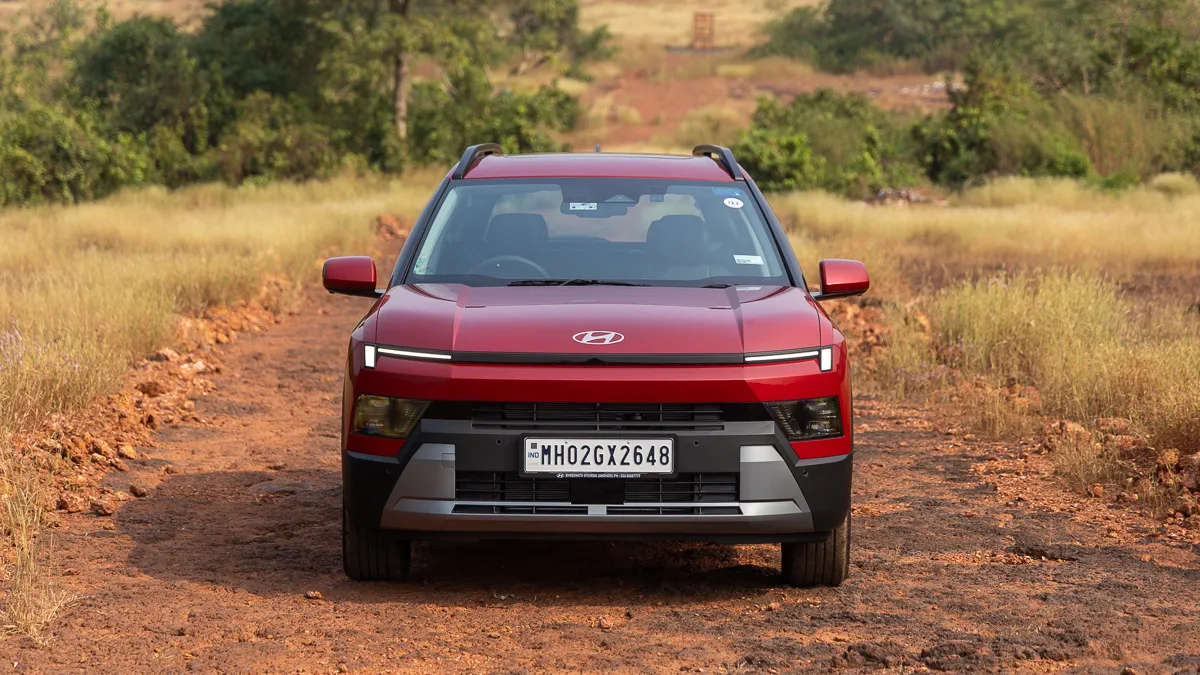
The Hyundai Bayon and Tata Sierra offer two different approaches to the compact SUV segment. While the Bayon focuses on a compact footprint, modern styling and technology, the Sierra brings a larger body, a spacious cabin and a wider choice of powertrains. Both SUVs offer extensive equipment, including touchscreen infotainment systems, panoramic sunroofs and Level 2 ADAS, but there are important differences in their pricing, dimensions and features.
The Hyundai Bayon is positioned as a relatively compact and premium-feeling SUV, making it suitable for buyers who want something easy to manage in city conditions. The Tata Sierra, meanwhile, targets customers looking for a larger SUV with stronger road presence, additional cabin space and petrol and diesel engine options.
So, which one offers better value? Here is a detailed comparison of the Hyundai Bayon and Tata Sierra across price, dimensions, colours, features, safety and powertrain options.
Hyundai Bayon Vs Tata Sierra: Price Comparison
The Hyundai Bayon has a lower starting price than the Tata Sierra. Its prices begin at Rs 10 lakh, while the Sierra starts at Rs 11.49 lakh. This gives the Bayon an entry-level price advantage of Rs 1.49 lakh.
The difference becomes more significant at the top end, where the Bayon is priced at Rs 18.15 lakh and the Sierra reaches Rs 21.59 lakh. The price gap between their top variants stands at Rs 3.44 lakh.
One reason for the Sierra’s higher price range is its wider powertrain lineup, which includes turbo-petrol and diesel options. The Bayon is offered with a single naturally aspirated petrol engine.
| Price Details | Hyundai Bayon | Tata Sierra |
|---|---|---|
| Starting price | Rs 10 lakh | Rs 11.49 lakh |
| Top variant price | Rs 18.15 lakh | Rs 21.59 lakh |
| Price range | Rs 10 lakh–Rs 18.15 lakh | Rs 11.49 lakh–Rs 21.59 lakh |
All prices are ex-showroom.
Dimensions: Tata Sierra Is Significantly Larger
The biggest difference between the two SUVs is their overall size. The Tata Sierra is longer, wider and taller than the Hyundai Bayon, giving it a more substantial road presence.
The Sierra measures 4,340mm in length, compared with 4,245mm for the Bayon. It is also 31mm wider and 110mm taller. The difference in wheelbase is even more noticeable, with the Sierra offering 2,730mm compared with the Bayon’s 2,600mm.
The additional 130mm of wheelbase could translate into better cabin space, particularly for rear-seat passengers. Its larger dimensions also give the Sierra a more upright SUV appearance, while the Bayon has a relatively compact stance.
| Dimension | Hyundai Bayon | Tata Sierra | Difference |
|---|---|---|---|
| Length | 4,245mm | 4,340mm | Bayon is 95mm shorter |
| Width | 1,810mm | 1,841mm | Bayon is 31mm narrower |
| Height | 1,605mm* | 1,715mm | Bayon is 110mm shorter |
| Wheelbase | 2,600mm | 2,730mm | Bayon is 130mm shorter |
*Hyundai Bayon height measured with roof rails.
Overall, the Sierra has an advantage in terms of exterior dimensions and is likely to appeal to buyers who prioritise a larger SUV and a more spacious cabin. The Bayon’s smaller footprint, on the other hand, could make it easier to manoeuvre and park in crowded urban areas.
Colour Options: Hyundai Bayon Vs Tata Sierra
Both SUVs offer several exterior colour choices, including shades that can be paired with a contrasting black roof. The Hyundai Bayon also offers selected matte-finish paint options, while the Tata Sierra gets a distinctive colour palette and a dedicated Dark Edition.
| Hyundai Bayon | Tata Sierra |
|---|---|
| Fiery Red* | Pristine White* |
| Atlas White* | Pure Grey* |
| Ecotronic Grey | Coorg Clouds* |
| Golden Bronze | Munnar Myst* |
| Titanium Black^ | Bengal Rouge* |
| Classy Blue^ | Andaman Adventure* |
| – | Friesian Black |
*Available with a dual-tone black roof. ^Also available with matte-finish paint.
The Bayon offers additional personalisation through its dual-tone and matte-finish options. The Sierra, meanwhile, gets dual-tone paint as standard from its base variant, along with the all-black exterior and interior treatment offered by the Dark Edition.
Among the Bayon’s colour options, Classy Blue complements its modern and edgy design particularly well. The Sierra’s colour choices, meanwhile, give it a more traditional SUV character.
Features and Technology: Which SUV Offers More?
Both the Hyundai Bayon and Tata Sierra come equipped with a long list of comfort, convenience and technology features. However, their equipment packages differ in several areas.
The Bayon gets a larger 12.3-inch digital instrument cluster, generative AI voice assistance, an integrated dashcam and an eight-way electrically adjustable driver’s seat. The Sierra counters with a more extensive display arrangement, a powered tailgate, a head-up display, rear window sunshades and additional rear-seat comfort features.
Exterior Features
Both SUVs feature LED headlamps, LED daytime running lights, LED tail-lamps, roof rails, puddle lamps and electrically adjustable ORVMs. However, the Sierra gets some additional exterior equipment, including LED front fog lamps with a cornering function, sequential indicators and flush door handles with welcome lights.
The Sierra also gets larger 19-inch dual-tone alloy wheels, compared with the Bayon’s 17-inch dual-tone alloy wheels. A powered tailgate with gesture operation and a rear window sunshade further improve convenience in the Tata SUV.
| Exterior Feature | Hyundai Bayon | Tata Sierra |
|---|---|---|
| LED Headlamps | Yes | Yes |
| LED DRLs | Yes | Yes |
| Front Fog Lamps | No | LED with cornering function |
| LED Tail-lamps | Yes | Yes |
| Sequential Indicators | No | Yes |
| Puddle Lamps | Yes | Yes |
| Flush Door Handles with Welcome Lights | No | Yes |
| Alloy Wheels | 17-inch | 19-inch |
| Rear Window Sunshade | No | Yes |
| Powered Tailgate | No | Yes, with gesture operation |
Infotainment and Connectivity
Both SUVs get a 12.3-inch touchscreen infotainment system with wireless Apple CarPlay and Android Auto, wireless phone charging and connected-car technology.
The Bayon features a 12.3-inch digital instrument cluster, giving it an advantage in terms of driver-display size. It also gets an eight-speaker Bose sound system and a generative AI voice assistant.
The Sierra takes a different approach with a triple-screen layout, including a 12.3-inch passenger display and a 10.25-inch instrument cluster. It also gets a 12-speaker JBL Black audio system with Dolby Atmos, built-in navigation, a head-up display and an in-car app suite.
| Technology Feature | Hyundai Bayon | Tata Sierra |
|---|---|---|
| Infotainment Screen | 12.3-inch | 12.3-inch |
| Passenger Display | No | 12.3-inch |
| Instrument Cluster | 12.3-inch | 10.25-inch |
| Wireless Apple CarPlay and Android Auto | Yes | Yes |
| Wireless Phone Charger | Yes | Yes |
| Sound System | 8-speaker Bose | 12-speaker JBL Black with Dolby Atmos |
| Generative AI Voice Assistant | Yes | No |
| Built-in Navigation | No | Yes |
| In-car Games and App Suite | No | Yes |
| Head-up Display | No | Yes |
Comfort and Convenience Features
The Hyundai Bayon and Tata Sierra both offer leatherette upholstery, a panoramic sunroof, ventilated front seats, rear AC vents, a rear centre armrest and electrically adjustable driver’s seats.
The Bayon gets an eight-way electrically adjustable driver’s seat, compared with the Sierra’s six-way electric adjustment with memory function. The Hyundai also offers single-zone automatic climate control, while the Tata gets a dual-zone system.
The Sierra adds several rear-seat comfort features, including a boss mode and thigh support extender. It also gets an air purifier, cooled glovebox and customisable ambient lighting. These additions give it an advantage for buyers who frequently travel with family or spend long hours in the rear seats.
| Comfort Feature | Hyundai Bayon | Tata Sierra |
|---|---|---|
| Leatherette Upholstery | Yes | Yes |
| Panoramic Sunroof | Yes | Yes |
| Ventilated Front Seats | Yes | Yes |
| Driver Seat Adjustment | 8-way electric | 6-way electric with memory |
| Boss Mode and Thigh Support Extender | No | Yes |
| Rear Seat Recline and 60:40 Split | Yes | Yes |
| Rear Centre Armrest | Yes | Yes |
| Rear AC Vents | Yes | Yes |
| Automatic Climate Control | Single-zone | Dual-zone |
| Air Purifier | No | Yes |
| Cooled Glovebox | No | Yes |
| Rear USB Type-C Charging | Yes | Yes |
Driving and Convenience Technology
Both SUVs offer adaptive cruise control, automatic headlights, paddle shifters, drive modes and electrically adjustable and foldable ORVMs. However, some features are available only with specific transmission options.
The Bayon gets paddle shifters and drive modes with the CVT variant, while the Sierra offers these features with its automatic versions and across its listed drive-mode equipment. The Sierra also gets rain-sensing wipers, which are not available on the Bayon.
| Feature | Hyundai Bayon | Tata Sierra |
|---|---|---|
| Adaptive Cruise Control | Yes | Yes |
| Paddle Shifters | CVT only | Automatic versions only |
| Drive Modes | CVT only | Yes |
| Automatic Headlights | Yes | Yes |
| Rain-sensing Wipers | No | Yes |
| Auto-dimming IRVM | Yes | Yes |
| Electrically Adjustable and Foldable ORVMs | Yes | Yes |
Safety Features: Bayon Vs Sierra
Safety equipment is an important part of both SUVs’ packages. The Hyundai Bayon and Tata Sierra get six airbags, Level 2 ADAS, a 360-degree camera, blind-spot view monitoring, electronic stability control and tyre pressure monitoring systems.
Both models also feature an electronic parking brake with auto hold, all-wheel disc brakes and ISOFIX child-seat mounts. These features provide a comprehensive set of active and passive safety equipment.
The Bayon gets a few additional features, including driver attention warning, an integrated dashcam and front, rear and side parking sensors. The Sierra, meanwhile, offers hill-descent control, which is not available on the Hyundai.
| Safety Feature | Hyundai Bayon | Tata Sierra |
|---|---|---|
| Airbags | 6 | 6 |
| ADAS | Level 2 Pro | Level 2 |
| High Beam Assist | Yes | Yes |
| Blind-spot Collision Warning | Yes | Yes |
| Driver Attention Warning | Yes | No |
| Parking Sensors | Front, rear and side | Front and rear |
| 360-Degree Camera | Yes | Yes |
| Blind-spot View Monitor | Yes | Yes |
| Integrated Dashcam | Yes | No |
| Tyre Pressure Monitoring System | Yes | Yes |
| Electronic Stability Control | Yes | Yes |
| Hill-start Assist | Yes | Yes |
| Hill Descent Control | No | Yes |
| Electronic Parking Brake with Auto Hold | Yes | Yes |
| All-wheel Disc Brakes | Yes | Yes |
| ISOFIX Child-seat Mounts | Yes | Yes |
Both SUVs offer a substantial safety package, although their equipment differs in certain areas. The Bayon’s integrated dashcam and driver attention warning add convenience, while the Sierra’s hill-descent control provides an additional feature for controlled driving on steep slopes. Actual safety performance also depends on vehicle structure and crash-test results, not just the number of features offered.
Powertrain Options: Petrol, Turbo-Petrol and Diesel
The Hyundai Bayon is available with a single 1.5-litre naturally aspirated petrol engine. The Tata Sierra offers three engine options, giving buyers a wider choice depending on their driving requirements.
The Bayon’s petrol engine produces 115PS and 144Nm of torque. It can be paired with either a six-speed manual transmission or a CVT automatic.
The Sierra’s naturally aspirated 1.5-litre petrol engine produces 106PS and 145Nm. It is available with a six-speed manual or a seven-speed DCT. Buyers looking for stronger performance can choose the 1.5-litre turbo-petrol engine, which produces 160PS and 255Nm and is paired with a six-speed automatic transmission.
The Sierra also offers a 1.5-litre diesel engine producing 118PS. Torque output stands at 260Nm with the manual transmission and 280Nm with the automatic. Transmission options include a six-speed manual and a six-speed automatic.
| Specification | Hyundai Bayon | Tata Sierra NA Petrol | Tata Sierra Turbo-Petrol | Tata Sierra Diesel |
|---|---|---|---|---|
| Engine | 1.5-litre naturally aspirated petrol | 1.5-litre naturally aspirated petrol | 1.5-litre turbo-petrol | 1.5-litre diesel |
| Power | 115PS | 106PS | 160PS | 118PS |
| Torque | 144Nm | 145Nm | 255Nm | 260Nm (MT) / 280Nm (AT) |
| Transmission | 6-speed MT / CVT | 6-speed MT / 7-speed DCT | 6-speed AT | 6-speed MT / 6-speed AT |
MT: Manual transmission; CVT: Continuously Variable Transmission; DCT: Dual-clutch transmission; AT: Automatic transmission.
The Bayon’s 1.5-litre petrol engine offers a single, straightforward powertrain choice for buyers who do not require diesel or turbo-petrol performance. The Sierra’s wider engine lineup caters to different preferences, from naturally aspirated petrol efficiency to the stronger performance of its turbo-petrol and diesel options.
Hyundai Bayon Vs Tata Sierra: Which SUV Should You Buy?
The Hyundai Bayon and Tata Sierra cater to different types of SUV buyers. The Bayon is aimed at customers who want a relatively compact SUV with modern styling, a premium feature list and a lower starting price. Its smaller dimensions could also make it more convenient to drive and park in urban environments.
The Sierra is better suited to buyers who prioritise a larger SUV, stronger road presence and additional cabin space. Its longer wheelbase and greater height could make it a more practical option for families who frequently travel together. The availability of turbo-petrol and diesel engines also gives it an advantage for buyers seeking more powertrain choices.
In terms of equipment, neither SUV has a clear advantage across every category. The Bayon offers features such as a larger driver display, generative AI voice assistant, integrated dashcam and an eight-way powered driver’s seat. The Sierra counters with a passenger display, head-up display, powered tailgate, rear-seat comfort features and a more powerful audio system.
Other SUVs to Consider
Buyers comparing the Hyundai Bayon and Tata Sierra can also consider several other SUVs in the segment, depending on their priorities for comfort, performance, practicality and ownership costs.
- Honda Elevate: The Elevate is an option for buyers looking for a practical SUV with a relatively straightforward powertrain and a comfortable cabin.
- Hyundai Creta: The Creta offers a well-rounded package with multiple engine options, a broad feature list and a balance of comfort and everyday usability.
- Kia Seltos: The Seltos combines modern styling, technology and multiple powertrain choices. It is worth considering for buyers looking for a premium compact SUV.
- Maruti Victoris: The Victoris offers a mix of features, practicality and different powertrain options, including a hybrid option.
- Renault Duster and Nissan Tekton: These SUVs appeal to buyers who prefer a more driving-focused character along with modern equipment.
- Toyota Urban Cruiser Hyryder and Maruti Grand Vitara: Both models are worth considering for buyers who prioritise fuel efficiency, practicality and hybrid technology.
- Volkswagen Taigun and Skoda Kushaq: These SUVs offer a more compact footprint and are known for their driving-focused character.
- Tata Curvv: The Curvv is an alternative for buyers who prefer a distinctive coupe-inspired SUV design.
- MG Astor: The Astor offers a premium-feeling cabin and a range of comfort and technology features.
- Citroen Aircross X: The Aircross X stands out with its available 5+2 seating layout and focus on passenger comfort.
Final Verdict
The Hyundai Bayon and Tata Sierra offer two distinct interpretations of a modern SUV. The Bayon focuses on compact dimensions, technology and a lower entry price, while the Sierra prioritises size, cabin space, additional comfort equipment and a wider engine lineup.
If easy city driving, modern features and a relatively compact footprint are the main priorities, the Hyundai Bayon makes a strong case. Buyers looking for a larger family SUV with more powertrain choices and additional rear-seat features may find the Tata Sierra more suitable.
Ultimately, the better choice depends on individual requirements, driving conditions and budget. Both SUVs offer extensive equipment, but their differences in size, price and engine options make them suitable for different kinds of buyers.
For breaking news and live news updates, like us on Facebook or follow us on Twitter and Instagram. Read more on Latest Automobile on thefoxdaily.com.


COMMENTS 0