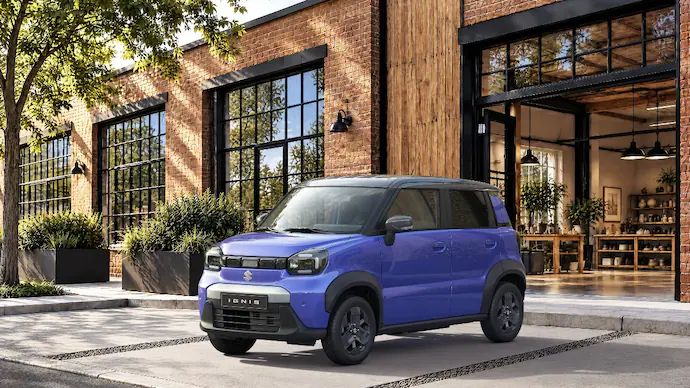
Remember the quirky Maruti Suzuki Ignis? The compact hatchback is making a comeback, but this time it has ditched its petrol engine for an all-electric powertrain. Suzuki Motor Corporation has unveiled the new Ignis EV as its first compact electric vehicle for global markets at an online world premiere held on November 25, 2026.
The new electric hatchback will go on sale in Europe and other international markets from summer 2027. Unlike the petrol-powered Ignis previously sold in India, the new model has been developed as a dedicated electric vehicle, with a focus on compact dimensions, everyday practicality and easy urban driving.
It gets a 26kWh lithium iron phosphate (LFP) battery, a front-mounted electric motor and Suzuki’s dedicated HEARTECT-e EV platform. Here’s everything you need to know about the new electric Ignis.
New Suzuki Ignis EV: Dimensions and Design
The new Ignis EV retains the compact proportions that made the original model suitable for city driving. It measures 3,570mm in length, 1,565mm in width and 1,635mm in height, while its wheelbase stands at 2,460mm. The electric hatchback gets a four-seat configuration and a minimum turning radius of 4.5 metres, which should make manoeuvring through narrow streets and crowded parking spaces easier.
| Specification | New Suzuki Ignis EV |
|---|---|
| Length | 3,570mm |
| Width | 1,565mm |
| Height | 1,635mm |
| Wheelbase | 2,460mm |
| Seating Capacity | 4 passengers |
| Minimum Turning Radius | 4.5 metres |
Suzuki has developed the exterior around three design themes: Smart, Iconic and Cozy. The design features a flowing shoulder line and a floating roof, giving the compact EV a distinctive appearance.
The front and rear LED lighting elements feature signature graphics inspired by digital numerals. According to Suzuki, the design aims to retain some familiarity with the original Ignis while giving the electric model a more contemporary identity.
Suzuki Ignis EV: Interior and Cabin Features
The cabin follows a rounded design theme, with the dashboard extending towards the door trims. Suzuki has focused on creating a practical and comfortable interior while maintaining a distinctive appearance.
The instrument panel combines a wide display screen with a storage tray featuring a ceramic-inspired finish. The overall dashboard design gives the cabin a modern look, while the storage area adds an element of everyday practicality.
The four-seat layout is another important aspect of the compact EV’s cabin. Suzuki has not yet revealed a complete list of interior features or detailed equipment specifications, so details about the infotainment system and other technology are still awaited.
Suzuki Ignis EV: Battery, Motor and Performance
The new Ignis EV uses a 26kWh lithium iron phosphate (LFP) battery paired with a newly developed electric motor. The motor, inverter and reduction gears are integrated into a compact eAxle unit, helping simplify the electric powertrain packaging.
The electric motor produces 91bhp and 133Nm of torque. Power is sent to the front wheels through a two-wheel-drive system, making the Ignis EV a front-wheel-drive electric hatchback.
| Powertrain Specification | Details |
|---|---|
| Battery Capacity | 26kWh |
| Battery Chemistry | Lithium Iron Phosphate (LFP) |
| Electric Motor Power | 91bhp |
| Peak Torque | 133Nm |
| Drive Configuration | Front-wheel drive |
| Powertrain Unit | Integrated eAxle |
Suzuki has not revealed the claimed driving range, charging time or charging specifications yet. These details are expected to be announced closer to the start of sales in 2027.
HEARTECT-e Platform and EV-Specific Hardware
The new Ignis EV is based on Suzuki’s HEARTECT-e dedicated electric vehicle platform. Unlike a conventional petrol-powered hatchback adapted to accommodate an electric motor, this platform has been developed specifically for electric vehicles.
The battery is positioned beneath the body, allowing Suzuki to make better use of the available cabin space while maintaining a lightweight and rigid structure. The electric hatchback also gets an EV-specific suspension setup designed around its electric powertrain.
Suzuki says the Ignis EV has undergone extensive testing across different road conditions. These tests included urban environments and winding roads in Europe and other markets. The company has used feedback from these tests to work on the vehicle’s power delivery and chassis tuning.
The compact dimensions, dedicated EV platform and front-wheel-drive layout are intended to make the Ignis EV suitable for everyday city use, while its chassis development aims to provide predictable handling across different driving conditions.
Braking System and Driving Experience
The new electric hatchback also gets a regenerative-hydraulic braking system, an electric brake booster and an easy-operation pedal. These systems are designed to deliver a natural braking response while accommodating the characteristics of an electric powertrain.
Regenerative braking allows the electric motor to recover energy during deceleration and send it back to the battery. By combining this technology with a hydraulic braking system, Suzuki aims to offer a familiar braking experience, particularly for drivers moving from petrol-powered cars to electric vehicles.
The electric brake booster is another part of the braking setup, while the easy-operation pedal is intended to make everyday driving more convenient. Further details about the braking system’s operation and available driving modes have not been disclosed yet.
Will the New Suzuki Ignis EV Launch in India?
There is currently no confirmation about the India launch of the new Ignis EV. The original petrol-powered Ignis was introduced in India by Maruti Suzuki in 2017 and remained on sale until it was discontinued in 2026.
However, the new electric model has been unveiled for global markets, with Suzuki confirming that sales will begin in Europe and other markets from summer 2027. The company has not announced whether India will be among the markets to receive the electric hatchback.
If introduced in India, the Ignis EV would bring back a familiar nameplate in an entirely different form. However, its launch prospects will depend on Suzuki’s future market plans, pricing strategy and product positioning.
New Suzuki Ignis EV: Expected Launch Timeline
Suzuki has confirmed that the new Ignis EV will begin reaching global markets from summer 2027. However, its exact launch dates, market-wise availability and pricing have not been announced yet.
| Detail | Information |
|---|---|
| Global Unveiling | November 25, 2026 |
| First Sales | Summer 2027 |
| Initial Markets | Europe and other global markets |
| India Launch | Not confirmed |
| Price | Not announced |
Conclusion
The new Suzuki Ignis EV marks a major transformation for the familiar compact hatchback. It retains the original model’s focus on compact dimensions and urban usability but introduces a dedicated electric platform, a 26kWh LFP battery and a 91bhp front-mounted electric motor.
Its four-seat layout, compact footprint and 4.5-metre turning radius should make it well suited to city driving. However, important details such as its claimed driving range, charging capabilities and pricing are still awaited.
For now, the new Ignis EV is confirmed for global markets, with sales scheduled to begin in summer 2027. Whether this all-electric version will eventually make its way to India remains to be seen.
For breaking news and live news updates, like us on Facebook or follow us on Twitter and Instagram. Read more on Latest Automobile on thefoxdaily.com.






COMMENTS 0