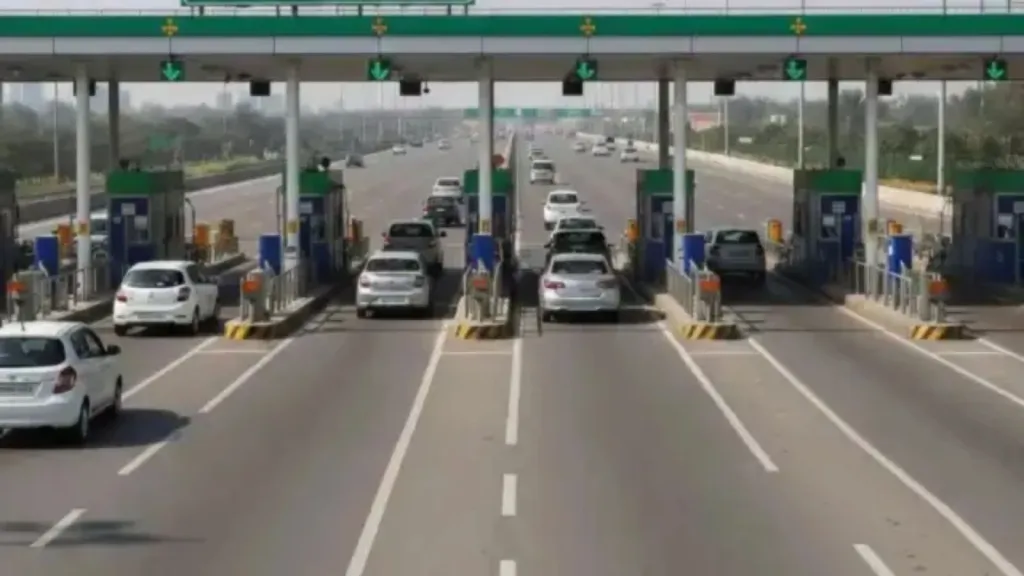
India’s barrier-less tolling system is facing a growing challenge as an increasing number of vehicles pass through Multi-Lane Free Flow (MLFF) toll plazas without being identified or paying the required user fee. The issue has raised concerns for the National Highways Authority of India (NHAI) and the Ministry of Road Transport and Highways (MoRTH), particularly over revenue losses and the possible misuse of the system.
At the Shahjahanpur toll plaza on the Delhi-Jaipur section of National Highway 48 (NH-48) in Rajasthan, at least one in every 10 vehicles has been classified as unidentified. Similar cases have been reported at other locations, including Delhi’s Mundka-Bakkarwala toll plaza and Manoharpura on NH-48.
Authorities are now discussing ways to identify these vehicles, recover unpaid toll charges and take action against suspected violations. The discussions involve investigating agencies and GST authorities, as unidentified vehicles could potentially be linked to activities such as smuggling, illegal sand mining, criminal operations and GST evasion.
Key Highlights of Unidentified Vehicles at MLFF Toll Plazas
- At least 10% of vehicles at Shahjahanpur toll plaza have been classified as unidentified.
- Around 2% of vehicles at Mundka-Bakkarwala and 3% at Manoharpura could not be identified.
- NHAI is considering penalties exceeding twice the toll amount and registration of FIRs.
- Authorities are developing an internal portal to share unidentified vehicle data with relevant departments.
- India plans to expand MLFF tolling across four-lane and wider national highways and expressways by March 2029.
Why Are Vehicles Going Unidentified at Barrier-Less Toll Plazas?
An unidentified vehicle is one whose registration number plate or FASTag cannot be properly detected, or where the two do not match. This can happen when a number plate or FASTag is covered, hidden or not visible to the tolling system. Fake or impersonated number plates can also prevent accurate identification.
Under the MLFF system, vehicles can pass through toll points without stopping at physical barriers. Cameras and electronic systems capture vehicle details, while the FASTag system is used to process toll payments. For a successful identification and deduction, the FASTag information must match the vehicle’s registration number.
If a FASTag has insufficient balance, an electronic notice is issued, giving the vehicle owner 72 hours to pay the toll. However, when both the vehicle and its payment details cannot be identified, authorities face difficulties recovering the outstanding amount.
This creates a gap in toll collection because the system does not have a physical barrier or toll booth operator to stop vehicles that cannot be verified automatically.
Unidentified Vehicles Raise Concerns Over Illegal Activities
The growing number of unidentified vehicles has become a concern beyond the loss of toll revenue. According to officials familiar with the discussions, authorities are examining whether some vehicles could be involved in illegal activities, including smuggling, unauthorised sand mining and other criminal operations.
There are also concerns about possible GST evasion. The e-way bill system is linked to FASTag information, which helps authorities monitor the movement of goods. If a vehicle’s identity cannot be established, tracking its movement through these linked systems can become more difficult.
The issue also affects NHAI and banks financially because unpaid toll charges cannot easily be recovered when a vehicle remains unidentified.
NHAI Considers Penalties and FIRs Against Violators
Authorities are discussing stricter enforcement measures to discourage vehicles from bypassing toll payments. Options under consideration include imposing a penalty of more than twice the applicable toll amount and registering a First Information Report (FIR) in relevant cases.
A final decision on the proposed measures is expected within a month, according to the information provided by sources. The authorities are also developing a dedicated internal portal to collect and share information about unidentified vehicles with relevant government departments and investigating agencies.
Officials have highlighted that deliberately impersonating a vehicle registration number is a serious offence and should not be treated as an ordinary toll violation. The MLFF system makes such cases more visible because it requires a match between the vehicle’s number plate and its FASTag.
Unidentified Vehicle Numbers Increasing at Toll Plazas
Data from several MLFF toll plazas indicates that unidentified vehicle cases have been recorded since the system became operational at these locations. The figures show the scale of the identification challenge across different highways.
- Manoharpura toll plaza, Rajasthan: MLFF became operational on July 1. More than 99,500 unidentified vehicles were recorded out of approximately 31.74 lakh vehicles that crossed the plaza by October 21.
- Shahjahanpur toll plaza, Rajasthan: The system went live on August 1. Around 2.60 lakh unidentified vehicles were recorded out of approximately 24 lakh vehicles during the reported period.
- Paranur toll plaza, Tamil Nadu: After MLFF operations began on October 1, more than 500 unidentified vehicles were recorded during the first 20 days.
These figures highlight why authorities are focusing on better vehicle identification and stronger enforcement. The problem is particularly significant on the Gurgaon-Jaipur stretch of NH-48, where all three toll plazas on the corridor operate under the barrier-less system.
Why the Gurgaon-Jaipur NH-48 Corridor Is a Major Concern
The Gurgaon-Jaipur section of NH-48 presents a particular challenge because MLFF is operational at Daulatpura, Manoharpura and Shahjahanpur toll plazas. With all three locations operating without physical barriers, an unidentified vehicle could potentially travel across the entire corridor without paying the required toll.
At conventional toll plazas, physical barriers and staff can help prevent vehicles from passing without completing the payment process. Under MLFF, identification and payment verification depend more heavily on automated technology, making accurate number plate detection and FASTag matching essential.
Authorities are reviewing the situation every 15 days. They are also considering a staggered rollout of MLFF to help identify vehicles using information captured at conventional boom-barrier toll plazas.
AI to Help Identify Unidentified Vehicles
Artificial intelligence is expected to play an important role in improving vehicle identification across the highway network. Officials are examining a system that can combine information from the VAHAN vehicle database with FASTag transaction records collected at conventional toll plazas.
The proposed process would compare details such as vehicle model and colour with available transaction information. By integrating different datasets, authorities aim to identify suspicious or unidentified vehicles within a 10-minute window.
This approach could help investigators trace vehicles even when their registration plates or FASTag details are not properly captured at a barrier-less toll plaza. It could also improve coordination between NHAI and other government departments.
However, the effectiveness of this method will depend on the accuracy of the collected information, the ability to match records and the timely sharing of data between agencies.
What Is the Multi-Lane Free Flow Tolling System?
Multi-Lane Free Flow is an electronic toll collection system designed to allow vehicles to travel through toll points without stopping at physical barriers. It uses technology to identify vehicles and process payments electronically, reducing the need for manual intervention.
The main objective is to reduce traffic congestion, improve travel times and make highway journeys more convenient. Traditional toll plazas often require vehicles to slow down or stop, particularly during busy periods. MLFF aims to remove this bottleneck by allowing vehicles to continue moving while toll transactions are processed.
NHAI introduced the system in May, with Choryasi toll plaza in Surat, Gujarat, becoming the first location to implement it. The technology has also been adopted in countries and regions such as the United States, Taiwan, Singapore and Australia.
Where Is MLFF Operational in India?
MLFF is currently operational at seven fee plazas across different national highways. These locations cover parts of Gujarat, Delhi, Haryana, Rajasthan and Tamil Nadu.
- Choryasi: NH-48, Gujarat.
- Mundka: Urban Extension Road-II, Delhi.
- Gharaunda: NH-44, Haryana.
- Manoharpura: NH-48, Rajasthan.
- Daulatpura: NH-48, Rajasthan.
- Shahjahanpur: NH-48, Rajasthan.
- Paranur: NH-45, Tamil Nadu.
The expansion of MLFF is part of India’s wider effort to modernise highway infrastructure and improve electronic toll collection.
NHAI Awards Contracts for 10 More MLFF Toll Plazas
Indian Highways Management Company Ltd (IHMCL), the tolling implementation agency of NHAI, has awarded contracts for 10 additional fee plazas. These projects will extend the barrier-less tolling network to more highways across the country.
- Gujarat: Boraich on NH-48.
- Tamil Nadu: Nemili/Sri Perumbadur and Chenasamudram on NH-48.
- Andhra Pradesh: Kasepalli, Amakathadu and Marur on NH-44.
- Maharashtra: Chalakwadi and Hiwargaon Pavsa on NH-50.
- Assam: Madanpur on NH-31.
- Haryana: Badarpur-Faridabad on NH-19.
In addition to these awarded projects, bids have been invited for another 104 fee plazas. This indicates that authorities are preparing for a much wider rollout of the technology.
India Targets MLFF Expansion by March 2029
According to the Economic Survey 2025-26, MLFF is projected to be implemented across all four-lane and wider national highways and expressways by March 2029. The target reflects the government’s ambition to move towards a more seamless and technology-driven toll collection network.
However, the rise in unidentified vehicles highlights an important challenge for this expansion. A barrier-less system can reduce congestion and improve travel efficiency, but it also requires reliable vehicle identification, accurate payment processing and effective enforcement.
Without solutions to these problems, unpaid tolls could affect revenue collection and weaken confidence in the system. The proposed AI-based identification process, internal data portal and stronger penalties are intended to address these gaps.
Conclusion
The growing number of unidentified vehicles at India’s barrier-less toll plazas has emerged as a major challenge for NHAI and the Ministry of Road Transport and Highways. Vehicles passing without proper identification can lead to unpaid toll charges, revenue losses and difficulties in monitoring highway movement.
Authorities are considering stricter penalties, FIRs and AI-based data integration to identify vehicles that fail to match their FASTag and registration details. As India plans to expand MLFF across national highways and expressways by March 2029, addressing these issues will be essential to ensuring that barrier-less tolling remains efficient, secure and financially sustainable.
For breaking news and live news updates, like us on Facebook or follow us on Twitter and Instagram. Read more on Latest Business on thefoxdaily.com.

COMMENTS 0