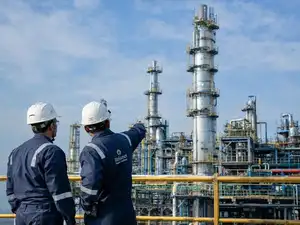
Bharat Petroleum Corporation Limited (BPCL) has approved a capital investment of ₹1,26,656 crore for developing a new greenfield refinery and petrochemical complex in Andhra Pradesh. The large-scale project is expected to expand India’s domestic refining capacity, strengthen petrochemical production and support the country’s efforts to reduce dependence on imported petroleum products.
The proposed facility represents a major investment in India’s energy and industrial infrastructure. With commercial operations scheduled to begin in July 2032, the project is expected to contribute to the country’s long-term fuel supply and petrochemical manufacturing capabilities.
BPCL Approves ₹1.26 Lakh Crore Greenfield Project
The BPCL board has approved capital expenditure of ₹1,26,656 crore for the proposed refinery and petrochemical complex in Andhra Pradesh. As a greenfield development, the project involves establishing a new industrial facility rather than expanding an existing refinery.
The investment will support the development of refining infrastructure and associated petrochemical production facilities. By combining these operations within one complex, BPCL aims to strengthen its ability to process crude oil and produce petroleum-based products used across different industries.
The scale of the proposed investment highlights the importance of refining and petrochemicals in India’s broader industrial development. Petroleum products remain essential for transportation, manufacturing and several other economic activities, while petrochemical materials are widely used in packaging, textiles, chemicals and consumer products.
Commercial Operations Scheduled for July 2032
BPCL expects the new complex to begin commercial operations in July 2032. The timeline places the project within a long-term infrastructure development cycle involving construction, installation of refining equipment and preparation of the associated petrochemical facilities.
Greenfield refinery projects typically require substantial planning and capital because they involve developing an industrial site and installing complex processing infrastructure. The proposed investment of ₹1.26 lakh crore reflects the scale of the planned development.
The period leading up to commercial operations will be important for project execution. Construction progress, infrastructure development and the completion of major facilities will determine whether the project remains aligned with its proposed operational timeline.
How the Project Could Strengthen India’s Domestic Fuel Production
One of the key objectives of the investment is to increase domestic production of important transportation fuels. India relies on petroleum products to support its large transport network, including road vehicles, aviation and other fuel-consuming sectors.
Expanding domestic refining capacity could help strengthen the country’s ability to meet demand through locally processed crude oil. BPCL’s proposed complex is intended to contribute to this objective by increasing the availability of domestically produced petroleum products.
Reducing reliance on imports is an important consideration for India’s Energy Sector. International crude oil and refined-product markets are influenced by geopolitical developments, supply disruptions, global demand and changes in commodity prices.
Although additional domestic refining capacity cannot eliminate India’s dependence on imported crude oil, it can increase the country’s capacity to process crude and produce fuels within its own industrial infrastructure. The extent of the project’s contribution will depend on its eventual capacity, production mix and operating performance.
Why Petrochemical Production Is an Important Part of the Investment
The proposed development is not limited to conventional petroleum refining. It also includes a petrochemical complex, giving the project a broader industrial role.
Petrochemicals are chemical products derived from crude oil and natural gas processing. They serve as essential raw materials for industries that manufacture plastics, synthetic fibres, packaging materials, chemicals and other industrial products.
Growing petrochemical production within India could support domestic manufacturing by improving access to important industrial feedstocks. It may also help strengthen supply chains for businesses that currently depend on imported petrochemical materials.
Integrating refining and petrochemical operations can allow companies to use petroleum-based feedstocks across multiple production processes. This approach can broaden the range of products generated from crude oil and create opportunities to serve different industrial markets.
For BPCL, the proposed complex therefore represents an investment in both transportation fuel production and the wider petrochemical value chain.
What the Investment Means for Andhra Pradesh
The proposed refinery and petrochemical complex could become a significant industrial development for Andhra Pradesh. A project of this scale may support economic activity through construction work, infrastructure requirements and demand for services associated with large industrial facilities.
Once operational, the complex could also create opportunities across industrial supply chains, including transportation, equipment maintenance, logistics and other supporting services. Petrochemical manufacturing may provide additional opportunities for industries that use petroleum-based raw materials.
However, the full economic impact will depend on the project’s execution, the scale of employment generated and the development of supporting infrastructure. The proposed investment figure represents the approved capital expenditure and should not be interpreted as a confirmed estimate of jobs or wider economic benefits.
BPCL’s Long-Term Strategy and India’s Energy Requirements
The investment comes against the backdrop of India’s continuing need to strengthen its energy infrastructure. Economic activity, urbanisation and industrial development create demand for transportation fuels and a wide range of petroleum-based materials.
Refineries play an important role in meeting these requirements by converting crude oil into usable products. Petrochemical facilities extend this industrial activity by supplying materials used in manufacturing and consumer industries.
For an energy company such as BPCL, investing in additional refining and petrochemical infrastructure can help expand its production capabilities and position it to serve different segments of the domestic market.
At the same time, large projects require careful assessment of future demand, operating costs, feedstock availability and market conditions. Changes in global energy consumption, crude oil prices and the adoption of alternative energy sources could influence the commercial environment by the time the facility begins operations.
Key Factors to Watch Before the Project Becomes Operational
While BPCL has approved the investment, the project’s long development period means several factors will remain important before commercial operations begin in July 2032.
- Project execution: Construction and installation of the refinery and petrochemical facilities will be central to meeting the proposed operational schedule.
- Domestic fuel demand: Future demand for transportation fuels will influence the commercial role of the additional refining capacity.
- Petrochemical market conditions: Demand for plastics, chemicals and other petroleum-based materials could affect the complex’s production opportunities.
- Crude oil supply and prices: Access to crude oil and fluctuations in international prices will remain important considerations for refinery operations.
- Import dependence: The project’s eventual contribution to domestic fuel availability will depend on its operating capacity and production mix.
These factors will help determine how effectively the new complex supports BPCL’s objectives and India’s broader energy requirements.
What Happens Next?
With the capital expenditure approved, the focus will shift towards advancing the development of the greenfield project. The proposed complex will require significant execution work before it can begin commercial production.
The July 2032 operational target provides a long-term timeline for the development. Progress on construction, infrastructure and facility commissioning will be important indicators as the project moves towards completion.
For BPCL, the investment of ₹1,26,656 crore represents a major commitment to expanding refining and petrochemical capabilities. For India, the project could add to domestic fuel production capacity and strengthen the industrial supply chain for petrochemical products.
The eventual impact will depend on how efficiently the project is delivered and how market demand develops over the coming years. If completed as planned, the Andhra Pradesh complex could become an important part of BPCL’s refining and petrochemical operations while supporting India’s longer-term domestic production ambitions.
For breaking news and live news updates, like us on Facebook or follow us on Twitter and Instagram. Read more on Latest Business on thefoxdaily.com.






COMMENTS 0