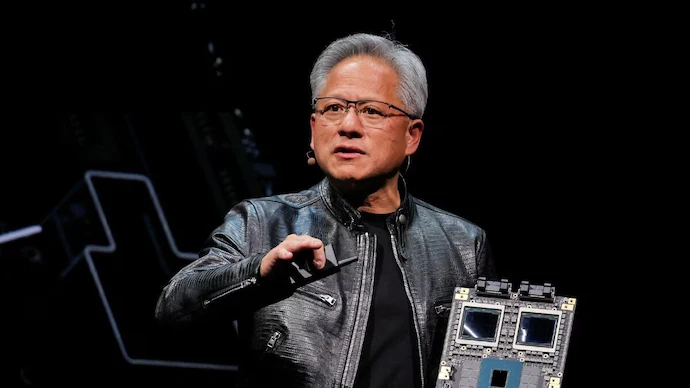
Nvidia CEO Jensen Huang defended the company’s business engagement with China just weeks before the semiconductor giant launched an independent investigation into reports that he may have been targeted by a Chinese intelligence operation. His earlier comments about US-China technology relations have attracted renewed attention as allegations involving a former business executive come under scrutiny.
In an interview filmed less than a month ago with Bloomberg’s Emily Chang for an upcoming episode of The Circuit, Huang argued that the United States should continue serving the Chinese market and maintain dialogue with Beijing on Artificial Intelligence. He also criticised restrictions that have limited Nvidia’s ability to sell advanced chips in China.
The interview has gained significance following reports that US intelligence officials suspect Alice Huang, a former executive at Singapore-based Megaspeed International, was recruited by China’s Ministry of State Security to cultivate a relationship with the Nvidia chief and collect information about him.
Nvidia’s board announced an independent investigation on November 8. Huang has said he will cooperate fully, while the company has stated that it currently has no reason to believe its confidential information or US national security interests were compromised.
Key Highlights
- Jensen Huang defended Nvidia’s engagement with China in a recent Bloomberg interview.
- He argued that the US should continue serving the Chinese market despite growing competition in artificial intelligence.
- US intelligence officials reportedly suspect former Megaspeed executive Alice Huang of cultivating a relationship with the Nvidia CEO on behalf of Chinese intelligence.
- Nvidia’s board launched an independent investigation on November 8 into reports of a possible foreign intelligence operation.
- No finding has established that Jensen Huang shared confidential information with China or that Nvidia’s secrets were compromised.
Jensen Huang Defended Nvidia’s Business Engagement With China
During the Bloomberg interview, Huang explained that he had tried to convince US policymakers that maintaining commercial engagement with China was important for the American Semiconductor Industry.
He argued that Nvidia should continue serving Chinese customers for as long as US regulations allowed. According to Huang, restrictions on chip exports had created a difficult situation for the industry and made it harder to maintain access to an important technology market.
Huang acknowledged that the US approach had created a problem that would be difficult to reverse. He said he had made efforts to explain the importance of engaging with China to American policymakers.
His remarks reflect a wider debate in the semiconductor industry over whether restricting advanced chip exports can protect US technological advantages while also affecting the commercial interests of American companies.
Nvidia has a significant position in the global AI chip market, and access to international customers is an important part of its business strategy. However, sales of advanced processors to China have become a sensitive issue because of US export-control policies and concerns about national security.
‘China Is Not Our Enemy’: Huang Calls for AI Dialogue
One of the most notable parts of Huang’s interview was his argument that China should not automatically be treated as an enemy despite the growing competition between the two countries in artificial intelligence.
He pointed to China’s large community of AI researchers and said many were working in research laboratories. Huang argued that competition in technology should not prevent the two countries from communicating about important issues.
He also stressed the need for cooperation on AI safety, suggesting that international dialogue is necessary because the technology could have implications beyond national borders.
According to Huang, countries concerned about the safe development of artificial intelligence should maintain communication and explore opportunities to work together.
His position highlights the tension between commercial cooperation and national security concerns. While technology companies may benefit from international markets and research collaboration, governments increasingly view advanced AI chips as strategically important resources.
Huang Defended China’s Right to Pursue Economic Growth
During the interview, Huang was asked whether there was anything China could do that would convince him Nvidia should stop selling its chips to the country.
He acknowledged that several circumstances could theoretically influence such a decision but described China’s leadership as pragmatic. He said both the United States and China wanted to improve their economic position and create prosperity for their people.
Huang argued that China’s ambition to become economically successful should be respected, just as the United States seeks prosperity for its own population.
He also praised China’s economic development, particularly its role in improving opportunities and living standards for hundreds of millions of people. According to him, this progress had produced benefits extending beyond China’s borders.
These comments underline Huang’s broader argument that economic development and international business engagement should remain part of the discussion even when countries compete in strategically important technologies.
Why Jensen Huang’s Bloomberg Interview Is Back in Focus
The interview has attracted renewed attention because of allegations involving Alice Huang, a former executive at Singapore-based Megaspeed International, a company that purchases Nvidia chips.
The New York Times reported that US intelligence officials suspected she had been recruited by China’s Ministry of State Security to gather information about Jensen Huang and potentially influence access to advanced American AI processors.
The allegations were based on information from unnamed sources familiar with US intelligence reporting. They have not been established as proven findings.
The situation has raised questions about the potential risks faced by senior executives at major technology companies, particularly those working in industries connected to national security and international competition.
However, the existence of an investigation does not establish that an intelligence operation successfully obtained confidential information or influenced Nvidia’s business decisions.
Megaspeed International Faces Scrutiny Over Nvidia Chip Sales
Megaspeed International has also attracted attention over suspicions that it helped China obtain advanced Nvidia processors restricted under US export-control rules.
The issue is significant because American export restrictions are designed to limit China’s access to certain advanced computing technologies that could have strategic and military applications.
Nvidia has previously said it checked that Megaspeed did not illegally send its AI processors to China. The allegations involving the company and its former executive have nevertheless brought renewed scrutiny to the movement of advanced semiconductor products through international business networks.
For Nvidia, the matter involves two sensitive areas: compliance with US export rules and the protection of information connected to its leadership and technology.
Any conclusions about Megaspeed’s role or the alleged intelligence activity will depend on the evidence examined during the relevant investigations.
Nvidia Board Launches Independent Investigation
On November 8, Nvidia’s board announced an independent investigation into reports that Jensen Huang had been targeted by a foreign intelligence operation.
A committee made up of independent directors will oversee the inquiry, with assistance from external legal counsel. The investigation is intended to examine available information and determine whether the reported activity had any implications for the company.
Nvidia said the board currently had no reason to believe that its confidential information or US national security interests had been compromised. The company nevertheless decided to investigate the allegations.
The independent review is important because Nvidia operates in a strategically sensitive industry where information about advanced chips, research and business relationships can have significant commercial and national security implications.
Until the investigation produces findings, the allegations should remain separate from established facts about the company’s operations and Huang’s conduct.
Jensen Huang Apologises to Family and Colleagues
Alongside the intelligence-related allegations, Huang has acknowledged being unfaithful to his wife and apologised to his family and colleagues.
In a message to employees, he said he supported the board’s independent investigation and would cooperate fully with the process.
The personal admission has added another dimension to the public attention surrounding the Nvidia chief. However, it is important to distinguish the personal matter from the separate allegations concerning possible foreign intelligence activity.
There is currently no established finding that Huang passed confidential Nvidia information to Chinese officials or that the company’s national security interests were compromised.
US-China Chip Restrictions Remain a Major Challenge for Nvidia
The controversy comes at a time when the United States and China are competing for leadership in artificial intelligence and advanced semiconductor technology.
Advanced AI processors are essential for training and operating powerful AI models. As a result, access to high-performance chips has become an important part of the broader technology and national security debate.
US export restrictions have limited Nvidia’s ability to sell certain advanced processors to Chinese customers. These controls create challenges for American chipmakers that want to maintain international sales while complying with government regulations.
For Nvidia, China represents a commercially important market, but its access to that market depends on changing export rules and government decisions. Huang’s comments show why he has argued for continued engagement, while the intelligence allegations highlight the security concerns surrounding international business relationships.
What the Investigation Could Mean for Nvidia
The independent investigation will need to establish whether the reported foreign intelligence effort took place and whether it had any impact on Nvidia, its leadership or its business operations.
Several issues are likely to be important, including the nature of the relationship between Huang and Alice Huang, the role of Megaspeed International and whether any confidential company information was accessed or disclosed.
The review may also draw attention to how multinational technology companies manage relationships with business partners in markets where commercial interests overlap with national security concerns.
For investors and industry observers, the investigation is relevant because Nvidia operates at the centre of the global AI semiconductor market. Any confirmed security or compliance issue could raise questions about corporate governance, business relationships and regulatory exposure.
However, no conclusion should be drawn before the independent review establishes the facts.
Conclusion
Jensen Huang’s defence of Nvidia’s engagement with China has gained renewed attention following reports of a possible foreign intelligence operation involving a former business executive. In his Bloomberg interview, the Nvidia CEO argued that the United States should continue serving Chinese customers and maintain dialogue with Beijing on artificial intelligence.
Meanwhile, Nvidia’s board has launched an independent investigation into allegations that Huang was targeted by Chinese intelligence. The company has said it currently has no reason to believe its confidential information or US national security interests were compromised.
The investigation will be important in determining whether the reported activity affected Nvidia or its business relationships. Until its findings are available, the allegations remain unproven, and there is no established evidence that Huang shared confidential information with China.
For breaking news and live news updates, like us on Facebook or follow us on Twitter and Instagram. Read more on Latest Business on thefoxdaily.com.






COMMENTS 0