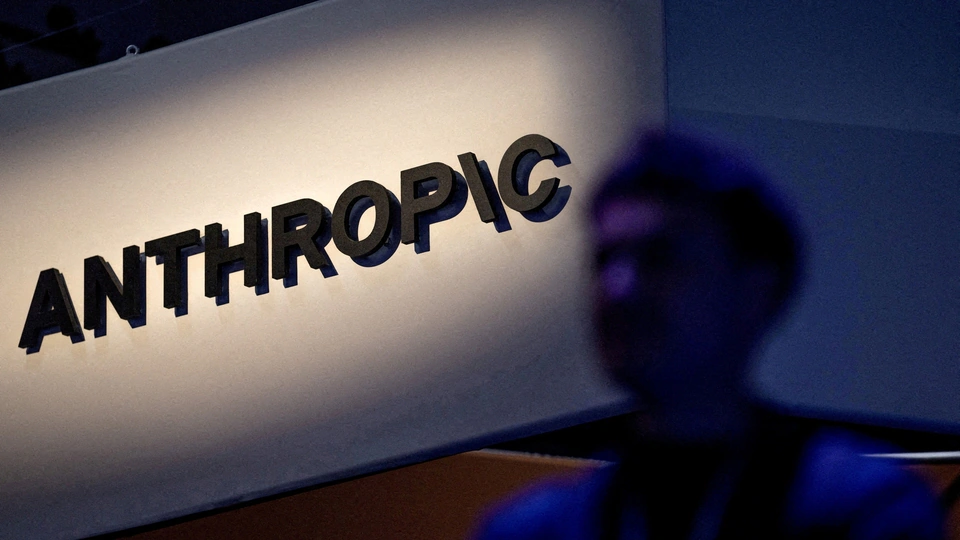
Artificial Intelligence company Anthropic is preparing to price one of the largest technology initial public offerings in history, offering investors an opportunity to buy shares in the company behind the Claude chatbot. The planned Nasdaq debut comes at a turbulent moment for the AI industry, with concerns about enormous technology spending, volatile share prices and the leadership crisis at Nvidia creating fresh uncertainty across markets.
Investor demand for Anthropic’s shares has reportedly been exceptionally strong. Institutional investors have indicated interest worth approximately $400 billion, while retail investor demand has approached $100 billion, according to figures reported by CNBC. The combined interest has put the offering heavily oversubscribed, although these indications of interest are not the same as completed share purchases.
Anthropic is expected to set its final IPO price on Wednesday, November 18, potentially above its initial range of $70 to $78 per share. Reports suggest that a price exceeding $80 could value the company at approximately $1.5 trillion to $1.6 trillion. Trading is expected to begin on the Nasdaq on Thursday under the ticker symbol ANT.
The timing is particularly significant because Nvidia, one of Anthropic’s investors and a central supplier to the AI industry, is facing an unprecedented leadership crisis following Jensen Huang’s resignation. The controversy has intensified questions about corporate governance, national security and the risks surrounding the companies financing the artificial intelligence boom.
Anthropic IPO Attracts Massive Investor Demand
Anthropic’s proposed Stock Market listing has attracted substantial interest from both institutional and individual investors. The reported $400 billion in institutional demand and nearly $100 billion in retail interest indicate that investors are eager to gain exposure to a major standalone artificial intelligence company.
At the upper end of its original price range, the offering would already represent one of the largest public listings in the technology sector. Strong demand has raised expectations that Anthropic could increase its final share price beyond the initial $70-to-$78 range.
Reports indicate that the company could price its shares above $80, potentially taking its valuation to between $1.5 trillion and $1.6 trillion. Earlier market estimates had placed its potential valuation as high as $2 trillion, but those expectations moderated as technology stocks experienced significant volatility.
The final IPO price is an important part of the listing process. Anthropic and its underwriting banks must determine the price at which shares will be sold to investors who submitted orders during the offering. That decision typically reflects demand, market conditions, the company’s financial position and the number of shares being offered.
Even with an oversubscribed order book, a higher valuation is not guaranteed to translate into sustained gains after trading begins. Investors will ultimately judge the company on its revenue growth, profitability prospects, competitive position and ability to meet the enormous infrastructure costs associated with developing advanced AI systems.
Anthropic Targets Nasdaq Listing Under Ticker ANT
Anthropic has applied to list its Class A common stock on the Nasdaq Global Select Market under the ticker symbol ANT. Trading is expected to begin on Thursday, November 19, following the final pricing of the offering.
The listing will give public-market investors a direct opportunity to own shares in a company whose growth has so far been driven by private investment and commercial demand for artificial intelligence services.
The proposed offering includes 825 million shares of Class A common stock, comprising shares sold by Anthropic and shares offered by existing shareholders. The company is incorporated as a public benefit corporation, a structure that combines commercial objectives with an explicit public-benefit purpose.
The public listing also represents a major development for the wider AI investment market. Until now, investors seeking exposure to companies developing advanced AI models have often relied on established technology businesses, venture capital funds or private-market investment opportunities.
A standalone Anthropic listing could provide a more direct way to assess how public investors value a leading AI model developer. Its performance could also influence expectations for other privately held AI companies considering future stock market listings.
Claude Revenue Surges as Enterprise Demand Expands
Anthropic’s financial growth is a major reason behind the enthusiasm surrounding its IPO. The company has expanded rapidly through commercial demand for its Claude family of artificial intelligence models, particularly among businesses using AI for software development and computer coding.
Its revenue reached approximately $17 billion in the third quarter of 2026, compared with around $1.4 billion in the same quarter a year earlier. The increase illustrates how quickly demand for advanced AI tools has expanded as companies integrate them into business operations.
Claude has become particularly prominent in software development. Businesses and developers use AI models to generate code, identify errors, explain complex programming tasks and assist with software engineering workflows. These applications have helped create a substantial commercial market for AI services.
Anthropic’s growth also reflects a broader shift in how businesses purchase artificial intelligence. Rather than treating AI as an experimental technology, companies are increasingly paying for tools that can support everyday work, improve productivity and automate selected tasks.
However, rapid revenue growth does not automatically establish long-term profitability. AI developers must spend heavily on computing infrastructure, specialised chips, data centres and model training. Their ability to convert rising customer demand into sustainable earnings will be a central question for public investors.
Anthropic Reports Significant Losses Despite Revenue Growth
Anthropic’s financial disclosures also highlight the costs associated with building advanced AI systems. Alongside its $17 billion third-quarter revenue, the company reported a net loss of approximately $23.3 billion for the same period.
The reported loss included a substantial non-cash accounting charge associated with changes in the valuation of convertible notes, derivative liabilities and other financing arrangements. This distinction matters because the headline net-loss figure does not represent only the company’s operating expenses or cash consumed during the quarter.
Nevertheless, the financial results underline the difficulty of evaluating AI businesses using conventional technology-sector benchmarks. Companies developing frontier AI models can generate substantial revenue while simultaneously committing enormous resources to computing capacity and research.
Investors will need to examine several measures beyond revenue growth, including operating expenses, infrastructure commitments, cash requirements and the efficiency with which computing resources are converted into commercial services.
The central question is whether Anthropic can maintain its rapid expansion while improving its financial efficiency. If revenue continues to grow faster than the cost of serving customers and developing models, the company could strengthen its long-term business position. If infrastructure expenses rise too quickly, however, profitability could remain difficult to achieve.
Jensen Huang’s Resignation Adds Pressure to the AI Investment Market
Anthropic’s IPO is taking place amid a major crisis at Nvidia, the semiconductor company whose processors have become essential to the global AI infrastructure boom.
Nvidia co-founder and former chief executive Jensen Huang resigned on November 12 following reports about extramarital relationships, including one involving Alice Huang, a former executive at Megaspeed International who has been investigated by US authorities over suspicions of links to Chinese intelligence.
Huang admitted to being unfaithful to his wife, but the wider espionage allegations remain a separate matter. US authorities’ suspicions about Alice Huang have not been independently established as proof that she worked for the Chinese government. Beijing has denied the allegations.
Nvidia’s board launched an independent investigation into the circumstances surrounding Huang’s relationship and potential national-security implications. The company has said it had no reason to believe that its trade secrets or national security had been compromised.
Huang’s departure has unsettled investors because Nvidia is not simply another semiconductor manufacturer. Its graphics processing units and associated computing technologies are central to the infrastructure used by major AI developers, cloud providers and research organisations.
The company is also an investor in Anthropic and several other businesses involved in artificial intelligence. Any uncertainty surrounding Nvidia’s leadership, business relationships or investment strategy therefore has implications beyond the chipmaker itself.
For Anthropic, the connection is especially important because advanced AI models require access to enormous computing resources. The stability of hardware suppliers and financing partners can influence the cost and availability of the infrastructure needed to develop and operate those models.
Why the Nvidia Controversy Matters to Anthropic Investors
The Nvidia controversy has added another layer of uncertainty to an already volatile AI market. Investors are not only evaluating whether AI companies can generate enough revenue to justify their valuations; they are also examining the governance and geopolitical risks surrounding the companies supporting the industry.
Nvidia’s position in the AI supply chain makes its leadership transition particularly important. The company supplies computing hardware to businesses developing large language models, AI assistants and other advanced applications. It also maintains commercial and investment relationships across the technology sector.
A disruption in Nvidia’s strategy could influence investor confidence in companies that depend on its technology. Even if Anthropic’s day-to-day operations remain unaffected, developments involving a major investor and supplier can influence how markets assess its business risks.
The controversy also intersects with US-China technology tensions. Advanced AI chips are strategically important because they can support sophisticated computing applications, including military and intelligence-related research. Questions about access to restricted technology have therefore become a major concern for policymakers and investors.
For Anthropic shareholders, the issue is not simply whether Nvidia’s stock price rises or falls. It is whether the wider technology ecosystem can continue delivering the computing capacity, capital and commercial partnerships needed to support the next generation of AI models.
AI Stocks Face Pressure as Investors Question Spending
The wider AI investment market has experienced sharp price movements as investors reassess the enormous sums being committed to artificial intelligence infrastructure.
Technology companies have announced major investments in data centres, specialised processors, networking equipment and energy infrastructure. These investments are intended to support growing demand for AI services, but they also raise questions about how quickly the spending will generate financial returns.
Investors are increasingly looking beyond announcements about new models and computing facilities. They want evidence that businesses are converting AI adoption into measurable productivity improvements, recurring revenue and sustainable earnings.
This has created a more complicated environment for companies preparing to enter public markets. Strong demand for AI technology can support high valuations, but concerns about infrastructure costs and uncertain returns can quickly affect investor sentiment.
Anthropic’s IPO will therefore serve as an important test of whether public investors are still willing to pay a premium for a company with exceptional revenue growth but substantial financial and infrastructure commitments.
US Midterm Election Results Add a Regulatory Dimension
Anthropic’s planned listing also coincides with a shift in the political environment in Washington. The November 3 US midterm elections gave Democrats control of both chambers of Congress, setting up a period of divided government when the new Congress takes office in January 2027.
Democratic lawmakers have raised concerns about several aspects of the AI industry, including data-centre expansion, energy consumption, labour-market disruption, privacy and the concentration of technological power among a small number of companies.
The election results do not automatically mean that new AI regulations will be introduced. However, Democratic control of Congress could increase scrutiny of the industry’s business practices and infrastructure requirements.
For companies such as Anthropic, the political debate is particularly relevant because their growth depends on access to computing infrastructure and the ability to deploy increasingly powerful models across commercial markets.
Potential regulatory changes could affect how AI systems are developed, tested and deployed. They could also influence data-centre construction, transparency requirements and the responsibilities of companies operating advanced AI services.
Anthropic has publicly positioned itself as a company focused on AI safety and responsible development. Its IPO disclosures devote considerable attention to the risks associated with increasingly powerful artificial intelligence systems, a position that could become important as policymakers debate how the industry should be governed.
Anthropic Warns of Catastrophic Risks From Advanced AI
One of the notable aspects of Anthropic’s IPO filing is the extensive discussion of the potential dangers associated with advanced artificial intelligence.
The company warns that highly capable AI systems could pose catastrophic or existential risks to society if they are not developed and deployed responsibly. This language reflects concerns about the possibility that increasingly advanced systems could behave in unexpected ways or be misused by individuals, organisations or governments.
AI safety has become an important part of Anthropic’s corporate identity since its establishment. The company was founded by Dario Amodei, its chief executive, and Daniela Amodei, its president, along with several former OpenAI colleagues in 2021.
The founders left ChatGPT developer OpenAI before establishing Anthropic, with a focus on developing advanced AI systems while placing substantial emphasis on safety research and responsible deployment.
The company’s public-benefit corporate structure also reflects its stated intention to balance commercial growth with broader societal considerations.
However, the IPO filing acknowledges that the company’s position on AI safety and regulation could expose it to political criticism or backlash. This is particularly relevant as governments debate how to balance innovation with safeguards against potential misuse.
Anthropic’s Dispute With the Trump Administration
Anthropic’s regulatory concerns are not limited to hypothetical future rules. The company has already faced a dispute with the Trump administration over the permitted uses of its AI technology by the US military.
The disagreement centred on the Pentagon’s proposed use of Claude. Anthropic refused to allow its technology to be used for domestic mass surveillance or lethal autonomous weapons, citing concerns about the potential consequences of those applications.
The administration subsequently ordered federal agencies to stop using Anthropic’s technology and designated the company a supply-chain risk.
The dispute illustrates the difficult choices facing AI developers as their products become relevant to national security and defence. Companies must balance commercial opportunities with decisions about which applications they are willing to support.
For investors, the conflict introduces another category of risk. Government contracts and public-sector relationships can provide significant commercial opportunities, but disagreements over technology use can also affect access to customers and government-supported projects.
Anthropic’s disclosures suggest that the company expects its positions on AI safety and regulation to remain an important part of its public identity, even as it seeks to expand commercially.
Google, Nvidia, AMD and Microsoft Back Anthropic’s IPO
Anthropic’s public offering is also accompanied by a separate private placement involving major technology companies. Google, Nvidia, AMD, Microsoft and three other technology companies have agreed to purchase approximately $26 billion worth of non-voting shares at the IPO price.
These companies are either existing investors in Anthropic or important suppliers of the computing resources required to operate its AI models. Their participation highlights how closely connected the leading AI developers have become to the technology businesses supplying their infrastructure.
The private placement is separate from the public share offering. It gives major technology companies an opportunity to maintain or expand their financial exposure to Anthropic while the company enters the public market.
The arrangement also illustrates the interdependence of the AI industry. Model developers need computing infrastructure, chipmakers benefit from demand for their processors, and cloud providers can earn revenue by supplying the resources needed to train and operate AI systems.
However, these relationships can create complicated financial dependencies. A company’s investor may also be a supplier, customer or strategic partner. Public-market investors will need to understand how these arrangements influence costs, revenue and long-term business commitments.
Anthropic IPO Could Challenge SpaceX’s Record Listing
Anthropic’s offering is expected to rank among the largest US IPOs on record. Its scale has drawn comparisons with SpaceX’s enormous public listing in June, when Elon Musk’s aerospace company raised approximately $75 billion at a valuation of $1.77 trillion.
SpaceX’s fundraising later increased to approximately $86 billion after underwriters exercised an option to purchase additional shares.
Anthropic’s proposed listing could approach that scale, depending on its final pricing, the number of shares sold and the size of the offering. A valuation between $1.5 trillion and $1.6 trillion would place it among the world’s most valuable technology businesses at the time of its debut.
The comparison also demonstrates how investor appetite for major technology companies has expanded beyond traditional software and hardware businesses. Artificial intelligence has become a major investment theme, attracting capital from institutional investors, technology companies and individual market participants.
However, large IPOs can experience significant price fluctuations after listing. Strong demand before trading begins does not guarantee that shares will maintain their initial valuation once investors can buy and sell them freely.
What Investors Will Watch After Anthropic Goes Public
Anthropic’s market debut will be closely watched because it could offer a clearer picture of how public investors value advanced AI developers. Several factors are likely to shape the company’s performance after listing.
Revenue growth and customer demand
The company’s ability to sustain its rapid revenue expansion will be central to investor confidence. Continued demand for Claude, particularly from enterprise customers and software developers, could support its growth strategy.
Infrastructure spending and profitability
Investors will examine how much Anthropic spends on computing resources and whether improvements in model efficiency can reduce the cost of delivering AI services. Revenue growth will be more valuable if the company can gradually improve its operating economics.
Competition in the AI market
Anthropic operates in a highly competitive environment that includes OpenAI, Google and other developers of advanced AI systems. The company will need to maintain the quality and commercial appeal of Claude while competing for customers, computing resources and skilled employees.
Regulatory and national-security risks
Government decisions on AI safety, military applications, data protection and technology exports could influence the company’s operations. Anthropic’s dispute with the Trump administration demonstrates that these issues can have direct commercial consequences.
Investor expectations after the listing
A high IPO valuation creates pressure to deliver strong financial performance. If growth slows or infrastructure costs rise faster than expected, investors could reassess the price they are willing to pay for the shares.
Anthropic’s IPO Becomes a Major Test for the AI Industry
Anthropic’s expected Nasdaq debut arrives at a defining moment for artificial intelligence. The company has demonstrated extraordinary revenue growth through its Claude models and attracted substantial interest from institutional and retail investors. Its proposed valuation also reflects the belief that advanced AI could become one of the most commercially important technology markets.
At the same time, the Nvidia leadership crisis, market volatility, rising infrastructure commitments and regulatory uncertainty show that the industry faces significant challenges. The financial performance of AI developers will increasingly be judged not only by their technological capabilities but also by their ability to generate sustainable returns.
The reported demand for Anthropic shares suggests that investors remain interested in gaining direct exposure to the AI boom. But the company’s valuation will ultimately depend on whether its rapid commercial expansion can support the enormous costs of developing increasingly powerful systems.
As trading is expected to begin on November 19 under the ticker ANT, Anthropic’s IPO could become a major benchmark for the next phase of AI investment. Its performance may influence how markets value other AI companies, how technology businesses finance their infrastructure and how investors assess the balance between innovation, profitability and risk.
The listing is therefore more than a fundraising milestone for Anthropic. It is a test of whether the public markets are prepared to place a trillion-dollar valuation on the future of artificial intelligence while the industry’s biggest companies navigate financial, political and technological uncertainty.
For breaking news and live news updates, like us on Facebook or follow us on Twitter and Instagram. Read more on Latest World on thefoxdaily.com.





COMMENTS 0