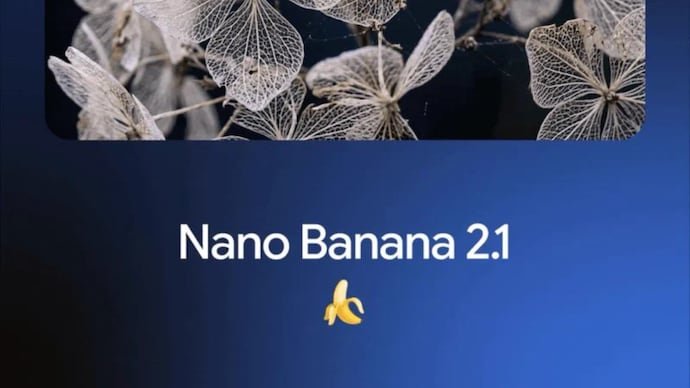
Google has launched Nano Banana 2.1, a new image generation and editing model in its Gemini 3 family that focuses on improved visual quality, stronger instruction following and significantly lower generation costs.
According to Google, Nano Banana 2.1 can generate images for nearly half the price of its predecessor while also improving how it handles complex prompts, image editing, text inside images and consistency across multiple visuals.
The model is being rolled out across several Google products and services, including the Gemini app, Google AI Studio, Gemini API, Google Search’s AI Mode, Google Ads, Flow and Stitch. The launch gives both everyday users and developers access to a cheaper image-generation system designed for more demanding creative workflows.
What Is Google Nano Banana 2.1?
Nano Banana 2.1 is Google’s latest AI model for generating and editing images. It is based on Google’s Gemini 3.6 Flash model and builds on the capabilities of earlier Nano Banana versions.
At its most basic level, the model works through natural-language instructions. A user can describe the image they want, specify visual details and ask the system to produce a new image. However, Google says Nano Banana 2.1 is designed to handle more detailed instructions with greater accuracy.
The model is also intended to make image editing more reliable. Instead of generating an entirely new image every time a change is required, users can provide an existing image and describe what they want changed.
That could include modifying clothing, replacing a background, adding or removing objects or changing the overall visual style while retaining important elements from the original image.
Nano Banana 2.1 Improves AI Image Editing
One of the key areas Google is highlighting with Nano Banana 2.1 is consistency during image generation and editing.
Users can provide multiple reference images and ask the model to combine information from them into a new visual. Google says Nano Banana 2.1 can work with up to 14 reference images at once.
The model can maintain consistency for up to four characters and 10 objects. This capability could be particularly useful for creators WHO need the same characters, products or visual elements to appear repeatedly across a collection of images.
For example, a creator working on a visual story could provide reference images for several characters and ask the model to place them in different environments. Similarly, a Business could use product reference images while generating different marketing visuals without having to recreate the product from scratch for every image.
The practical advantage is that image creation can become more of an iterative process. Users can start with an image, identify the part that needs to change and use a text instruction to modify it rather than beginning again.
Better Text Generation Inside Images
AI image generators have historically faced challenges when producing readable and correctly spelled text inside images. Google says Nano Banana 2.1 improves this area as well.
The improved text handling is particularly relevant for visual formats where words are an important part of the design. These include posters, diagrams, infographics and other informational graphics.
Better text generation can make image models more useful beyond purely artistic visuals. A user creating an infographic, presentation graphic or promotional design may need headings, labels and other written elements to appear directly within the generated image.
While text accuracy remains an important consideration with AI-generated visuals, Google’s focus on this capability indicates that image generation is increasingly being positioned as a tool for practical design and communication rather than only creative experimentation.
1K, 2K and 4K Image Generation
Nano Banana 2.1 supports multiple output resolutions, including 1K, 2K and 4K. This gives users and developers more flexibility depending on the intended use of an image.
Lower-resolution outputs can be suitable for applications where speed and cost are priorities, while higher-resolution images can be useful for projects that require greater visual detail.
The availability of 4K output is particularly relevant for professional creative workflows, where generated images may need to be used in larger designs or edited further before publication.
Google also allows users to select different levels of AI reasoning depending on how much processing they want the model to use. This provides another way to balance image-generation requirements with processing demands.
Google Search Grounding Comes to Image Generation
Another notable feature of Nano Banana 2.1 is its ability to use Google Search and Google Image Search as sources of information when generating images.
This search grounding capability can help when an image needs to be based on real-world information rather than only the model’s existing knowledge.
For example, a user may want to create a visual that depends on information about a real-world subject. Access to search information can potentially help the model incorporate relevant details into the generation process.
The feature also reflects a broader direction in generative AI, where models are increasingly being connected to live information and external search systems rather than operating entirely from their pre-existing training.
Nano Banana 2.1 Price: Nearly Half the Previous Cost
The biggest change for developers may not be a visual feature at all. It is the reduction in image-generation cost.
According to Google, a 1K image generated through the API costs around $0.0336, compared with approximately $0.067 previously.
For 4K images, the price is around $0.0756, down from about $0.151.
That means the new model costs roughly half as much as the previous model for the listed image-generation options.
| Image Output | Previous Cost | Nano Banana 2.1 Cost |
|---|---|---|
| 1K | About $0.067 | About $0.0336 |
| 4K | About $0.151 | About $0.0756 |
The reduction becomes more significant when image generation is performed at scale. A developer creating hundreds, thousands or even larger volumes of images can see the difference accumulate quickly.
Why Lower Image Generation Costs Matter
AI image generation has moved from an experimental feature into workflows used by developers, businesses, marketers and content creators. In those environments, the cost of generating individual images can become an important part of operating expenses.
A lower per-image price makes it easier to generate multiple variations, test different concepts and build applications that rely heavily on visual content.
For businesses, the cost reduction could also make automated image generation more practical. Product visuals, advertising creatives, Social Media assets and other graphics can require numerous variations, particularly when different audiences or formats are being targeted.
The lower price does not eliminate the need to consider quality, consistency and editing requirements. However, it changes the economics of experimenting with those capabilities at a larger scale.
Google Is Putting Nano Banana 2.1 Across Its AI Ecosystem
Nano Banana 2.1 is not being offered as a standalone experiment. Google is integrating the model across several of its products.
It is being rolled out through the Gemini app, Google AI Studio and Gemini API, giving both general users and developers access to the Technology.
The model is also being introduced into Google Search’s AI Mode, Google Ads, Flow and Stitch. This broader deployment means image generation and editing can become part of different stages of Google’s AI and creative ecosystem.
For developers, the Gemini API provides a way to incorporate image generation into applications and automated workflows. For consumers, integration into products such as Gemini provides a more direct way to experiment with the technology without building an application around an API.
What Nano Banana 2.1 Means for Creators
For individual creators, one of the most useful aspects of Nano Banana 2.1 may be the combination of image generation and editing rather than either capability alone.
A creator can generate an initial concept and then continue refining it through natural-language instructions. Changes to clothing, environments, objects and visual styles can be requested without necessarily starting over.
The ability to work with multiple reference images also opens up possibilities for maintaining a recognizable visual identity. Consistency is particularly important for creators producing a series of images rather than a single standalone graphic.
The improved handling of text could further expand the range of projects that can be attempted directly with an image model, particularly when the visual itself needs to contain meaningful written information.
What Developers Should Know About the New Model
For developers, Nano Banana 2.1 combines three important changes: broader image-generation capabilities, stronger editing and a lower price per generated image.
The reduction in API costs could be especially relevant for applications that generate images frequently. At the same time, developers need to consider the requirements of their particular application, including resolution, consistency, response times and the amount of reasoning required.
The ability to generate 1K, 2K and 4K images gives developers additional control over output quality and cost. Choosing the appropriate resolution can become an important part of managing an application’s image-generation budget.
Nano Banana 2.1 Pushes AI Image Generation Toward Production Use
Google’s latest model reflects the rapid shift in AI image generation from novelty to a more practical production technology.
Features such as multi-image references, character and object consistency, natural-language editing, improved text rendering and search grounding address several of the limitations that can make image-generation systems difficult to use in professional workflows.
The lower API pricing adds another important factor. When an image can be generated for substantially less, developers have more room to experiment and build applications that depend on visual generation without facing the same per-image cost.
Google’s AI Image Competition Is Getting More Intense
The launch also highlights how competitive the AI image-generation market has become. Improvements are no longer limited to producing visually impressive individual images. Models are increasingly being judged on instruction following, consistency, editing, text rendering, factual grounding, resolution and operating costs.
That shift matters because professional users often need predictable results rather than a single impressive demonstration. A model that can preserve the identity of characters and objects across multiple generations, edit existing visuals accurately and produce readable text can fit into more structured creative workflows.
By combining those capabilities with a lower price, Google is positioning Nano Banana 2.1 as an image model intended for both experimentation and larger-scale use.
Nano Banana 2.1: A Cheaper and More Capable Image Model
Google’s Nano Banana 2.1 launch combines improvements in image generation with a significant reduction in API pricing. The model is designed to follow detailed instructions more accurately, edit existing images, maintain consistency across multiple references and produce images at up to 4K resolution.
Its ability to use Google Search and Google Image Search for grounding adds another layer for tasks that depend on real-world information, while improved text generation could make the model more useful for posters, diagrams and infographics.
But the most immediate difference for developers is the price. With 1K generation costing around $0.0336 and 4K generation around $0.0756, Google says Nano Banana 2.1 can produce images for roughly half the cost of its predecessor.
As the model rolls out across Gemini, Google AI Studio, the Gemini API, Search, Ads and other products, its combination of lower costs and expanded capabilities could make AI-generated imagery more accessible for both individual creators and businesses building visual content at scale.
For breaking news and live news updates, like us on Facebook or follow us on Twitter and Instagram. Read more on Latest Technology on thefoxdaily.com.





COMMENTS 0