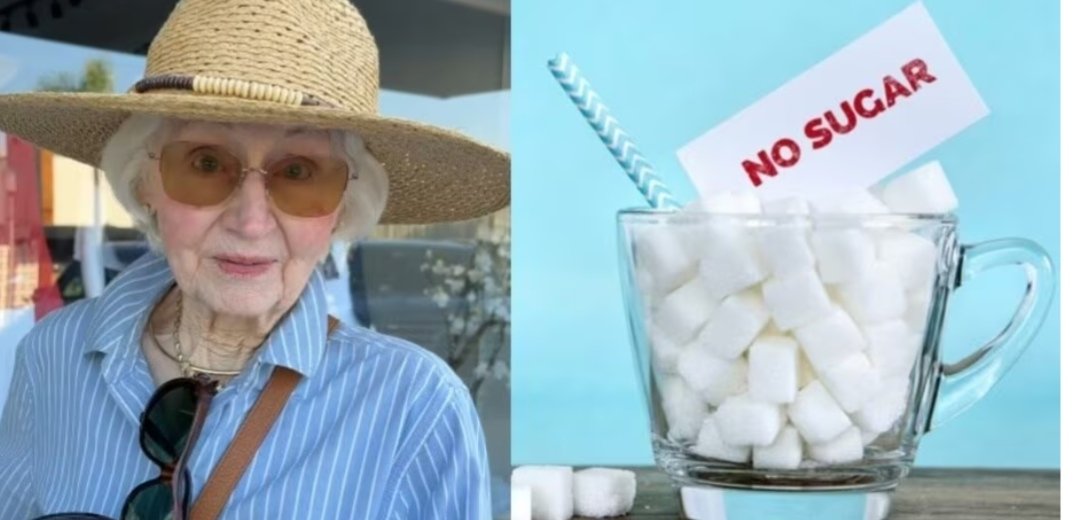
readers want to understand the 88-year-old grandmother’s daily routine, why she walks around 8 km a day, how 10,000 steps, reading and social activities may support healthy ageing, and whether avoiding sugar can genuinely contribute to Longevity.
Primary keyword: 88-year-old grandmother longevity secrets
Related semantic keywords: healthy ageing, longevity habits, 10,000 steps a day, walking for seniors, active ageing, social connection and longevity, book clubs for seniors, reducing added sugar, healthy lifestyle for older adults
An 88-year-old grandmother who walks around 8 km every day has offered a refreshingly uncomplicated explanation for how she stays active and engaged: keep moving, keep learning, maintain friendships and avoid unnecessary sugar.
Her routine has attracted attention because it sounds almost deliberately ordinary. There is no complicated biohacking protocol, expensive supplement stack or extreme diet. Instead, she reportedly aims for around 10,000 steps each day, participates in book clubs, stays socially engaged and avoids sugar.
But her story should not be interpreted as proof that these habits alone can guarantee a long life. Longevity is influenced by genetics, environment, medical history, socioeconomic factors and many other variables. What her routine does provide is a useful real-world illustration of several behaviours that research consistently associates with healthier ageing.
The most important detail may therefore not be the exact number of steps she takes. It is the fact that physical activity, mental stimulation and social interaction appear to be woven into her ordinary life rather than treated as occasional health projects.
What is the 88-year-old grandmother’s longevity routine?
According to the recent report that brought her story attention, the grandmother walks approximately 8 km a day and aims for about 10,000 steps. Her routine also includes book clubs and avoiding sugar.
These habits fall into three broad areas of healthy ageing:
- Physical activity: regular walking keeps the body moving and supports mobility.
- Mental engagement: reading and participating in book clubs provide opportunities for learning, discussion and cognitive stimulation.
- Dietary restraint: avoiding or limiting added sugar can reduce exposure to foods and drinks that provide substantial calories with relatively little nutritional value.
There is also a fourth element hiding in plain sight: social connection.
A book club is not simply a reading exercise. It creates a recurring reason to meet people, talk, listen, exchange opinions and remain part of a community.
Walking 8 km a day: why movement matters as we age
Walking is one of the simplest forms of physical activity, but its simplicity should not be confused with insignificance.
As people grow older, maintaining the ability to walk independently becomes increasingly important. Regular physical activity can support cardiovascular fitness, muscle function, bone health, balance, mobility and mental wellbeing.
The World Health Organization recommends that adults aged 65 and above undertake at least 150 minutes of moderate-intensity aerobic physical activity each week, or the equivalent amount of more vigorous activity. It also recommends muscle-strengthening activities on at least two days each week and, for older adults, activities emphasising balance and strength on three or more days a week.
That last point is particularly important when discussing an older person who walks extensively.
Walking is excellent, but healthy ageing is not only about accumulating steps. Strength and balance become increasingly important because maintaining them can help older adults preserve functional independence and reduce the risk of falls.
Does everyone need 10,000 steps a day?
No.
The popularity of the 10,000-step target can make it sound like a biological threshold: walk fewer than 10,000 steps and you have somehow failed; reach the number and longevity begins.
That is not how physical activity works.
Health benefits occur across a range of activity levels, and for someone who is currently inactive, increasing movement can be valuable even if they never approach 10,000 steps.
WHO guidance similarly emphasises that doing some physical activity is better than doing none and advises people who cannot meet the full recommendations to be as active as their abilities and health conditions allow.
For an 88-year-old who is already accustomed to walking 8 km daily, that amount may be perfectly compatible with her established fitness and lifestyle. It should not automatically become a target for every person of the same age.
Someone with arthritis, balance problems, heart disease, lung disease or another medical condition may require a very different activity plan.
The more useful lesson is consistency at an appropriate level.
The hidden benefit of a daily walking habit
One reason daily walking can be so powerful is that it can become part of a person’s identity and routine.
There is a major difference between deciding to “exercise” occasionally and building movement into everyday life.
A person who walks to shops, meets friends on foot, takes a morning walk or regularly explores their neighbourhood may accumulate physical activity without experiencing it as a formal workout.
This matters particularly in later life. Maintaining regular movement can help preserve the ability to perform everyday tasks independently.
Going up stairs, carrying groceries, getting out of a chair, walking to meet friends and navigating unfamiliar places all depend on physical capacity.
In that sense, the goal of healthy ageing is not simply to burn calories. It is to preserve the ability to participate in life.
Book clubs may be doing more than keeping her entertained
The mention of book clubs is one of the most interesting parts of the grandmother’s routine.
Reading is often discussed as a cognitive activity, but a book club adds another dimension. It requires a person to read, remember, interpret, form opinions and communicate those opinions with other people.
That combination can make a simple hobby socially and mentally engaging.
Social connection itself is increasingly recognised as an important component of healthy ageing. A major review of research on older adults found strong associations between social connection and better health outcomes, while social isolation has been associated with increased mortality risk.
This does not mean joining a book club will automatically extend someone’s life.
It does mean that activities creating meaningful social relationships may be valuable for wellbeing, particularly when they give older adults regular opportunities to interact with others.
Why social connection may be the most overlooked longevity habit
Longevity conversations often focus on food and exercise because they are easy to measure.
Steps can be counted. Calories can be estimated. Blood pressure can be recorded.
Friendship is harder to put into a spreadsheet.
Yet social connection can influence many aspects of daily life. Friends and community groups can provide emotional support, practical help, encouragement to remain active and a reason to maintain routines.
A regular book club also creates something surprisingly valuable: something to look forward to.
That may be one of the strongest insights from this grandmother’s story. Healthy ageing is not simply about avoiding illness. It is also about maintaining reasons to get up, go out, interact and remain curious.
What does “no sugar” actually mean?
The phrase “no sugar” can easily become misleading.
There is an important difference between avoiding added sugar and eliminating every food that contains naturally occurring sugars.
Fruit, for example, naturally contains sugars alongside fibre, vitamins and other nutrients. Milk contains lactose naturally. These foods are not nutritionally equivalent to sugary drinks, sweets and desserts.
The American Heart Association defines added sugars as sugars and syrups added during preparation or processing and notes that added sugars contribute calories without providing essential nutritional benefits. It recommends limiting added sugar intake.
So when someone says they avoid sugar for longevity, the more useful interpretation is generally to reduce foods and drinks high in added sugars, rather than treating all naturally occurring sugar as harmful.
Why cutting sugary drinks can be an especially practical change
Sugary drinks are an easy source of added sugar because they can deliver substantial amounts without creating the same feeling of fullness as solid food.
Reducing them can therefore be a relatively straightforward dietary improvement.
Instead of sweetened beverages, people can choose water, unsweetened tea or other drinks that do not routinely add large quantities of sugar to the diet.
The same principle applies to highly sweetened snacks and desserts: they can remain occasional foods rather than becoming everyday staples.
The key is moderation rather than fear.
The four pillars hidden in her routine
| Habit | What it can support | Important nuance |
|---|---|---|
| Daily walking | Mobility, cardiovascular fitness and physical function | Activity should match individual ability and health status |
| 10,000-step goal | Encourages regular movement | Not a universal medical requirement |
| Book clubs | Mental engagement and social interaction | The social connection may be as important as the reading |
| Less added sugar | Can reduce excess calories and improve diet quality | Naturally occurring sugars in whole foods are different from added sugars |
Together, these habits illustrate a broader concept: healthy ageing is multidimensional.
A person can be physically active but socially isolated. Another can eat a nutritious diet but spend most of the day sedentary. Someone else may exercise regularly but have little mental stimulation.
The strongest lifestyle approach is usually the one that addresses several dimensions at once.
Why the “secret” may actually be consistency
Calling these habits a “secret” makes for an attractive headline, but there is nothing particularly mysterious about them.
What is unusual is maintaining them over many years.
Most people know that walking is good for them. Most people know that excessive added sugar is not ideal. Many people understand that friendships and hobbies are important.
The difficult part is turning those ideas into routine behaviour.
That is where the grandmother’s example becomes useful.
Her reported lifestyle does not depend on a short-term challenge. It appears to be structured around repeated activities that have become normal parts of her week.
That is a very different approach from extreme “longevity hacks” that promise dramatic results after a few weeks.
Longevity is not just about living longer
There is an important distinction between lifespan and healthspan.
Lifespan refers to how long a person lives. Healthspan refers broadly to the years spent in relatively good health and functional independence.
For many older adults, the second goal is more meaningful.
Being able to walk independently, meet friends, read, travel, prepare meals and participate in community activities can make later life dramatically different from simply accumulating additional years.
The WHO’s recommendations for older adults reflect this broader perspective. Physical activity is associated not only with cardiovascular outcomes but also with cognitive health, mental health, sleep, bone health, functional ability and fall prevention.
What her routine gets right—and what it doesn’t prove
What it gets right
- It prioritises regular movement.
- It encourages an active daily routine rather than occasional exercise.
- It includes mentally stimulating activities.
- It builds social interaction into everyday life.
- It limits added sugar.
- It demonstrates that healthy habits can also be enjoyable.
What it does not prove
- Walking 10,000 steps guarantees longevity.
- A sugar-free diet prevents ageing-related disease.
- Book clubs alone protect against cognitive decline.
- Every 88-year-old should walk 8 km daily.
- These habits can override genetics or existing medical conditions.
This distinction is essential. A single person’s experience can be inspiring, but it is not a controlled scientific experiment.
Walking 8 km is impressive—but don’t copy it blindly
One of the biggest risks in viral health stories is turning an individual’s routine into a universal prescription.
An 88-year-old who has spent years developing the strength, balance and endurance required for long daily walks may tolerate that activity extremely well.
A sedentary 70-year-old starting from scratch may not.
For older adults who are inactive, WHO guidance recommends starting with amounts appropriate to their abilities and gradually increasing activity. Those with health conditions or functional limitations may need individual advice from a healthcare professional.
That means the better question is not “How can I walk 8 km?”
It is “What amount of movement can I safely and consistently build into my life?”
What older adults can learn from this routine
The most useful takeaway is to break the idea of longevity into small, achievable behaviours.
Instead of suddenly trying to reach 10,000 steps, begin by increasing daily movement gradually.
Instead of eliminating every source of sugar, start by reducing sugary drinks and foods high in added sugars.
Instead of worrying about complicated brain-training programmes, read books, learn something new or join a group where conversation and participation are encouraged.
Instead of waiting for social interaction to happen, schedule it.
These are modest changes, but they are easier to maintain.
A simple healthy-ageing routine inspired by her habits
- Move every day: Walk or perform another activity appropriate for your fitness and medical condition.
- Build strength: Include age-appropriate muscle-strengthening exercises rather than relying on walking alone.
- Work on balance: Balance-focused activity becomes particularly relevant as people age.
- Keep your mind active: Read, learn, write, play games or pursue a hobby.
- Stay socially connected: Join a book club, community group, class or regular social activity.
- Limit added sugar: Focus especially on sugary beverages and heavily sweetened foods.
- Protect sleep: Maintain a regular sleep schedule and address persistent sleep problems with a healthcare professional.
- Keep medical care current: Regular check-ups and management of conditions such as blood pressure and diabetes remain important.
The bigger lesson: make health part of life, not a separate project
Perhaps the most compelling aspect of this grandmother’s story is that none of her habits sound like punishment.
Walking can be a way to experience the neighbourhood. A book club can be entertainment. Meeting friends can be something to anticipate. Reducing added sugar does not require eliminating every enjoyable food.
That is an important distinction because sustainable health habits are easier to maintain when they provide some immediate reward.
If someone walks only because they are terrified of disease, motivation can disappear.
If they walk because they enjoy the morning air, conversation or feeling of independence, the habit can become self-reinforcing.
The same applies to social activities and hobbies.
Healthy ageing may therefore be less about forcing yourself to behave like a health enthusiast and more about designing a life in which healthy behaviours naturally fit.
Frequently asked questions about the 88-year-old grandmother’s longevity habits
How does the 88-year-old grandmother stay active?
According to the report, she walks approximately 8 km every day and aims for around 10,000 steps. Her routine also includes book clubs and social activities.
Does walking 10,000 steps a day guarantee a longer life?
No. Ten thousand steps is not a universal longevity requirement. Research supports regular physical activity, but the appropriate amount varies according to age, fitness, health conditions and ability.
Is 8 km of walking every day safe for every older adult?
No. An 8 km daily walk may be appropriate for a highly active older adult but excessive for someone who is sedentary or has mobility or medical problems. Older adults should increase activity gradually and seek professional advice when necessary.
Why are book clubs good for older adults?
Book clubs combine reading with social interaction, discussion and regular participation. Social connection is associated with better health and survival, although a book club itself cannot be considered a guaranteed longevity intervention.
Does avoiding sugar help with healthy ageing?
Limiting added sugar can be part of a healthy dietary pattern because added sugars provide calories with little nutritional value. It is different from eliminating naturally occurring sugars found in foods such as fruit and milk.
What does WHO recommend for physical activity after age 65?
WHO recommends at least 150 minutes of moderate-intensity aerobic activity each week for older adults, with additional benefits possible at higher levels. It also recommends muscle-strengthening activity at least two days a week and balance and strength-focused multicomponent activity for older adults.
Is walking enough for healthy ageing?
Walking is an excellent form of aerobic activity, but healthy ageing also benefits from strength and balance training. Combining different types of activity can better support functional ability and help reduce fall risk.
What is the biggest longevity lesson from her story?
Consistency may be more important than chasing a perfect routine. Regular movement, meaningful social connections, mental engagement and a nutritious diet can all contribute to a healthier lifestyle as people age.
Conclusion: her “secret” is less mysterious than it sounds
The 88-year-old grandmother’s routine is compelling precisely because it does not depend on a miracle ingredient.
She reportedly walks around 8 km a day, aims for 10,000 steps, participates in book clubs and avoids added sugar. Those habits do not constitute a guaranteed formula for longevity, but they align with several principles supported by evidence on healthy ageing: stay physically active, preserve strength and balance, remain socially connected, keep the mind engaged and maintain a nutritious diet.
The biggest lesson may be that longevity is not simply about adding years to life; it is about protecting the ability to participate in those years.
Walking helps preserve mobility. Strength and balance help maintain independence. Book clubs provide mental and social engagement. Reducing added sugar can improve the nutritional quality of the diet.
And perhaps most importantly, these habits can become part of ordinary life rather than another short-lived wellness challenge.
So you do not need to copy an 88-year-old’s exact 8 km route. You do not need to obsess over hitting precisely 10,000 steps. And you certainly do not need a complicated longevity protocol.
A more realistic goal is simpler: move regularly, keep learning, stay connected and make healthier food choices consistently.
That may not sound like a secret. But after 88 years, perhaps that is exactly the point.
SEO Details
SEO title: 88-Year-Old Grandmother’s Longevity Secrets: 10,000 Steps, Book Clubs & No Sugar
SEO URL: 88-year-old-grandmother-longevity-secrets-10000-steps-book-clubs-no-sugar
Important keywords: 88-year-old grandmother longevity secrets, 10,000 steps a day, healthy ageing, walking for seniors, social connection and longevity
Tags: Healthy Ageing, Longevity
Key Highlights
- An 88-year-old grandmother reportedly walks around 8 km daily and aims for approximately 10,000 steps as part of her active lifestyle.
- Her routine also includes book clubs and social interaction, highlighting the importance of mental stimulation and connection in later life.
- She avoids sugar, but healthy eating is better understood as limiting added sugars rather than eliminating naturally occurring sugars from nutritious foods.
- Her story aligns with broader healthy-ageing evidence supporting regular physical activity, strength and balance work, social connection and a nutritious diet.
For breaking news and live news updates, like us on Facebook or follow us on Twitter and Instagram. Read more on Latest Lifestyle on thefoxdaily.com.






COMMENTS 0