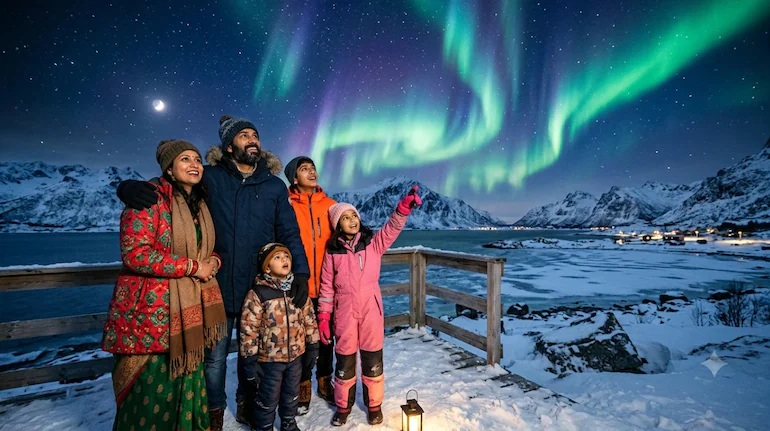
Interest in Northern Lights travel is rising sharply, with demand surging 214% year-on-year, according to travel agency Pickyourtrail. The growing interest reflects travellers’ increasing preference for experience-led winter holidays and rare natural spectacles that offer unforgettable travel experiences.
Known scientifically as the Aurora Borealis, the Northern Lights are among the most sought-after natural phenomena in the world. Their colourful displays across the night sky have become a major attraction for travellers, photographers and adventure enthusiasts.
In recent years, aurora chasing has developed into a global travel trend, driven by viral night-sky photographs, periods of increased solar activity and growing interest in bucket-list destinations. The usual Northern Lights viewing season runs from October to March, although opportunities can extend beyond these months depending on the destination and weather conditions.
Why Is Demand for Northern Lights Travel Increasing?
The reported 214% year-on-year increase highlights growing interest in holidays centred on distinctive natural experiences rather than conventional sightseeing alone.
Social media has also helped popularise aurora destinations, with photographs and videos of green, purple and pink lights illuminating Arctic skies encouraging more travellers to plan winter trips.
However, seeing the Aurora Borealis is never guaranteed. Visibility depends on factors such as solar activity, cloud cover, darkness and local weather conditions. Choosing a destination with favourable viewing conditions and spending several nights there can improve the chances of witnessing the phenomenon.
7 Best Places in the World to See the Northern Lights
1. Tromsø, Norway
Located at approximately 69°N latitude in the heart of the Arctic auroral oval, Tromsø is widely regarded as one of Europe’s leading Northern Lights destinations. Its geographical position makes it a popular base for travellers hoping to witness auroral displays.
The coastal climate is relatively mild compared with some inland Arctic destinations, partly because of the warming influence of the Gulf Stream. The main aurora-viewing season generally runs from mid-September to early April, although clear skies are essential for visibility.
Visitors can explore the surrounding Arctic fjords on a cruise or take the Fjellheisen Cable Car to Mount Storsteinen for panoramic views of the city and surrounding landscape. Away from city lights, the surrounding countryside also offers opportunities for night-sky photography.
2. Abisko, Sweden
Located in Swedish Lapland, Abisko National Park is known for its favourable conditions for Northern Lights viewing. The area has a distinctive local weather pattern, often described as the “blue hole of Abisko”, referring to a tendency for clearer skies around the national park even when nearby areas experience cloud cover.
The surrounding mountains and Lake Torneträsk contribute to the area’s local microclimate, making Abisko a popular destination for aurora enthusiasts.
Visitors can take a chairlift up Mount Nuolja to the Aurora Sky Station, an elevated observation facility designed for dark-sky viewing. Its location away from major urban centres also provides favourable conditions for stargazing.
3. Yellowknife, Northwest Territories, Canada
Yellowknife, the capital of Canada’s Northwest Territories, is another prominent destination for Northern Lights tourism. Its location beneath the northern auroral zone and relatively flat surrounding landscape provide wide, unobstructed views of the night sky.
The viewing season can extend from mid-August to late April, giving visitors a comparatively long period in which to plan an aurora-focused trip.
One popular attraction is Aurora Village, where visitors can watch the Northern Lights from heated teepees. The destination also offers glass-dome accommodation options for travellers looking to experience the night sky in a more comfortable setting.
4. Fairbanks, Alaska, USA
Fairbanks is one of North America’s best-known destinations for Northern Lights tourism. Located just south of the Arctic Circle, the Alaskan city combines access to remote wilderness with established tourism facilities.
The main viewing period generally extends from late August to late April. Travellers are often encouraged to spend several consecutive nights in the region because aurora visibility depends on changing weather and geomagnetic conditions.
Chena Hot Springs is a popular attraction near Fairbanks. Visitors can relax in its outdoor mineral pools while enjoying the surrounding Arctic landscape. On nights with suitable conditions, the location also offers opportunities to watch the Northern Lights.
5. Luosto and Inari, Finnish Lapland
Finnish Lapland offers a combination of Arctic scenery, dark skies and specialised accommodation designed around Northern Lights tourism. Areas around Lake Inari and Luosto are popular among travellers seeking to escape urban light pollution.
These destinations also offer opportunities to experience traditional Lapland landscapes, including frozen lakes, snow-covered forests and wide-open Arctic surroundings.
One of the region’s most popular accommodation experiences is staying in a heated glass igloo. Some properties offer aurora notification services that alert guests when Northern Lights activity is detected, allowing them to watch the display without spending the entire night outdoors.
6. Snæfellsnes Peninsula and South Coast, Iceland
Iceland is another popular destination for aurora enthusiasts because the country lies within the region where Northern Lights activity can be observed. Depending on solar activity and weather conditions, visitors may have opportunities to see the display from different parts of the island.
The Snæfellsnes Peninsula and South Coast are particularly attractive for travellers who want to combine aurora viewing with Iceland’s dramatic natural scenery. Volcanic landscapes, glaciers, waterfalls and coastal formations provide distinctive settings for night-sky photography.
Popular photography locations include Kirkjufell Mountain and Jökulsárlón Glacier Lagoon, where icebergs float across the water beneath the surrounding glacial landscape.
7. Kangerlussuaq and Ilulissat, Greenland
Greenland offers travellers an opportunity to experience the Northern Lights against a backdrop of remote Arctic wilderness. Its low population density and limited urban development mean that many locations have very little artificial light pollution.
Kangerlussuaq is particularly known for its relatively stable inland weather conditions and favourable opportunities for clear-sky viewing. Ilulissat, meanwhile, offers dramatic Arctic scenery, including the UNESCO-listed Ilulissat Icefjord.
Near Ilulissat, visitors can experience the sight of auroral displays above the icebergs of Disko Bay, creating a striking combination of colourful night skies and frozen landscapes.
When Is the Best Time to See the Northern Lights?
The Northern Lights are generally best viewed during the darker months, with October to March considered a popular travel window across several Arctic destinations. However, the viewing season varies by location, with some destinations offering opportunities from August through April.
Travellers should consider a few important factors when planning an aurora trip:
- Choose darker months: Longer nights provide more opportunities to observe the Northern Lights.
- Check the weather: Clear skies are essential because clouds can completely block an aurora display.
- Stay for multiple nights: Spending several nights at a destination increases the chances of witnessing suitable conditions.
- Move away from city lights: Locations with limited artificial lighting generally provide better viewing conditions.
- Monitor aurora forecasts: Solar and geomagnetic activity forecasts can help travellers identify periods with greater potential for auroral displays.
Northern Lights Travel: A Growing Bucket-List Experience
The reported 214% year-on-year increase in Northern Lights travel demand reflects the growing appeal of rare natural experiences among international travellers. Destinations such as Tromsø, Abisko, Yellowknife and Fairbanks continue to attract visitors looking for opportunities to witness the Aurora Borealis.
However, no destination can guarantee a sighting. Weather conditions, solar activity and seasonal darkness all influence visibility. Careful planning, flexible travel dates and multiple nights at an aurora destination can help travellers make the most of their winter holiday.
For breaking news and live news updates, like us on Facebook or follow us on Twitter and Instagram. Read more on Latest Lifestyle on thefoxdaily.com.


COMMENTS 0