Regular exercise, a balanced diet and maintaining a healthy weight are among the most important ways to protect Heart Health. But do these habits guarantee that the coronary arteries will remain free of blockages? Not necessarily. A person can follow a Healthy Lifestyle, have low blood pressure and still develop coronary artery disease.
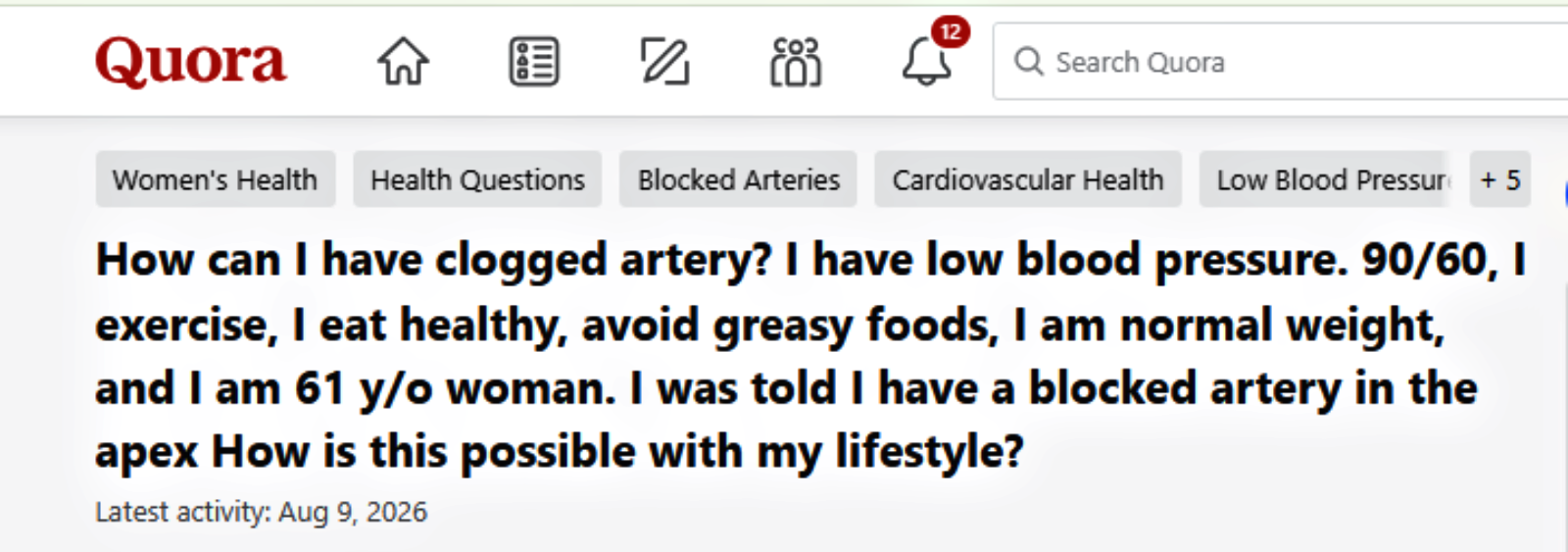
This was the concern raised by a 61-year-old woman on Quora. She said she exercised regularly, avoided greasy foods and maintained a normal weight. Her blood pressure was around 90/60, yet she had been told that she had a blocked artery near the apex of her heart. Understandably, she wanted to know how this could happen despite her efforts to stay healthy.
To understand why artery blockages can develop even in people who appear to have a healthy lifestyle, we spoke to Dr Punya Pratap Kujur, Consultant Cardiologist at Gleneagles Hospital, Parel, Mumbai. He explains that cardiovascular risk is influenced by several factors, including age, genetics, cholesterol, diabetes and hormonal changes. Low blood pressure and normal body weight alone cannot rule out coronary artery disease.
Can You Have a Blocked Artery Despite a Healthy Lifestyle?
Yes. Regular physical activity, nutritious food and weight management can significantly reduce the risk of cardiovascular disease, but they cannot eliminate it entirely. Coronary artery disease develops through a combination of factors, some of which may not be directly visible in a person’s daily habits.
Dr Kujur explains, “A healthy lifestyle lowers cardiovascular risk but does not eliminate it completely. Ageing, genetics, family history, diabetes, cholesterol levels, smoking exposure and other medical factors can contribute to plaque formation.”
Coronary artery disease generally develops when fatty deposits, cholesterol and other substances accumulate inside the walls of the arteries supplying blood to the heart. These deposits, known as plaques, can gradually narrow the arteries and restrict blood flow. In some cases, a plaque may rupture and trigger the formation of a blood clot, potentially causing a heart attack.
Importantly, plaque formation is not determined by body weight or food choices alone. A person may exercise regularly and avoid fried foods but still have elevated LDL cholesterol, a family history of premature heart disease or an underlying metabolic condition.
“Low blood pressure and normal weight do not necessarily mean that the coronary arteries are free of plaque,” Dr Kujur adds.
Does Low Blood Pressure Protect You From Coronary Artery Disease?
A blood pressure reading of 90/60 mmHg may appear reassuring, particularly when someone is otherwise physically active. However, low blood pressure does not automatically mean that the coronary arteries are healthy.
Blood pressure measures the force exerted by circulating blood against the walls of the arteries. Coronary artery disease, on the other hand, involves the narrowing or obstruction of the blood vessels that supply the heart muscle. These are related to cardiovascular health but represent different medical issues.
“Low blood pressure does not completely protect against coronary artery disease. Blood pressure and artery blockage are different issues, and a person can have low blood pressure while also having plaque in the coronary arteries,” says Dr Kujur.
He adds, “The overall cardiovascular risk depends on several factors, not blood pressure alone.”
Therefore, a person can have a relatively low blood pressure reading and still develop plaque inside the coronary arteries. A normal or low reading should not be treated as proof that the heart is free from disease.
It is also important to understand that a blood pressure reading of 90/60 does not necessarily indicate a problem in everyone. Some people naturally have lower readings without symptoms. However, if low blood pressure is accompanied by dizziness, fainting, weakness or confusion, it should be discussed with a healthcare professional.
What Other Factors Can Cause Artery Blockages?
Several cardiovascular risk factors may contribute to plaque formation even when someone maintains a healthy weight and exercises consistently. Some are related to inherited characteristics, while others develop with age or as a result of underlying medical conditions.
1. Genetics and family history
Family history can influence a person’s likelihood of developing coronary artery disease. Someone with close relatives who experienced heart disease at a relatively young age may have a higher inherited risk, even if they follow healthy habits.
Genetic factors can also influence cholesterol levels and how the body processes fats. For this reason, a person who eats carefully may still have an inherited tendency towards elevated LDL cholesterol.
2. High LDL cholesterol
Low-density lipoprotein (LDL), often called bad cholesterol, plays an important role in the development of atherosclerosis. When LDL cholesterol remains elevated, it can contribute to plaque accumulation inside artery walls.
Body weight alone cannot reveal whether cholesterol levels are healthy. Even people who are slim, physically active and careful about their diet may have high LDL cholesterol. A lipid profile can help assess cholesterol levels and guide decisions about prevention or treatment.
3. Diabetes and blood sugar levels
Diabetes is an important risk factor for cardiovascular disease. Persistently high blood glucose can damage blood vessels and contribute to processes that encourage plaque formation.
Some people may have diabetes or prediabetes without obvious symptoms. This is why blood sugar assessment can be important when evaluating cardiovascular risk, particularly as people grow older.
4. Age-related changes
The risk of coronary artery disease generally increases with age. Over time, changes in blood vessels and the cumulative effects of cholesterol, inflammation and other risk factors can contribute to plaque development.
Being physically active throughout life is beneficial, but it does not completely prevent age-related changes in the arteries.
5. Smoking, inflammation and kidney disease
Smoking is associated with damage to blood vessels and an increased risk of cardiovascular disease. Exposure to tobacco smoke can also affect people who do not smoke themselves.
Chronic inflammation and kidney disease may further increase cardiovascular risk. These conditions can influence blood vessel health and interact with other risk factors, making an individual’s overall risk more complicated than their weight or exercise routine might suggest.
6. Hormonal changes after menopause
Hormonal changes are another consideration for women, particularly after menopause. Before menopause, oestrogen is associated with certain protective effects on cardiovascular health. After menopause, changes in hormone levels can influence cholesterol patterns, blood vessel function and other cardiovascular risk factors.
Dr Kujur highlights this point, saying, “In women, hormonal changes after menopause may further influence cardiovascular risk.”
This means women should not assume that maintaining a healthy weight or having no obvious symptoms is enough to rule out heart disease as they get older.
What Does ‘Blocked Artery in the Apex’ Actually Mean?
The phrase “blocked artery in the apex” may sound alarming, but it is not a precise medical description on its own. The apex is the pointed lower end of the heart, and the phrase may refer to reduced blood supply to this region or narrowing in a coronary artery that supplies it.
However, the exact meaning depends on the investigation that led to the diagnosis. It is important to distinguish between a finding suggesting reduced blood supply to part of the heart and a confirmed narrowing in a specific coronary artery.
Dr Kujur explains, “‘Blocked artery in the apex’ is not, by itself, a precise description of a coronary blockage and may refer to reduced blood supply to the apex of the heart or a blockage in an artery supplying that region.”
Doctors need more information before determining the seriousness of the finding. This includes identifying the artery involved, the location of the narrowing and the extent to which blood flow may be affected.
“The exact artery, percentage of narrowing and its significance are determined using the relevant test, such as CT coronary angiography or conventional coronary angiography, along with other findings,” he says.
These investigations help doctors examine the coronary arteries and understand whether a narrowing is present. Other tests may also be considered depending on the patient’s symptoms, medical history and initial findings.
What Should You Do After Being Diagnosed With an Artery Blockage?
Being told that an artery is blocked can be frightening, particularly when someone has spent years exercising and eating carefully. However, the first step is to understand exactly what the diagnosis means rather than immediately assuming that the blockage is severe.
Dr Kujur advises, “The first step is to understand exactly which artery is affected, how severe the narrowing is and whether it is actually causing reduced blood flow.”
A cardiologist can review the imaging reports alongside other important health indicators, including cholesterol levels, blood sugar, blood pressure and family history. The doctor may then recommend lifestyle changes, medication or further investigations, depending on the findings.
“A cardiologist can review the imaging, cholesterol, blood sugar, blood pressure and family history and decide whether lifestyle measures, medication or further testing is appropriate,” he says.
The treatment plan should be based on the actual condition of the coronary arteries and the person’s overall cardiovascular risk. Not every narrowing requires the same treatment. Some patients may be managed with medication and risk-factor control, while others may need additional procedures depending on the severity and clinical circumstances.
Dr Kujur emphasises, “Treatment should be based on the actual findings rather than blood pressure or body weight alone.”
He also advises people not to blame themselves for developing coronary artery disease despite following healthy habits. “Do not assume that the blockage is caused by something you did wrong; coronary disease can occur even in people who follow a healthy lifestyle.”
Warning Signs of a Heart Problem You Should Not Ignore
Coronary artery disease does not always cause obvious symptoms in its early stages. Some people may experience chest discomfort during physical activity, while others may have breathlessness, unusual fatigue or symptoms that are less typical.
Warning signs that need urgent medical attention include:
- Chest pressure, tightness, squeezing or discomfort.
- Unexplained breathlessness, particularly with chest discomfort.
- Cold sweating or sudden nausea associated with possible cardiac symptoms.
- Fainting or sudden severe dizziness.
- Pain or discomfort spreading to the arm, shoulder, jaw, neck or back.
Women may sometimes experience symptoms such as breathlessness, nausea, back discomfort or unusual fatigue rather than the classic description of chest pain. Symptoms can vary, and the absence of severe chest pain does not rule out a heart problem.
If symptoms suggest a heart attack, seek emergency medical help rather than waiting for them to disappear. Do not drive yourself to the hospital if emergency assistance is available.
How to Protect Your Heart as You Get Older
Although a healthy lifestyle cannot guarantee complete protection against coronary artery disease, it remains an essential part of cardiovascular prevention. Regular physical activity, a balanced diet, adequate sleep and avoiding tobacco can help reduce several important risk factors.
People should also monitor health indicators that may not be obvious from their appearance or fitness level. These include LDL cholesterol, blood glucose, kidney function and blood pressure. A family history of early heart disease should also be discussed with a doctor.
For women aged 60 and above, regular cardiovascular assessment is particularly important. Screening and testing should be guided by individual risk factors, symptoms and medical history rather than age or weight alone.
Most importantly, do not start, stop or change prescribed heart medicines without consulting a healthcare professional. If a scan or other investigation has identified a possible blockage, ask the cardiologist to explain the exact finding, its severity and the next steps.
The central message is simple: exercising regularly, eating well and maintaining a healthy weight are valuable habits, but they are not a guarantee against heart disease. Understanding the full range of cardiovascular risk factors can help people take informed steps towards protecting their heart.
Frequently Asked Questions (FAQs)
1. Can you have a blocked artery even if you exercise regularly?
Yes. Regular exercise reduces cardiovascular risk but cannot eliminate it completely. Genetics, age, high LDL cholesterol, diabetes, smoking exposure and other medical conditions can contribute to plaque formation.
2. Does low blood pressure mean your arteries are healthy?
No. Blood pressure and coronary artery blockage are different issues. A person can have low blood pressure and still have plaque or narrowing in the coronary arteries.
3. Can a slim person develop coronary artery disease?
Yes. Maintaining a normal weight does not guarantee healthy coronary arteries. Cholesterol levels, family history, diabetes, age and other factors also influence cardiovascular risk.
4. What causes artery blockages in women after menopause?
Ageing, changes in hormone levels, elevated LDL cholesterol, diabetes, genetics and other risk factors can contribute to coronary artery disease after menopause.
5. What does a blocked artery in the apex of the heart mean?
The phrase may refer to reduced blood supply to the apex, the pointed lower part of the heart, or narrowing in an artery supplying that region. The exact meaning must be clarified through medical reports and appropriate investigations.
6. Which tests can identify a coronary artery blockage?
Depending on the clinical situation, doctors may recommend CT coronary angiography or conventional coronary angiography. Other tests may be needed to assess heart function and whether blood supply is reduced.
7. Can coronary artery blockage be treated without surgery?
Some cases can be managed with medication and lifestyle changes, depending on the location and severity of narrowing and the patient’s symptoms. Other cases may require procedures such as angioplasty. A cardiologist should determine the appropriate treatment.
8. When should you seek urgent medical help for a possible heart problem?
Seek emergency medical attention for new or severe chest pressure, breathlessness, cold sweating, fainting or pain spreading to the arm, jaw, neck or back. These symptoms may indicate a serious heart problem and should not be ignored.
Disclaimer: This article is for general informational purposes and is not a substitute for professional medical advice, diagnosis or treatment. Consult a qualified cardiologist for an assessment based on your symptoms, medical history and test results.
For breaking news and live news updates, like us on Facebook or follow us on Twitter and Instagram. Read more on Latest Lifestyle on thefoxdaily.com.





COMMENTS 0