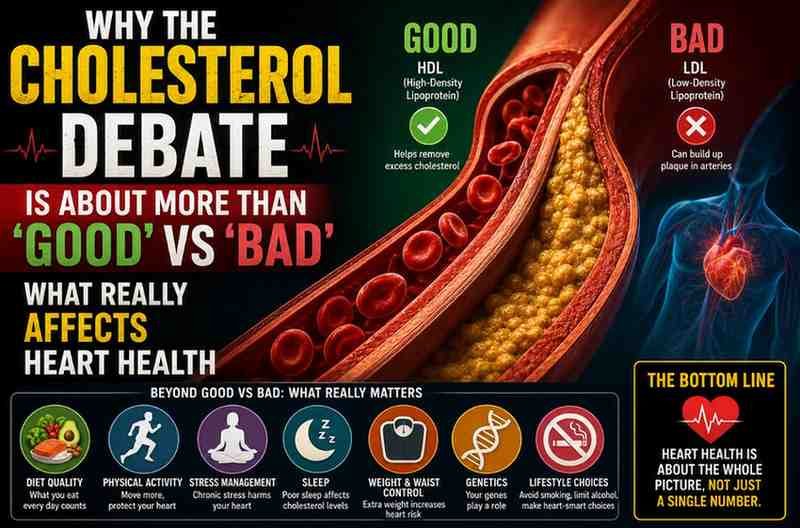
Ask someone what causes high cholesterol, and the answer is often immediate: “Eating too much fat.” While dietary fat does influence cholesterol metabolism, today’s understanding of cardiovascular health has evolved considerably. Health experts now emphasize that cholesterol should not be viewed in isolation or divided into simplistic categories of “good” and “bad.” Instead, cholesterol levels reflect a complex interaction between biology, lifestyle, nutrition, physical activity, genetics, and even social factors.
Cardiovascular disease remains one of the leading causes of illness and death worldwide, making cholesterol management an important public health priority. However, focusing only on reducing cholesterol numbers without addressing broader lifestyle habits may overlook the root causes that contribute to long-term heart disease.
The modern cholesterol debate is shifting from blaming individual nutrients to understanding overall health patterns. That shift offers a more realistic and sustainable approach to preventing heart disease while improving overall well-being.
What Is Cholesterol and Why Does the Body Need It?
Cholesterol is a waxy, fat-like substance that plays several essential roles in the body. Contrary to popular belief, cholesterol itself is not harmful. In fact, it is vital for normal human health.
The body uses cholesterol to:
- Build healthy cell membranes.
- Produce important hormones.
- Synthesize vitamin D.
- Create bile acids needed for digestion.
- Support normal brain and nerve function.
Most cholesterol is produced naturally by the liver, while a smaller proportion comes from foods of animal origin.
The real concern arises when cholesterol-carrying particles become imbalanced or when other cardiovascular risk factors combine to damage blood vessels over many years.
Understanding LDL and HDL: Why the Labels Can Be Misleading
Many people recognize LDL as “bad cholesterol” and HDL as “good cholesterol.” While these labels are useful for basic education, they oversimplify how cholesterol functions inside the body.
LDL (low-density lipoprotein) carries cholesterol from the liver to tissues throughout the body. Elevated LDL levels may contribute to plaque formation inside arteries, increasing the risk of heart attacks and strokes over time.
HDL (high-density lipoprotein) helps transport excess cholesterol back to the liver, where it can be processed and removed. Higher HDL levels have traditionally been associated with lower cardiovascular risk, although recent research suggests that simply increasing HDL numbers does not automatically improve heart health.
Today, clinicians increasingly evaluate cholesterol alongside other markers such as triglycerides, blood pressure, blood sugar, inflammation, and overall cardiovascular risk.
Why Diet Is About More Than Fat
For decades, many dietary recommendations focused primarily on reducing fat intake. While limiting excessive saturated and trans fats remains important, nutrition science now recognizes that the overall quality of the diet matters far more than eliminating a single nutrient.
Highly processed foods, refined carbohydrates, sugary beverages, and excessive calorie consumption can contribute to unhealthy cholesterol profiles even if a diet is relatively low in fat.
Conversely, balanced diets rich in vegetables, fruits, whole grains, legumes, nuts, seeds, and healthy fats may support healthier cholesterol levels and reduce cardiovascular risk.
| Dietary Pattern | Potential Effect on Heart Health |
|---|---|
| Whole grains and legumes | Provide fibre that supports healthy cholesterol levels |
| Fruits and vegetables | Rich in antioxidants, vitamins, and fibre |
| Nuts and seeds | Contain heart-healthy unsaturated fats |
| Ultra-processed foods | Often high in salt, sugar, and unhealthy fats |
| Sugary beverages | May contribute to weight gain and metabolic imbalance |
The Role of Physical Activity
Exercise influences cholesterol in several beneficial ways. Regular physical activity can improve lipid profiles, support healthy body weight, enhance insulin sensitivity, and strengthen cardiovascular function.
People who remain physically active often experience:
- Improved cardiovascular fitness.
- Healthier body composition.
- Better blood sugar regulation.
- Reduced inflammation.
- Lower long-term cardiovascular risk.
Importantly, movement throughout the day matters alongside structured exercise. Long periods of uninterrupted sitting may negatively affect metabolic health even in individuals who exercise regularly.
Stress: The Overlooked Cholesterol Risk Factor
Modern lifestyles expose many people to chronic psychological stress, which can indirectly affect cholesterol and heart health.
Stress may contribute to:
- Emotional eating.
- Poor sleep quality.
- Reduced physical activity.
- Higher blood pressure.
- Hormonal changes that influence metabolism.
While stress does not directly “cause” high cholesterol on its own, its influence on daily habits can significantly increase cardiovascular risk over time.
Sleep and Cholesterol Are More Connected Than Many Realize
Growing evidence suggests that inadequate sleep affects multiple aspects of metabolic health. Poor sleep may disrupt hormones involved in appetite regulation, increase inflammation, and contribute to insulin resistance, obesity, and other cardiovascular risk factors.
Adults who consistently obtain sufficient, high-quality sleep often find it easier to maintain healthier eating patterns, remain physically active, and manage stress effectively.
Genetics Matter Too
Not everyone develops high cholesterol because of lifestyle alone. Genetics play a significant role in determining how the body produces, processes, and removes cholesterol.
Some inherited conditions can cause markedly elevated cholesterol levels even among individuals who maintain healthy lifestyles. This is why routine health screening remains important, particularly for people with a strong family history of heart disease.
Lifestyle improvements remain beneficial, but some individuals may also require medical treatment as recommended by healthcare professionals.
| Factor | Influence on Cholesterol |
|---|---|
| Diet quality | Supports healthier lipid balance |
| Exercise | Improves cardiovascular health |
| Stress | Can indirectly worsen metabolic health |
| Sleep | Supports hormone regulation and metabolism |
| Genetics | Affects natural cholesterol regulation |
Why Social Factors Influence Cholesterol
Cholesterol is not only a medical issue—it is also shaped by the environments in which people live and work.
Access to affordable nutritious food, opportunities for physical activity, work schedules, urban planning, education, healthcare availability, and economic conditions all influence long-term heart health.
For example, individuals working long hours may have limited opportunities to prepare healthy meals or exercise regularly. Communities with fewer recreational spaces may also experience lower levels of physical activity.
Recognizing these broader influences allows healthcare strategies to move beyond blaming individual choices alone.
Why Regular Health Screening Matters
High cholesterol often develops without noticeable symptoms. Many people discover elevated cholesterol only during routine blood tests.
Regular screening allows healthcare providers to evaluate:
- Total cholesterol.
- LDL cholesterol.
- HDL cholesterol.
- Triglycerides.
- Overall cardiovascular risk.
Early identification makes it possible to introduce lifestyle modifications or medical treatment before serious complications develop.
Moving Beyond the ‘Good’ vs. ‘Bad’ Conversation
The future of cholesterol management is becoming increasingly personalized. Rather than focusing solely on individual cholesterol numbers, clinicians now consider a person’s overall cardiovascular profile, including blood pressure, diabetes risk, body weight, smoking history, family history, physical activity, diet, and other medical conditions.
This broader perspective encourages sustainable lifestyle improvements rather than quick dietary fixes or unnecessary restrictions.
Practical Habits That Support Heart Health
Experts generally recommend a comprehensive approach to cardiovascular wellness.
- Eat a balanced, fibre-rich diet.
- Limit ultra-processed foods and trans fats.
- Stay physically active throughout the week.
- Maintain a healthy body weight.
- Prioritize adequate sleep.
- Manage chronic stress effectively.
- Avoid tobacco products.
- Follow medical advice regarding cholesterol testing and treatment.
These habits improve not only cholesterol levels but also many other aspects of long-term health.
The Bigger Picture: Heart Health Is Built Every Day
Perhaps the biggest lesson from modern cholesterol research is that cardiovascular health cannot be reduced to one blood marker or one dietary ingredient. Heart disease develops gradually through the interaction of multiple biological, behavioural, and environmental factors.
Focusing on overall lifestyle rather than isolated cholesterol numbers empowers individuals to make meaningful, sustainable improvements that benefit the entire body—not just the heart.
Conclusion
The debate over cholesterol has evolved far beyond the simple distinction between “good” and “bad” cholesterol. While LDL and HDL remain important indicators, they represent only one part of a much larger picture that includes diet quality, physical activity, stress management, sleep, genetics, and broader social influences.
Instead of fearing individual foods or obsessing over cholesterol numbers alone, experts increasingly encourage a holistic approach to cardiovascular health. Balanced nutrition, regular movement, quality sleep, preventive healthcare, and healthy daily habits together provide the strongest foundation for protecting the heart over the long term.
Ultimately, successful cholesterol management is less about avoiding a single nutrient and more about creating a lifestyle that supports overall metabolic health and lifelong cardiovascular wellness.
For breaking news and live news updates, like us on Facebook or follow us on Twitter and Instagram. Read more on Latest Health on thefoxdaily.com.






COMMENTS 0