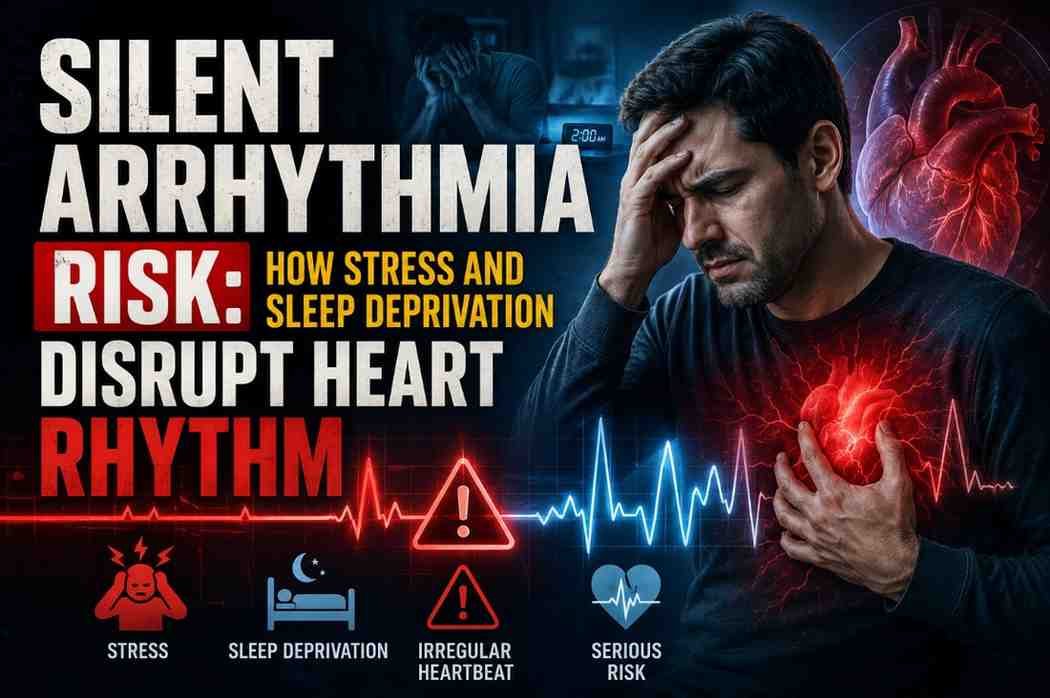
Stress does not damage the heart through some vague, unmeasurable pathway. The chain of causation is specific, well-documented, and runs through a system called the autonomic nervous system (ANS) the body’s involuntary control network that regulates heart rate, blood pressure, digestion, and dozens of other functions without any conscious input.
The ANS has two opposing branches. The sympathetic nervous system activates the “fight-or-flight” response during perceived threat. The parasympathetic nervous system governs “rest-and-digest” functions, promoting recovery and calm. Under healthy conditions, these two systems maintain a dynamic balance, adjusting heart rate and rhythm continuously throughout the day. A key marker of this balanceand of cardiovascular health is heart rate variability (HRV): the subtle beat-to-beat variation in the interval between heartbeats. High HRV indicates a resilient, well-regulated heart. Low HRV signals autonomic dysfunction and elevated arrhythmia risk.
Chronic stress demolishes this balance. When the body is under persistent psychological pressure work deadlines, financial anxiety, relationship conflict, or the low-grade cortisol drip of constant digital overstimulation the sympathetic nervous system remains in a state of prolonged activation. The consequences cascade through the cardiovascular system in several interconnected ways:
- Catecholamine flooding: The chronic release of adrenaline (epinephrine) and noradrenaline increases heart rate and can directly provoke ectopic beats electrical impulses that arise outside the heart’s normal pacemaker. In susceptible individuals, these ectopic beats become the trigger for sustained atrial fibrillation or ventricular tachycardia.
- Cortisol and electrical instability: Chronically elevated cortisol the body’s primary stress hormone reduces cardiovagal baroreflex sensitivity and suppresses HRV, creating a proarrhythmic electrical environment in the myocardium. Research has shown that acute surges in cortisol can precipitate left ventricular dysfunction and ventricular arrhythmia.
- Systemic inflammation: Chronic psychological stress activates pro-inflammatory cytokines and triggers NF-κB pathways, generating persistent low-grade inflammation in cardiac tissue. This inflammation disrupts ion channel function and alters the electrical properties of the heart muscle itself.
- T wave alternans and repolarisation instability: Studies using functional neuroimaging and ECG monitoring have demonstrated that psychological stress induces measurable fluctuations in the T wave the part of the ECG that reflects ventricular repolarisation. These fluctuations are recognised predictors of future ventricular tachyarrhythmia events.
Perhaps most striking is the emotional specificity of this risk. Research has found that anger is the emotion most strongly associated with triggering ventricular arrhythmias. Hostility and negative affect independently increase the risk of atrial fibrillation. Depression — a condition deeply intertwined with chronic stress — has been shown to predict arrhythmic death. It is estimated that between 20 and 40% of sudden cardiac deaths are precipitated by acute emotional stressors. The surgeon John Hunter, an 18th-century figure who himself predicted he would die if provoked to anger, died of a cardiac event during a hospital board meeting a darkly illustrative anecdote that modern cardiology has now mechanistically explained.
Sleep Deprivation: A Separate Pathway to the Same Dangerous Destination
If chronic stress is one road to arrhythmia, inadequate sleep is another with distinct but overlapping mechanisms, and an equally well-established body of evidence behind it.
Sleep is not merely the absence of wakefulness. It is an active, restorative biological state during which the heart undergoes essential regulatory processes. Normally, sleep is accompanied by nocturnal dipping a sustained reduction in blood pressure and heart rate that gives the cardiovascular system a genuine period of reduced demand. Disrupted or insufficient sleep eliminates this dipping, exposing the heart to sustained hypertension and elevated sympathetic tone around the clock.
Research published in peer-reviewed cardiology literature has mapped the molecular consequences of sleep deprivation on cardiac rhythm in compelling detail:
- Pulmonary vein arrhythmogenesis: Chronic partial sleep deprivation in rodent models has been shown to impair left ventricular systolic and diastolic function, elevate the heart rate, and dramatically increase the incidence of atrial fibrillation triggered by atrial pacing. Sleep-deprived animals showed accelerated spontaneous electrical activity in the pulmonary veins the most common anatomical source of AF triggers in humans and a higher frequency of delayed after-depolarisations, a recognised arrhythmia precursor.
- GRK2 signalling disruption: The same research identified reduced expression of G protein-coupled receptor kinase 2 (GRK2) in the left atrium of sleep-deprived subjects, a finding that points to sympathetic overactivity as the key mediating mechanism.
- Cytokine dysregulation: Insufficient sleep chronically elevates pro-inflammatory cytokines particularly interleukins and tumour necrosis factor that prevent resolution of the normal inflammatory response. Over time, this persistent low-grade inflammation compromises myocardial tissue integrity, disrupts ion channel function, and alters gap junction communication between cardiac cells, creating precisely the conditions in which arrhythmias develop and sustain themselves.
- Arterial stiffness: Even a single night of total sleep deprivation has been associated with increased arterial stiffness in healthy adults. Chronic sleep loss extends this effect indefinitely, adding haemodynamic stress to an already electrically compromised heart.
Sleep apnoea a condition characterised by repeated nocturnal breathing interruptions and deeply fragmented sleep deserves special mention. It affects an estimated 15% of adults and up to 50% of patients with established cardiac disease. Sleep-disordered breathing exposes the heart to chronic intermittent hypoxemia and wide swings in intrathoracic pressure, bolstering a proarrhythmic environment through autonomic imbalance, oxidative stress, and inflammation simultaneously. Its relationship to AF is so well established that cardiologists routinely screen AF patients for undiagnosed sleep apnoea as part of standard workup.
The Convergence: When Stress and Poor Sleep Combine
The truly alarming scenario and the one most relevant to the majority of working-age adults today is not stress alone or sleep deprivation alone, but the combination of both operating simultaneously and reinforcing each other in a self-perpetuating cycle. Chronic stress impairs sleep quality and duration. Poor sleep amplifies cortisol reactivity and emotional dysregulation, making stressors feel more overwhelming and physiologically taxing. The result is a feedback loop in which the autonomic nervous system never fully recovers, HRV remains suppressed week after week, and the heart’s electrical stability is chronically undermined.
Depression and anxiety both strongly associated with stress and sleep disruption operate through this same shared pathway, adding a third converging influence on arrhythmic risk. Research consistently identifies depression as an independent predictor of arrhythmic death, acting through autonomic dysfunction and systemic inflammation as dual pathological mechanisms. The heart-brain axis, once considered a metaphor, is now a precisely mapped physiological circuit with well-defined failure modes.
| Risk Factor | Primary Mechanism | Arrhythmia Type Most Commonly Associated | Key Biological Marker Affected |
|---|---|---|---|
| Chronic psychological stress | Sustained sympathetic overactivation, cortisol elevation | Atrial fibrillation, ventricular tachycardia, PVCs | Heart rate variability (HRV), T wave alternans |
| Acute emotional stress (anger, fear) | Catecholamine surge, repolarisation instability | Ventricular fibrillation, sudden cardiac death | QT interval, T wave dispersion |
| Chronic sleep deprivation | Sympathetic overactivity, cytokine dysregulation, GRK2 suppression | Atrial fibrillation, PVCs | Nocturnal BP dipping, inflammatory cytokines |
| Sleep apnoea | Intermittent hypoxemia, intrathoracic pressure swings, oxidative stress | Atrial fibrillation, bradyarrhythmias | Oxygen saturation, sympathetic tone |
| Depression and anxiety | ANS dysfunction, inflammation, reduced vagal tone | Ventricular arrhythmias, AF | HRV, cortisol, CRP |
Who Is Most at Risk And What Does the Data Say?
Silent arrhythmias do not discriminate neatly by age, though the risk accumulates with time. A 2025 Japanese screening study found that silent atrial fibrillation was detected in 5.2% of individuals aged 75 and older who had no prior AF diagnosis identified only because they underwent extended seven-day patch ECG monitoring during routine health checkups. The study concluded that age was the single strongest independent predictor of silent AF detection, reinforcing the established understanding that electrical remodelling in the heart accumulates over decades of cumulative exposure to risk factors.
But “accumulates over decades” does not mean the problem is irrelevant to younger adults. The biological damage inflicted by chronic stress and sleep deprivation begins in the third and fourth decades of life precisely when professional pressures, parenting demands, and financial stress tend to peak. The arrhythmia that manifests silently at 60 may well have its roots in the sleep debt and cortisol load of the preceding 20 years.
Globally, AF now affects more than 52.5 million people a 137% increase since 1990. By 2030, projections suggest that approximately 12.1 million Americans alone will carry an AF diagnosis. The death rate from AF as a primary or contributing cause has been rising steadily for more than two decades. Each year in the United States, AF directly accounts for more than 454,000 hospitalisations and approximately 158,000 deaths.
Detection in the Modern Era: Wearables, Patches, and the Power of Continuous Monitoring
One of the defining challenges of silent arrhythmia has always been that a standard 12-lead ECG, taken during a routine doctor’s visit, captures only a few seconds of cardiac electrical activity. If the arrhythmia is not happening at that precise moment, it is invisible to the test. This is why so many cases go undetected for years.
The emergence of wearable cardiac monitoring technology has begun to change this calculus. Smartwatch-based irregular pulse detection algorithms and consumer PPG (photoplethysmography) sensors now offer continuous, passive heart rhythm surveillance that was simply impossible outside of hospital settings a decade ago. Large-scale studies including the Apple Heart Study and the Fitbit Heart Study, each enrolling hundreds of thousands of participants have demonstrated that wearable devices can detect AF with meaningful accuracy in real-world populations, particularly when confirmed by follow-up ECG patch monitoring.
Seven-day adhesive ECG patch monitors offer a middle ground between the snapshot of a clinical ECG and the full-time monitoring of implantable devices capturing enough cardiac activity to catch paroxysmal (intermittent) AF that would otherwise hide between appointments. Cardiologists increasingly recommend extended monitoring for patients who present with stroke of uncertain origin, palpitations that resolve before a clinic visit, or those with multiple lifestyle risk factors for arrhythmia but a normal standard ECG.
The practical implication is clear: if you are in a high-risk category over 55, hypertensive, a poor sleeper, under sustained occupational or psychological stress, or managing depression or anxiety a conversation with a physician about extended cardiac rhythm monitoring is no longer premature or alarmist. It is simply rational preventive medicine.
What You Can Actually Do: Modifiable Risk Reduction That Works
The relationship between stress, sleep, and arrhythmia is not a counsel of despair. These are, by definition, modifiable risk factors meaning the damage is partly reversible, and the trajectory can be altered by deliberate lifestyle intervention. Cardiologists and electrophysiologists increasingly view psychological health management as a complementary strategy for arrhythmia treatment, not merely general wellness advice.
The evidence-backed interventions worth prioritising include:
- Sleep duration and consistency: Research consistently identifies falling asleep around 22:00 as associated with the lowest hypertension risk. Both short sleep (under 6 hours) and excessively long sleep (over 9 hours) are associated with endothelial damage and cardiovascular risk. Seven to nine hours of consistent, high-quality sleep is the established target for adults, and consistency of sleep and wake times matters as much as total duration.
- Heart rate variability training: Biofeedback techniques targeting HRV including slow, paced breathing at 4–6 breaths per minute have been shown to increase vagal tone and reduce sympathetic dominance over weeks of practice. Higher HRV correlates directly with lower arrhythmia susceptibility.
- Treatment of sleep-disordered breathing: For those with obstructive sleep apnoea, CPAP therapy has been shown to suppress inflammatory response and reduce sleep-induced cardiovascular risk. Treating sleep apnoea in AF patients can meaningfully reduce AF recurrence.
- Stress management with measurable physiological targets: Mindfulness-based stress reduction (MBSR), cognitive behavioural therapy (CBT), and regular aerobic exercise all demonstrably reduce cortisol burden, improve HRV, and lower circulating inflammatory markers. These are not soft recommendations they are mechanistically grounded interventions that alter the very biological variables driving arrhythmia risk.
- Avoidance of compounding triggers: Alcohol, caffeine in excess, smoking, and stimulant medications all amplify sympathetic tone and have established associations with arrhythmia triggers. Their interaction with stress and sleep deprivation is synergistic, not merely additive.
Conclusion: The Silent Epidemic Hiding in Plain Sight
Silent arrhythmias are not a niche cardiological concern for elderly patients with established heart disease. They are a growing public health problem embedded in the daily choices, stressors, and sleep habits of hundreds of millions of people who consider themselves reasonably healthy. The science now makes it unmistakably clear that the autonomic nervous system does not distinguish between a boardroom confrontation, a 3 AM doom-scroll, and a physiologically dangerous threat. It responds to all three with the same cascade of hormones and electrical disruption and over months and years, that cumulative disruption leaves its mark on the heart’s electrical architecture.
The good news is that the body is not without resilience. Sleep can be restored. Stress responses can be retrained. Autonomic balance can be rebuilt. And for those who have already accumulated years of high-pressure, low-sleep living, modern monitoring technology now offers the possibility of catching silent arrhythmia before it announces itself as a stroke. The window for intervention is real but it requires recognising that what happens in the mind and the bedroom each night is not separate from what happens in the heart. They are part of the same continuous, measurable, and modifiable biological story.<
For breaking news and live news updates, like us on Facebook or follow us on Twitter and Instagram. Read more on Latest Health on thefoxdaily.com.






COMMENTS 0