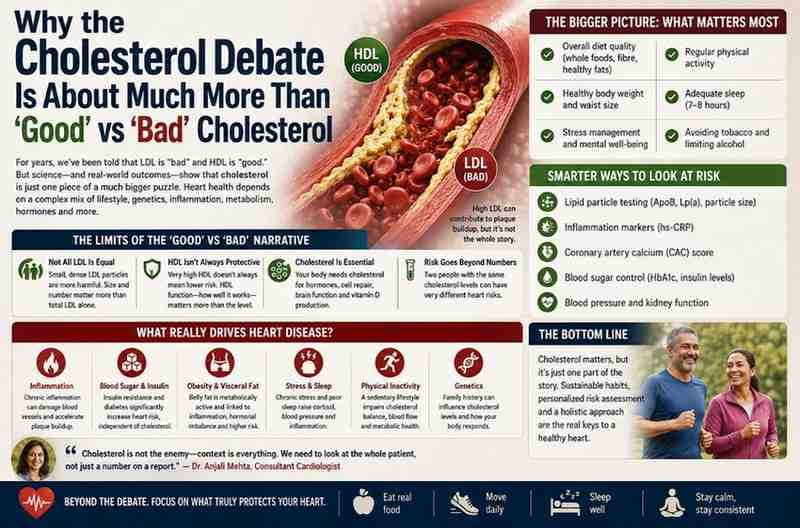
For decades, cholesterol has been one of the most misunderstood topics in healthcare. Many people believe that avoiding oily foods or increasing “good cholesterol” is enough to protect the heart. While these factors do matter, modern research shows that cholesterol management is far more nuanced than simply balancing two numbers on a blood test.
Heart disease remains one of the leading causes of illness worldwide, and abnormal cholesterol levels are among its most significant risk factors. However, cholesterol problems rarely develop in isolation. They are often the result of a combination of lifestyle habits, genetics, dietary patterns, chronic stress, poor sleep, obesity, diabetes, and limited physical activity.
Understanding cholesterol requires looking beyond labels like “good” and “bad” and focusing instead on overall cardiovascular health, long-term habits, and personalized risk assessment.
What Exactly Is Cholesterol?
Cholesterol is a waxy, fat-like substance that is essential for normal body function. Contrary to popular belief, cholesterol itself is not harmful. In fact, every cell in the body depends on it.
Your body uses cholesterol to:
- Build healthy cell membranes.
- Produce important hormones.
- Synthesize vitamin D.
- Create bile acids that help digest fats.
- Support normal brain and nerve function.
The liver naturally produces most of the cholesterol the body requires, while the remainder comes from food.
Understanding LDL and HDL Cholesterol
Because cholesterol cannot travel through blood on its own, it is transported by particles called lipoproteins.
Low-Density Lipoprotein (LDL)
LDL is commonly referred to as “bad cholesterol” because elevated levels can contribute to the buildup of fatty plaques inside arteries. Over time, these plaques may narrow blood vessels and increase the risk of heart attack and stroke.
High-Density Lipoprotein (HDL)
HDL is often called “good cholesterol” because it helps transport excess cholesterol from the bloodstream back to the liver, where it can be processed and removed.
However, experts now emphasize that cardiovascular health depends on much more than LDL and HDL values alone.
Why the ‘Good vs Bad’ Explanation Is Too Simple
Modern cardiology recognizes that heart disease is influenced by multiple interconnected factors. Someone with moderately elevated LDL cholesterol may remain healthy if other risk factors are well controlled, while another individual with seemingly acceptable cholesterol values may still develop cardiovascular disease due to diabetes, smoking, hypertension, or genetic conditions.
Doctors increasingly evaluate the complete cardiovascular risk profile rather than focusing on a single laboratory number.
The Hidden Lifestyle Factors Affecting Cholesterol
Experts stress that cholesterol imbalance is often the result of everyday habits rather than one specific food.
Several factors contribute significantly:
- Highly processed foods.
- Excess sugar intake.
- Physical inactivity.
- Being overweight or obese.
- Smoking.
- Excessive alcohol consumption.
- Poor sleep quality.
- Chronic psychological stress.
Addressing these factors often improves cholesterol levels alongside overall metabolic health.
| Factor | Potential Effect on Cholesterol |
|---|---|
| Regular Exercise | May increase HDL and improve heart health |
| Processed Foods | May raise unhealthy lipid levels |
| Healthy Weight | Supports better cholesterol balance |
| Smoking | Can lower HDL and damage blood vessels |
| Quality Sleep | Supports healthy metabolism |
Not All Dietary Fats Are the Same
For many years, all fats were viewed as harmful. Nutrition science now paints a more balanced picture.
Healthy fats found in foods such as nuts, seeds, fish, avocados, and certain plant oils can be part of a heart-friendly diet when consumed in appropriate amounts.
On the other hand, diets high in trans fats and excessive amounts of ultra-processed foods are associated with poorer cardiovascular health.
The focus has shifted from eliminating fat altogether to choosing healthier dietary patterns.
Can Traditional Foods Really Be Blamed?
Many traditional Indian foods containing ghee, coconut, or dairy are often blamed for rising cholesterol levels. However, nutrition experts increasingly point out that the broader dietary pattern matters more than any single ingredient.
A balanced diet rich in vegetables, fruits, whole grains, legumes, pulses, and moderate portions of healthy fats generally supports better heart health than diets dominated by processed snacks, sugary beverages, and refined carbohydrates.
Portion size, cooking methods, and overall eating habits are equally important.
The Role of Physical Activity
Regular exercise remains one of the most effective non-medication strategies for improving cardiovascular health.
Physical activity can help:
- Increase HDL cholesterol.
- Improve blood circulation.
- Maintain healthy body weight.
- Reduce blood pressure.
- Improve insulin sensitivity.
- Lower long-term cardiovascular risk.
Even moderate daily movement contributes to better overall metabolic health.
Stress: The Overlooked Cholesterol Risk
Chronic stress influences far more than emotional well-being. Long-term psychological stress may contribute to unhealthy eating habits, disturbed sleep, elevated blood pressure, hormonal changes, and reduced physical activity.
Together, these factors can indirectly worsen cholesterol profiles and increase cardiovascular risk.
Managing stress through relaxation techniques, exercise, social support, or mindfulness can therefore become part of a comprehensive heart-health strategy.
Why Genetics Also Matter
Some individuals develop high cholesterol despite maintaining healthy lifestyles because inherited genetic conditions affect how the body processes fats.
Family history of premature heart disease or inherited lipid disorders may require earlier screening and, in some cases, medication alongside lifestyle modifications.
This is why routine health check-ups remain important even for physically active individuals.
| Myth | Reality |
|---|---|
| All cholesterol is harmful. | Cholesterol is essential for normal body functions. |
| Only fatty foods cause high cholesterol. | Diet, lifestyle, genetics, and metabolism all contribute. |
| Thin people cannot have high cholesterol. | Body weight alone does not determine cholesterol levels. |
| Exercise alone cures cholesterol. | Healthy habits work best when combined. |
| Only older adults need testing. | Adults of various ages may benefit from screening based on risk. |
How to Build a Heart-Healthy Lifestyle
Experts increasingly recommend focusing on sustainable lifestyle improvements rather than quick dietary fixes.
- Eat a balanced, minimally processed diet.
- Exercise regularly.
- Maintain a healthy body weight.
- Avoid tobacco products.
- Limit excessive alcohol intake.
- Sleep seven to nine hours consistently.
- Manage chronic stress.
- Schedule regular health screenings.
Small, consistent habits often provide greater long-term benefits than short-lived restrictive diets.
The Future of Cholesterol Management
Advances in cardiovascular medicine increasingly emphasize personalized care. Instead of relying solely on total cholesterol values, healthcare providers now consider blood pressure, blood sugar, inflammation, genetics, age, family history, kidney function, and overall cardiovascular risk before recommending treatment.
This individualized approach allows prevention strategies to be tailored more effectively to each person’s unique health profile.
Conclusion
The conversation around cholesterol has evolved significantly beyond the traditional labels of “good” and “bad.” While LDL and HDL remain important indicators, they represent only part of a much larger picture involving nutrition, exercise, genetics, stress, sleep, metabolic health, and overall lifestyle.
Rather than fearing cholesterol itself, individuals can benefit from understanding how daily habits collectively influence heart health. Balanced eating, regular physical activity, adequate sleep, stress management, and routine medical check-ups remain among the most effective ways to reduce long-term cardiovascular risk.
Ultimately, protecting the heart is not about avoiding one nutrient or chasing a single laboratory value it is about creating a healthier lifestyle that supports the body as a whole for years to come.
For breaking news and live news updates, like us on Facebook or follow us on Twitter and Instagram. Read more on Latest Health on thefoxdaily.com.






COMMENTS 0