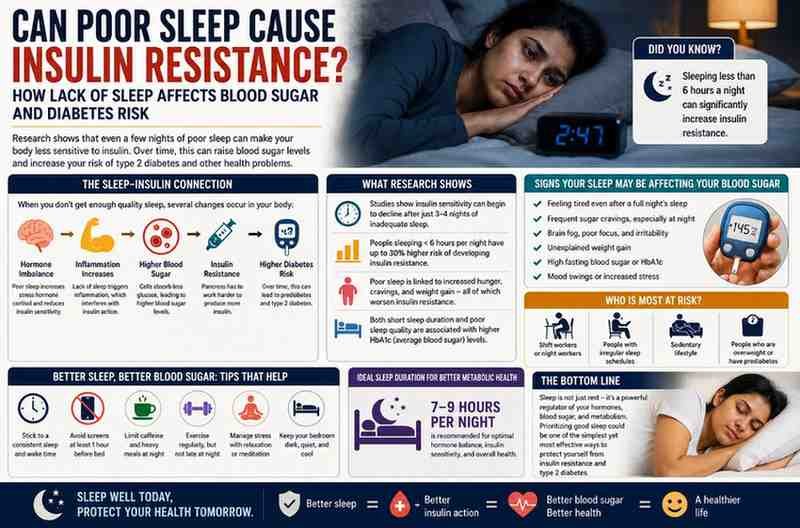
Most people know that a good night’s sleep improves mood and concentration, but its impact goes far beyond feeling refreshed. Sleep is one of the body’s most important metabolic regulators, influencing everything from hormone production to appetite, immunity, and blood sugar control.
Increasingly, research suggests that poor sleep can contribute to insulin resistance a condition in which the body’s cells become less responsive to insulin, making it harder to regulate blood glucose effectively. Remarkably, studies indicate that insulin sensitivity can begin to decline after only a few nights of insufficient sleep, highlighting just how quickly disrupted sleep can affect metabolic health.
While occasional late nights are unlikely to cause lasting harm in healthy individuals, chronic sleep deprivation may significantly increase the long-term risk of developing type 2 Diabetes, obesity, cardiovascular disease, and other metabolic conditions. Understanding this connection can help people view sleep not as a luxury, but as an essential pillar of preventive healthcare.
What Is Insulin Resistance?
Insulin is a hormone produced by the pancreas that helps move glucose from the bloodstream into the body’s cells, where it is used for energy.
When someone develops insulin resistance, the body’s cells no longer respond efficiently to insulin. As a result, the pancreas must produce increasing amounts of insulin to keep blood sugar levels within a normal range.
Over time, this extra demand can strain the pancreas, allowing blood glucose levels to rise and increasing the likelihood of prediabetes and type 2 diabetes.
How Does Sleep Affect Blood Sugar?
Sleep is a period of active biological regulation rather than simple rest. During healthy sleep, the body balances hormones that control appetite, stress, metabolism, and glucose regulation.
When sleep is shortened or repeatedly interrupted, these carefully coordinated processes become disrupted.
Research has found that even a few nights of inadequate sleep may reduce insulin sensitivity, meaning the body’s cells become less efficient at absorbing glucose from the bloodstream.
Why Does Poor Sleep Reduce Insulin Sensitivity?
Several biological mechanisms explain the relationship between sleep and insulin resistance.
1. Increased Stress Hormones
Sleep deprivation can raise levels of cortisol, commonly known as the stress hormone. Elevated cortisol encourages the liver to release more glucose into the bloodstream while making body tissues less responsive to insulin.
2. Hormonal Imbalance
Poor sleep affects hormones that regulate hunger and fullness, often increasing appetite while reducing feelings of satiety. This may encourage overeating and gradual weight gain, both of which are associated with insulin resistance.
3. Inflammation
Insufficient sleep has been linked to higher levels of inflammatory activity within the body. Chronic low-grade inflammation is believed to contribute to reduced insulin sensitivity over time.
4. Reduced Muscle Glucose Uptake
Muscles play a major role in using glucose for energy. Sleep loss may impair how efficiently muscle cells respond to insulin, making blood sugar regulation more difficult.
Can Just a Few Nights of Poor Sleep Make a Difference?
Yes. Research suggests that measurable reductions in insulin sensitivity can occur after only several consecutive nights of restricted sleep.
Although these short-term changes may improve when healthy sleep is restored, repeated or chronic sleep deprivation can gradually contribute to long-term metabolic problems, especially when combined with poor diet and limited physical activity.
This highlights the importance of maintaining consistent sleep habits rather than trying to “catch up” only on weekends.
| Sleep Habit | Possible Effect on Metabolic Health |
|---|---|
| 7–9 hours of quality sleep | Supports healthy insulin sensitivity |
| Frequent sleep deprivation | May reduce insulin responsiveness |
| Irregular sleep schedule | Can disrupt metabolic regulation |
| Repeated nighttime awakenings | May impair glucose control |
| Consistent sleep routine | Supports hormone balance |
Who Is Most at Risk?
While anyone can experience temporary changes in insulin sensitivity after poor sleep, certain groups may face a greater risk of long-term metabolic complications.
- People with obesity.
- Individuals with prediabetes.
- Shift workers.
- People experiencing chronic stress.
- Those with obstructive sleep apnea.
- Individuals with sedentary lifestyles.
- People with a family history of type 2 diabetes.
Addressing sleep problems may be particularly important for these populations.
The Connection Between Sleep, Weight Gain, and Diabetes
Sleep loss influences more than blood sugar alone. Poor sleep often increases cravings for calorie-dense foods while reducing motivation for physical activity due to daytime fatigue.
Over time, this combination may contribute to weight gain, which itself is a major risk factor for insulin resistance.
This creates a cycle in which inadequate sleep, increased appetite, weight gain, and worsening insulin sensitivity reinforce one another.
What About Shift Workers?
People who work overnight or rotating shifts frequently experience disruption of their circadian rhythm the body’s internal clock that regulates sleep, hormone release, and metabolism.
Studies have associated long-term circadian disruption with higher rates of metabolic disorders, including insulin resistance and type 2 diabetes.
Although shift work is often unavoidable, maintaining consistent sleep routines whenever possible may help reduce some of these effects.
Can Better Sleep Improve Insulin Sensitivity?
In many cases, improving sleep habits can support healthier metabolic function. While sleep alone cannot reverse insulin resistance caused by multiple medical factors, restoring adequate sleep may contribute to better blood sugar regulation as part of an overall healthy lifestyle.
Combining quality sleep with balanced nutrition, regular exercise, stress management, and medical care when needed offers the greatest benefit.
Healthy Sleep Habits That Support Blood Sugar Control
- Maintain a consistent bedtime and wake-up time.
- Aim for seven to nine hours of sleep each night.
- Limit caffeine late in the day.
- Reduce screen exposure before bedtime.
- Create a cool, quiet, and comfortable sleep environment.
- Avoid heavy meals immediately before sleeping.
- Stay physically active during the day.
These simple habits can improve both sleep quality and overall metabolic health.
| Common Myth | Evidence-Based Reality |
|---|---|
| Sleep only affects energy levels. | Sleep also influences metabolism and insulin sensitivity. |
| You can recover all lost sleep on weekends. | Consistent sleep is generally more beneficial than irregular catch-up sleep. |
| Only older adults develop insulin resistance. | It can occur at various ages depending on multiple risk factors. |
| Healthy eating alone prevents diabetes. | Sleep, exercise, weight, and genetics also play important roles. |
| One poor night permanently damages health. | Occasional sleep loss is usually temporary; chronic deprivation is the greater concern. |
The Bigger Picture: Sleep Is a Pillar of Metabolic Health
Modern lifestyles often encourage sacrificing sleep for work, entertainment, or productivity. However, growing scientific evidence suggests that sleep deserves equal importance alongside healthy eating and regular exercise.
Protecting sleep quality may help reduce the risk of insulin resistance, support weight management, improve cardiovascular health, and enhance overall well-being. Healthcare professionals increasingly recognize sleep as a critical component of preventive medicine rather than simply a period of rest.
Viewing sleep as an essential investment in long-term health not an optional luxury may be one of the simplest ways to support healthier metabolism.
Conclusion
The relationship between poor sleep and insulin resistance is supported by an expanding body of research showing that even a few nights of inadequate sleep can reduce insulin sensitivity. While occasional sleep disruption is unlikely to cause lasting harm for most healthy people, chronic sleep deprivation may increase the long-term risk of prediabetes, type 2 diabetes, obesity, and cardiovascular disease.
Fortunately, improving sleep habits is one of the most accessible lifestyle changes people can make. Consistent, high-quality sleep—combined with balanced nutrition, regular physical activity, stress management, and routine medical care forms a strong foundation for maintaining healthy blood sugar regulation and overall metabolic health.
In the quest for better health, sleep should be viewed not as time lost, but as one of the body’s most powerful tools for protecting the heart, brain, and metabolism.
For breaking news and live news updates, like us on Facebook or follow us on Twitter and Instagram. Read more on Latest Health on thefoxdaily.com.






COMMENTS 0