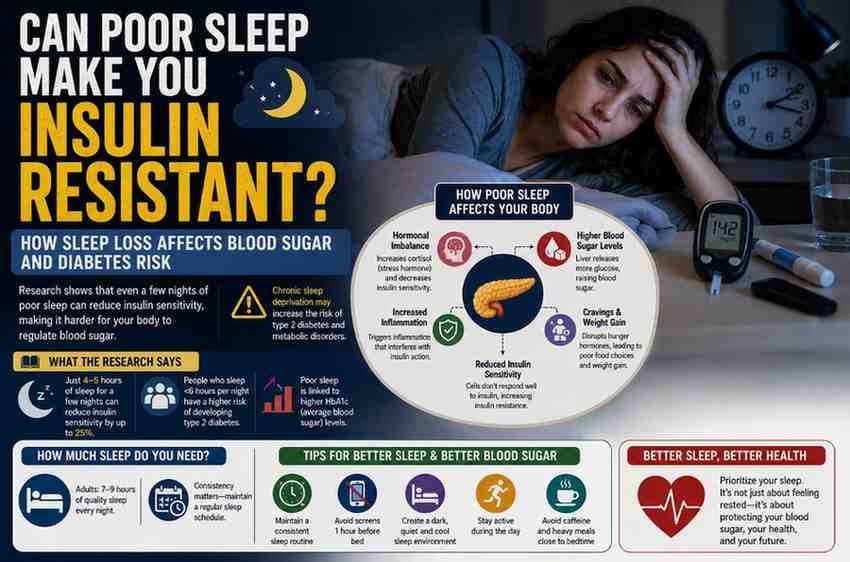
Most people associate Diabetes prevention with eating healthy foods and staying physically active. While both are essential, one powerful factor often goes unnoticed—sleep. Modern lifestyles, long work hours, excessive screen time, and chronic stress have made insufficient sleep increasingly common, yet research continues to reveal that poor sleep can significantly affect the body’s ability to process glucose.
Studies suggest that insulin sensitivity may begin to decline after only a few nights of inadequate sleep. This means the body’s cells become less responsive to insulin, forcing the pancreas to work harder to keep blood sugar levels under control. Over time, persistent sleep deprivation may contribute to insulin resistance, a key risk factor for Type 2 diabetes, metabolic syndrome, and cardiovascular disease.
Although a few restless nights are unlikely to cause diabetes on their own, consistently poor sleep can gradually disrupt metabolic health. Understanding this connection can help people make better lifestyle choices that protect both their sleep and their long-term health.
What Is Insulin Resistance?
Insulin is a hormone produced by the pancreas that helps glucose move from the bloodstream into the body’s cells, where it is used for energy. When cells respond normally to insulin, blood sugar remains within a healthy range.
Insulin resistance develops when the body’s cells become less responsive to insulin’s signals. As a result, the pancreas produces more insulin to compensate. Initially, this extra insulin may keep blood sugar under control, but over time the pancreas may struggle to keep up, allowing blood glucose levels to rise.
Persistent insulin resistance is one of the earliest stages in the development of Type 2 diabetes.
Can Just a Few Nights of Poor Sleep Affect Insulin Sensitivity?
Yes. Research indicates that even short-term sleep restriction can reduce insulin sensitivity in healthy adults. Several studies have found measurable changes in glucose metabolism after only a few nights of sleeping significantly less than recommended.
These effects may be temporary if healthy sleep patterns are restored quickly. However, chronic sleep deprivation can lead to longer-lasting metabolic changes that increase the likelihood of insulin resistance over time.
This finding highlights that sleep is not merely a period of rest—it is an active biological process that supports hormone regulation, tissue repair, immune function, and metabolic balance.
How Sleep Helps Regulate Blood Sugar
During healthy sleep, the body carries out numerous processes that influence glucose metabolism. Hormones are released in carefully regulated patterns, energy use changes, and tissues become more efficient at responding to insulin.
When sleep is consistently shortened or disrupted, these normal processes become less effective.
Poor sleep may affect:
- Insulin production.
- Insulin sensitivity.
- Blood sugar regulation.
- Appetite hormones.
- Stress hormone levels.
- Inflammatory responses.
Together, these changes create an environment that makes glucose regulation more difficult.
Why Sleep Deprivation Can Increase Insulin Resistance
Scientists believe several biological mechanisms explain the relationship between poor sleep and insulin resistance.
Higher Stress Hormones
Insufficient sleep increases the production of cortisol, the body’s primary stress hormone. Elevated cortisol can raise blood glucose levels and reduce insulin effectiveness.
Hormonal Imbalance
Sleep loss alters hormones that regulate hunger and fullness. Many people experience increased appetite, stronger cravings for high-calorie foods, and greater overall calorie intake after poor sleep.
Inflammation
Chronic sleep deprivation is associated with low-grade inflammation, which may interfere with normal insulin signalling.
Reduced Muscle Glucose Uptake
Muscle tissue is one of the body’s largest users of glucose. Sleep restriction may reduce how efficiently muscles respond to insulin, contributing to elevated blood sugar.
| Effect of Poor Sleep | Potential Impact on Blood Sugar |
|---|---|
| Higher cortisol levels | Raises blood glucose |
| Reduced insulin sensitivity | Cells respond less effectively to insulin |
| Increased appetite | Higher calorie intake |
| Inflammation | May worsen insulin resistance |
| Fatigue | Reduced physical activity |
Sleep Duration Matters, but So Does Sleep Quality
Getting enough hours of sleep is important, but quality matters just as much.
Interrupted sleep, frequent awakenings, untreated sleep disorders, or poor sleep efficiency can impair metabolic health even if total sleep time appears adequate.
Deep, restorative sleep supports hormone regulation and healthy glucose metabolism far more effectively than fragmented sleep.
Who Is Most at Risk?
Although anyone can experience reduced insulin sensitivity after poor sleep, some individuals may be particularly vulnerable.
- People with prediabetes.
- Individuals with obesity.
- Shift workers.
- People experiencing chronic stress.
- Older adults.
- Individuals with sleep disorders such as obstructive sleep apnoea.
Addressing sleep problems early may help reduce future metabolic complications in these groups.
The Two-Way Relationship Between Sleep and Diabetes
The relationship between sleep and diabetes works in both directions.
While poor sleep may increase insulin resistance, diabetes itself can also interfere with sleep. High blood sugar may lead to frequent urination, increased thirst, nighttime discomfort, or nerve-related pain that disrupts sleep quality.
This creates a cycle in which poor sleep worsens glucose control, while poor glucose control further disrupts sleep.
Can Better Sleep Improve Insulin Sensitivity?
Evidence suggests that improving sleep habits may help restore insulin sensitivity, particularly when combined with healthy eating and regular physical activity.
Although sleep alone cannot reverse established diabetes, better sleep supports overall metabolic function and may reduce future risk.
Sleep should be viewed as one pillar of metabolic health alongside nutrition, exercise, stress management, and weight control.
| Healthy Sleep Habit | Potential Benefit |
|---|---|
| Consistent bedtime | Supports hormone balance |
| 7–9 hours of sleep for most adults | Promotes metabolic recovery |
| Reduced evening screen time | Improves sleep quality |
| Regular physical activity | Supports better sleep and insulin sensitivity |
| Stress management | Helps regulate cortisol levels |
Simple Ways to Improve Sleep Naturally
Many lifestyle habits can support healthier sleep.
- Maintain a consistent sleep schedule.
- Create a cool, dark, and quiet bedroom environment.
- Limit caffeine late in the day.
- Avoid heavy meals immediately before bedtime.
- Reduce screen exposure during the evening.
- Exercise regularly but avoid intense workouts close to bedtime.
- Practice relaxation techniques if stress interferes with sleep.
These habits improve not only sleep quality but also overall physical and mental health.
Sleep Is Becoming a Core Part of Preventive Medicine
Healthcare professionals increasingly recognize sleep as a critical component of preventive healthcare. Rather than viewing sleep simply as rest, experts now consider it an essential biological process that influences immunity, cardiovascular health, brain function, weight management, hormone regulation, and glucose metabolism.
As research continues to evolve, sleep assessment is becoming a more routine part of diabetes prevention strategies and metabolic health evaluations.
Common Myths About Sleep and Blood Sugar
Myth: Catching up on weekends completely reverses sleep loss.
While extra sleep may help reduce fatigue, consistently irregular sleep schedules may still affect metabolic health.
Myth: Only people with diabetes need to worry about sleep.
Healthy sleep supports metabolic function in everyone, including people with normal blood sugar.
Myth: Five hours of sleep is enough if you feel fine.
Many people adapt subjectively to sleep loss while physiological changes continue to occur beneath the surface.
Looking Ahead: Why Sleep May Become a Standard Part of Diabetes Prevention
Future diabetes prevention programs are likely to place greater emphasis on sleep alongside nutrition and physical activity. Wearable health technology, digital sleep tracking, and personalised lifestyle medicine may help identify individuals whose sleep habits increase metabolic risk before disease develops.
By treating sleep as a modifiable health behaviour rather than a luxury, healthcare systems may improve prevention strategies for diabetes and other chronic diseases.
Conclusion
Research increasingly demonstrates that poor sleep can reduce insulin sensitivity after only a few nights of inadequate rest, making the body less efficient at regulating blood sugar. Although occasional sleep loss is unlikely to cause diabetes on its own, chronic sleep deprivation may contribute to insulin resistance, weight gain, metabolic dysfunction, and an increased risk of developing Type 2 diabetes.
Healthy sleep should be considered an essential part of overall wellness. Alongside balanced nutrition, regular exercise, stress management, and routine medical care, consistent, high-quality sleep provides one of the body’s most powerful tools for maintaining healthy metabolism and protecting long-term health.
For breaking news and live news updates, like us on Facebook or follow us on Twitter and Instagram. Read more on Latest Lifestyle on thefoxdaily.com.






COMMENTS 0