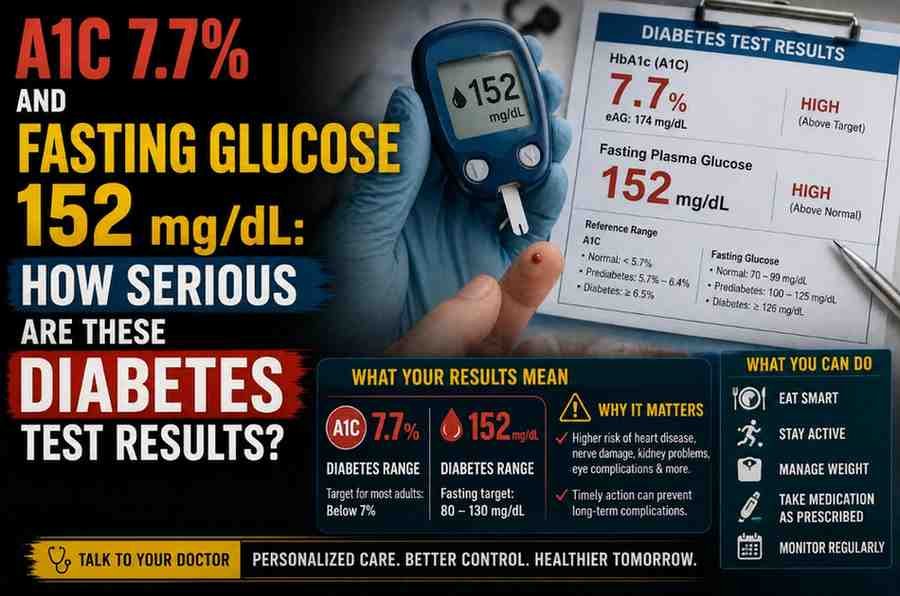
Routine blood tests often reveal numbers that leave people wondering whether they should be worried. Among the most common questions doctors hear is: “My A1C is 7.7% and my fasting glucose is 152 mg/dL how serious is that?”
The short answer is that these values are significant. While they are not typically considered a medical emergency, they indicate blood sugar levels that are consistently higher than normal and above the treatment targets recommended for many adults with Diabetes.
The encouraging news is that these numbers can often be improved. Early action can dramatically reduce the risk of complications affecting the heart, kidneys, eyes, nerves, and blood vessels.
What Does an A1C of 7.7% Mean?
The HbA1c test measures average blood glucose levels over the previous two to three months. Unlike a single blood sugar reading, it provides a broader picture of how well glucose has been controlled over time.
Generally:
- Below 5.7% is considered normal.
- 5.7% to 6.4% suggests prediabetes.
- 6.5% or higher indicates diabetes.
An A1C of 7.7% means blood sugar has been elevated consistently over several weeks or months. For many adults with diabetes, healthcare providers often aim for an A1C below 7%, though targets may vary depending on age, overall Health, and other medical conditions.
What Does a Fasting Glucose of 152 mg/dL Mean?
Fasting blood glucose is measured after at least eight hours without eating.
Typical ranges are:
- 70–99 mg/dL: Normal.
- 100–125 mg/dL: Prediabetes.
- 126 mg/dL or higher: Diabetes.
A fasting glucose level of 152 mg/dL is clearly above the diabetes threshold and suggests that glucose control is not currently optimal.
Why These Numbers Matter
High blood sugar does not usually cause symptoms immediately, which is why diabetes is often called a “silent disease.” However, prolonged elevations can damage blood vessels and organs over time.
Poorly controlled diabetes increases the risk of:
- Heart disease.
- Stroke.
- Kidney disease.
- Nerve damage.
- Vision problems.
- Foot complications.
- Infections.
The goal of treatment is not simply to lower numbers but to reduce these long-term risks.
Comparison: Understanding the Test Results
| Test | Normal Range | Your Result | Interpretation |
|---|---|---|---|
| HbA1c | Below 5.7% | 7.7% | Above recommended targets for many adults with diabetes |
| Fasting Blood Glucose | 70–99 mg/dL | 152 mg/dL | Consistent with diabetes and elevated glucose control |
Should You Be Alarmed?
These results deserve attention, but they should not trigger panic.
An A1C of 7.7% is not uncommon, and many people are able to improve their numbers through a combination of:
- Healthy eating.
- Regular physical activity.
- Weight management.
- Medication adjustments.
- Stress reduction.
- Improved sleep habits.
The important thing is not to ignore the findings.
An Insight Competitors Often Miss: The Trend Matters More Than One Number
Many people focus on a single test result, but doctors pay close attention to patterns over time.
For example:
- Has your A1C increased from 6.8% to 7.7%?
- Are fasting glucose levels steadily rising?
- Have medications changed recently?
- Are diet and exercise habits different?
Understanding trends helps determine whether blood sugar control is worsening, stable, or improving.
One elevated result provides information, but repeated measurements tell the story.
What Could Cause Elevated Blood Sugar?
Several factors may contribute to higher readings:
- Type 2 diabetes progression.
- Diet high in refined carbohydrates.
- Lack of physical activity.
- Weight gain.
- Stress.
- Poor sleep.
- Certain medications.
- Infections or illness.
Because diabetes is influenced by multiple factors, management often requires a personalized approach.
When Should You See a Doctor?
If these test results are new or unexpectedly high, a healthcare professional should review them.
Your doctor may recommend:
- Repeat blood tests.
- Medication adjustments.
- Dietary counseling.
- Exercise plans.
- Kidney function tests.
- Eye examinations.
- Cholesterol and blood pressure monitoring.
Regular follow-up is essential because diabetes affects multiple organ systems.
Can Lifestyle Changes Really Help?
Yes. Lifestyle interventions remain a cornerstone of diabetes management.
Nutrition
Balanced meals emphasizing vegetables, lean protein, whole grains, and fiber can improve glucose control.
Physical Activity
Regular exercise helps muscles use glucose more effectively and improves insulin sensitivity.
Weight Management
Even modest weight loss may significantly improve blood sugar levels in some individuals.
Sleep and Stress
Chronic stress and inadequate sleep can affect hormones that influence glucose regulation.
What About Medications?
For some people, lifestyle changes alone may not be enough. Diabetes medications work in different ways to help control blood sugar.
Treatment decisions depend on:
- Age.
- Duration of diabetes.
- Other medical conditions.
- Risk of low blood sugar.
- Kidney function.
- Individual preferences.
Medication adjustments should always be made under medical supervision.
Prediction: Diabetes Care Is Becoming More Personalized
Modern diabetes treatment is shifting away from a one-size-fits-all approach.
Increasingly, doctors consider:
- Continuous glucose monitoring.
- Individual risk factors.
- Cardiovascular health.
- Kidney protection.
- Lifestyle patterns.
- Patient preferences.
The future of diabetes care is likely to focus not just on lowering blood sugar but on improving overall health and quality of life.
Warning Signs That Require Immediate Medical Attention
Seek urgent medical care if high blood sugar is accompanied by:
- Extreme thirst.
- Frequent urination.
- Vomiting.
- Confusion.
- Shortness of breath.
- Severe weakness.
- Abdominal pain.
These symptoms may indicate serious complications requiring prompt treatment.
Conclusion
An A1C of 7.7% and a fasting glucose level of 152 mg/dL indicate diabetes that is above the recommended target range for many individuals. While these numbers are a sign that blood sugar control needs attention, they are also an opportunity to intervene before complications develop.
Through lifestyle modifications, regular monitoring, and appropriate medical care, many people are able to improve their glucose levels and protect their long-term health.
Diabetes is not defined by a single test result. What matters most is what happens next—and the sooner action begins, the greater the opportunity to change the trajectory.
For breaking news and live news updates, like us on Facebook or follow us on Twitter and Instagram. Read more on Latest Lifestyle on thefoxdaily.com.






COMMENTS 0