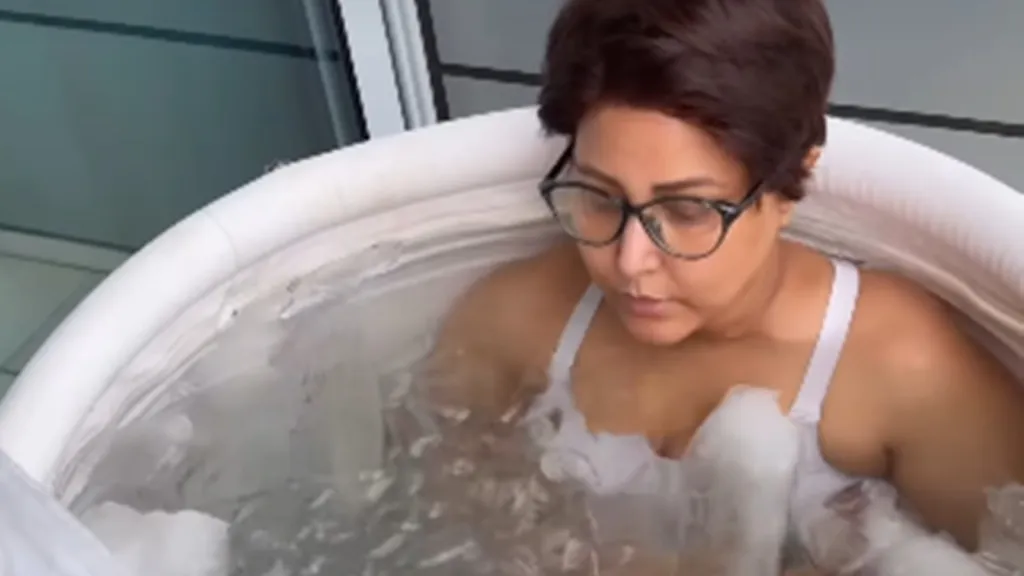
Actor and breast cancer survivor Hina Khan has once again drawn attention to her resilience after sharing a video of herself spending 12 minutes in a cryotherapy chamber at nearly -70°C. Calling it a personal challenge, Hina revealed that her previous record was seven minutes and expressed her determination to push beyond it.
While many fans praised her mental strength and commitment to recovery, the post also ignited an important conversation among healthcare professionals about the benefits, limitations, and safety of whole-body cryotherapy. Experts caution that although cryotherapy has gained popularity among athletes, fitness enthusiasts, and some cancer survivors, scientific evidence supporting many of its claimed Health benefits remains limited.
The viral moment has shifted attention from the challenge itself to a broader question: Can extreme cold therapy improve recovery, and is it safe for everyone?
What Did Hina Khan Share?
Hina Khan documented her latest cryotherapy session on social media, revealing that she remained inside a cryotherapy chamber for approximately 12 minutes, surpassing her earlier personal best of seven minutes.
The actor described the session as a personal milestone during her ongoing health and fitness journey. Having openly documented her breast cancer diagnosis and treatment, Hina has consistently shared her rehabilitation efforts, inspiring many people dealing with serious health conditions.
However, healthcare experts emphasize that personal experiences should not be interpreted as medical recommendations for everyone.
What Is Whole-Body Cryotherapy?
Whole-body cryotherapy (WBC) involves exposing the body to extremely cold temperatures—typically ranging between -100°C and -140°C—for a short period inside a specially designed chamber. Some facilities may use different temperatures or cooling technologies.
The treatment was originally explored for managing inflammatory conditions but has since become popular in sports medicine, Wellness clinics, and recovery centers.
| Feature | Whole-Body Cryotherapy |
|---|---|
| Temperature | Typically between -100°C and -140°C (varies by system) |
| Session Duration | Usually 2–4 minutes under supervision |
| Purpose | Recovery, pain relief, muscle soreness management |
| Medical Status | Wellness therapy; not a replacement for medical treatment |
How Does Cryotherapy Work?
Extreme cold causes blood vessels near the skin to constrict temporarily. Once the session ends, blood flow returns, bringing oxygen and nutrients back to tissues. This process is believed to reduce inflammation and temporarily decrease pain perception.
Cold exposure may also stimulate the release of endorphins and activate the body’s stress-response mechanisms, which some people report as improving mood and energy.
However, researchers continue to study how much of these effects translate into meaningful long-term health benefits.
Potential Benefits of Cryotherapy
Although evidence varies across different conditions, cryotherapy has been investigated for several possible applications.
- Temporary relief from muscle soreness after exercise.
- Reduction in joint discomfort in some individuals.
- Short-term improvement in perceived recovery.
- Reduced inflammation following intense physical activity.
- Possible improvement in mood immediately after treatment.
- Temporary pain relief in certain musculoskeletal conditions.
Importantly, these benefits are not guaranteed and can differ significantly between individuals.
Can Cryotherapy Help Cancer Survivors?
This question has received increasing attention as more cancer survivors explore complementary wellness therapies.
While cold therapy may help some people manage muscle aches, fatigue, or exercise recovery under medical guidance, there is no evidence that whole-body cryotherapy treats cancer or prevents cancer recurrence.
Cancer survivors should always consult their oncology team before beginning any new recovery therapy, particularly if they have cardiovascular disease, neuropathy, compromised immunity, or treatment-related complications.
Why Hina Khan’s Session Has Raised Questions
Experts point out that the duration of Hina Khan’s cryotherapy session appears considerably longer than the session length commonly used in many cryotherapy facilities.
Most professionally supervised whole-body cryotherapy sessions typically last only a few minutes because prolonged exposure to extremely low temperatures may increase the risk of adverse effects.
The exact conditions of Hina’s session, including the chamber type and temperature regulation, are not publicly known, making it inappropriate to compare her experience directly with standard medical or wellness protocols.
Possible Risks of Cryotherapy
Although generally well tolerated when performed correctly and under professional supervision, cryotherapy is not without risks.
- Cold burns or frostbite.
- Skin irritation.
- Numbness or tingling.
- Dizziness after treatment.
- Temporary increase in blood pressure.
- Rare cold-related injuries.
Improper equipment, unsupervised exposure, or remaining inside the chamber longer than recommended may increase the likelihood of complications.
Who Should Avoid Whole-Body Cryotherapy?
Healthcare professionals generally advise caution or avoidance in individuals with certain medical conditions.
- Uncontrolled high blood pressure.
- Heart disease.
- Poor circulation.
- Severe asthma triggered by cold.
- Raynaud’s phenomenon.
- Cold hypersensitivity disorders.
- Pregnancy unless specifically advised otherwise by a physician.
Anyone considering cryotherapy should discuss it with their healthcare provider, especially if they have chronic medical conditions.
Cryotherapy vs Ice Baths
| Whole-Body Cryotherapy | Ice Bath |
|---|---|
| Dry cold exposure | Cold water immersion |
| Extremely low air temperature | Cold water between approximately 10–15°C in many recovery settings |
| Short sessions | Usually longer immersion |
| Requires specialized equipment | Can be performed using cold-water tubs under appropriate guidance |
What Does the Research Say?
Scientific studies suggest that cryotherapy may provide temporary relief from muscle soreness and perceived fatigue in some individuals. However, evidence supporting claims related to weight loss, immune enhancement, anti-aging effects, or major improvements in athletic performance remains limited.
Researchers continue to evaluate the long-term safety and effectiveness of repeated whole-body cryotherapy sessions.
Recovery After Breast Cancer: A Personalized Journey
Every cancer survivor’s recovery experience is unique. Rehabilitation often includes a combination of physical activity, balanced nutrition, mental health support, adequate sleep, and regular medical follow-up.
Complementary wellness practices, including yoga, meditation, physiotherapy, supervised exercise, and selected recovery therapies, may help improve quality of life when integrated into a physician-approved care plan.
No single therapy should replace evidence-based cancer treatment or follow-up care.
Should You Try Cryotherapy?
For healthy individuals, cryotherapy may offer temporary recovery benefits when performed at a reputable facility under trained supervision. However, it should not be viewed as a miracle treatment or substitute for healthy lifestyle habits.
People with underlying health conditions, particularly cardiovascular disease or those recovering from major illnesses, should seek medical advice before scheduling a session.
The Bottom Line
Hina Khan’s cryotherapy challenge has inspired many admirers while also prompting an important discussion about the safe use of extreme cold therapy. Her determination reflects remarkable personal resilience, but healthcare experts remind the public that wellness practices should always be individualized and guided by medical advice.
Whole-body cryotherapy may provide short-term recovery benefits for some people, but it is not risk-free, nor is it a proven treatment for cancer or other serious illnesses. Safe use, realistic expectations, and consultation with qualified healthcare professionals remain the best approach.
Key Takeaway: Whole-body cryotherapy has become increasingly popular for recovery and pain management, but sessions should be professionally supervised and tailored to individual health needs. While Hina Khan’s achievement has sparked widespread interest, experts emphasize that extreme cold therapy should complement—not replace—evidence-based medical care and healthy lifestyle practices.
For breaking news and live news updates, like us on Facebook or follow us on Twitter and Instagram. Read more on Latest Lifestyle on thefoxdaily.com.






COMMENTS 0