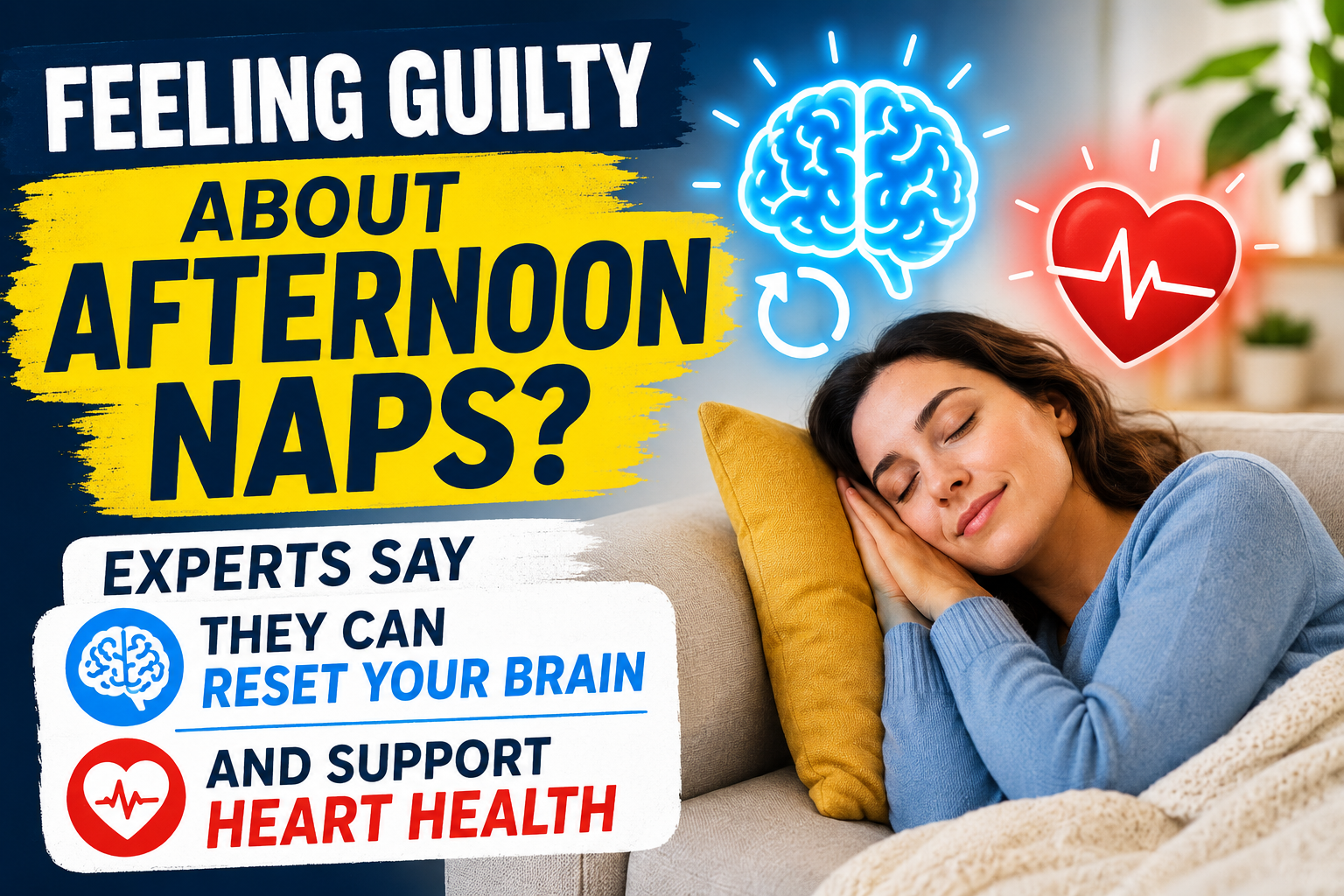
If you’ve ever felt guilty about taking an afternoon nap, you’re not alone. In a culture that often glorifies constant productivity, napping is sometimes seen as laziness. But growing medical insight suggests the opposite. According to heart and brain Health experts, a well-timed nap may be one of the most powerful habits to reset your brain and even support cardiovascular health.
Who: Adults experiencing fatigue, stress, or reduced focus
What: The science backed benefits of afternoon naps
When: Typically between 1 PM and 3 PM
Where: Across work, home, and high performance environments
Why: To restore cognitive function, reduce stress, and support heart health
How: Through neurological reset, hormonal balance, and energy restoration
This isn’t about sleeping more it’s about sleeping smarter.
The Cultural Myth: Why Napping Feels “Wrong”
For decades, productivity has been linked to long, uninterrupted work hours. Napping, in contrast, has been misunderstood as a sign of poor discipline or lack of motivation.
However, this belief ignores a fundamental biological truth: the human body is not designed for continuous high alertness all day.
Insight: The midday energy dip is not a flaw it’s a built in biological signal that your brain needs recovery.
What Happens in Your Body During the Afternoon Slump?
Most people experience a drop in energy in the early afternoon. This is influenced by:
- Natural circadian rhythm fluctuations
- Post-lunch blood sugar changes
- Mental fatigue from sustained focus
This dip can lead to:
- Reduced concentration
- Slower reaction time
- Increased irritability
Instead of fighting this phase with caffeine or willpower, a short nap can restore balance.
Why Cardiologists Support Short Naps
Heart health experts increasingly recognize the link between stress, fatigue, and cardiovascular risk.
1. Stress Reduction
Napping helps lower stress hormones, which are directly linked to heart strain.
2. Blood Pressure Regulation
Short rest periods may contribute to better blood pressure control, especially in high-stress individuals.
3. Nervous System Reset
A nap activates the parasympathetic nervous system the body’s “rest and recover” mode.
Result: A calmer heart, reduced strain, and improved overall resilience.
The Brain Reset Effect: What Makes Naps So Powerful?
Even a short nap can significantly impact brain performance.
Memory Consolidation
Your brain processes and organizes information during sleep even brief naps.
Improved Focus
A nap clears mental clutter, helping you return to tasks with sharper attention.
Emotional Regulation
Rest stabilizes mood and reduces emotional reactivity.
Creativity Boost
Many people report better problem solving after a short nap.
Key takeaway: A nap doesn’t waste time it gives time back in the form of better performance.
Comparison: No Nap vs Power Nap
| Factor | No Nap | Power Nap (20–30 min) |
|---|---|---|
| Energy Levels | Declining | Restored |
| Focus | Scattered | Sharp |
| Stress | Accumulating | Reduced |
| Productivity | Decreasing | Improved |
| Mood | Irritable | Balanced |
The Ideal Nap: How to Do It Right
Duration Matters
- 10–20 minutes: Quick refresh, best for alertness
- 20–30 minutes: Ideal balance of rest and recovery
- 60+ minutes: May cause grogginess (sleep inertia)
Timing Is Key
The best time is early afternoon usually between 1 PM and 3 PM when your body naturally dips.
Environment Tips
- Quiet, dimly lit space
- Comfortable but not too cozy (to avoid deep sleep)
- Set an alarm to avoid oversleeping
A Unique Insight: The “Productivity Paradox”
Here’s the irony: the more you push through fatigue, the less productive you become.
This is known as the productivity paradox working longer without rest reduces efficiency.
Napping breaks this cycle by restoring your brain’s capacity to perform.
Real-World Impact: Who Benefits the Most?
- Students needing better memory retention
- Professionals dealing with mental fatigue
- Shift workers with irregular sleep patterns
- Anyone experiencing chronic stress
Even high-performing individuals including athletes and executives use naps strategically.
When Napping Might Not Be Ideal
While beneficial, naps are not for everyone in every situation:
- If you struggle with insomnia, daytime naps may interfere with nighttime sleep
- Long naps can disrupt your sleep cycle
- Late evening naps may delay bedtime
Balance is key.
Prediction: The Rise of “Strategic Rest”
As awareness grows, workplaces and institutions may begin to embrace structured rest periods.
- Nap pods in offices
- Flexible work schedules
- Focus on energy management rather than time management
The future of productivity may prioritize recovery as much as effort.
Conclusion
Feeling guilty about afternoon naps is based on outdated thinking. Modern science and even cardiology suggests that a short nap can be one of the most effective ways to reset your brain, reduce stress, and improve overall performance.
Instead of viewing naps as lost time, consider them an investment in your mental clarity and long term health.
Final thought: Sometimes, the smartest way to move forward is to pause and let your brain recharge.
For breaking news and live news updates, like us on Facebook or follow us on Twitter and Instagram. Read more on Latest Lifestyle on thefoxdaily.com.






COMMENTS 0