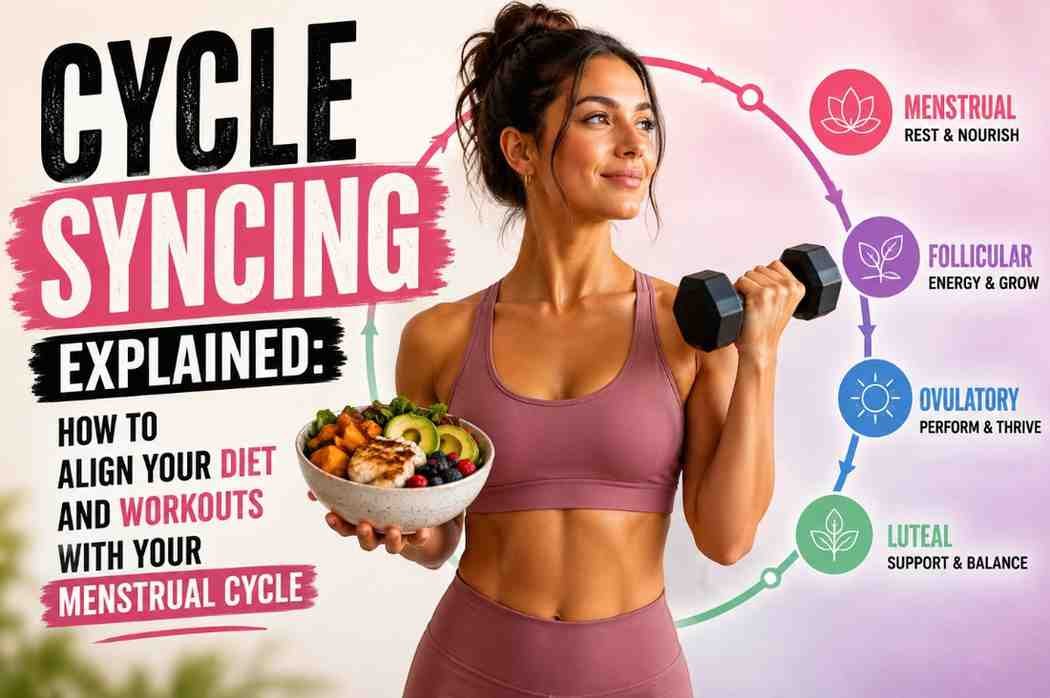
What if your body already had a built in schedule for when to push hard and when to slow down? That’s the idea behind cycle syncing, a growing Wellness approach that encourages women to adjust their diet, exercise, and daily routines based on hormonal fluctuations throughout the menstrual cycle.
Who: Women of reproductive age
What: Aligning diet and workouts with menstrual cycle phases
When: Across the four phases of the cycle
Where: Everyday lifestyle home, gym, work
Why: To improve energy, reduce symptoms, and optimize Health
How: By adapting nutrition and physical activity to hormonal changes
What Is Cycle Syncing?
Cycle syncing is based on the understanding that hormone levels primarily estrogen and progesterone rise and fall in predictable patterns throughout the menstrual cycle. These hormonal shifts affect metabolism, mood, strength, endurance, and even how your body uses nutrients.
Instead of following a one-size-fits-all diet or workout plan, cycle syncing encourages a more personalized, phase-based approach.
Insight: Your energy dips and productivity shifts aren’t random they’re biological signals.
The Four Phases of the Menstrual Cycle
1. Menstrual Phase (Days 1–5)
This phase begins on the first day of your period. Hormone levels (estrogen and progesterone) are at their lowest, which often leads to fatigue and low energy.
How You May Feel
- Low energy
- Need for rest
- Reduced motivation
Best Diet Approach
- Iron-rich foods (spinach, lentils)
- Warm, nourishing meals
- Hydrating fluids
Best Workouts
- Gentle yoga
- Stretching
- Light walking
Why it matters: Your body is shedding the uterine lining rest supports recovery and hormonal balance.
2. Follicular Phase (Days 6–14)
Estrogen starts rising, bringing a boost in energy, focus, and motivation. This is your “fresh start” phase.
How You May Feel
- More energetic
- Creative and motivated
- Mentally sharp
Best Diet Approach
- Lean proteins
- Fresh fruits and vegetables
- Fermented foods for gut health
Best Workouts
- Strength training
- Cardio workouts
- Trying new fitness routines
Scientific angle: Rising estrogen improves insulin sensitivity and muscle recovery, making it ideal for higher-intensity workouts.
3. Ovulatory Phase (Around Day 14)
This is when estrogen peaks and ovulation occurs. Energy, confidence, and social engagement are typically at their highest.
How You May Feel
- Confident and outgoing
- Physically strong
- High stamina
Best Diet Approach
- Light, fresh meals
- Fiber rich foods
- Antioxidant rich fruits
Best Workouts
- High-intensity interval training (HIIT)
- Group workouts
- Competitive sports
Why it works: Peak estrogen supports muscle strength, coordination, and endurance.
4. Luteal Phase (Days 15 28)
Progesterone rises, and energy gradually declines. This phase can bring symptoms like bloating, mood swings, or fatigue.
How You May Feel
- Slower and more introspective
- Cravings increase
- Lower tolerance for stress
Best Diet Approach
- Complex carbs (whole grains)
- Magnesium-rich foods (nuts, seeds)
- Foods that stabilize blood sugar
Best Workouts
- Pilates
- Moderate strength training
- Low-impact cardio
Key insight: Your body needs more calories and recovery during this phase ignoring this can increase fatigue and irritability.
Cycle Syncing vs Traditional Fitness Approach
| Approach | Cycle Syncing | Traditional Routine |
|---|---|---|
| Energy Alignment | Matches hormonal fluctuations | Ignores body signals |
| Workout Intensity | Varies by phase | Fixed intensity |
| Nutrition | Phase specific nutrients | Same diet daily |
| Outcome | Better balance and sustainability | Higher burnout risk |
The Science Behind Cycle Syncing
Hormonal changes influence multiple biological systems:
- Metabolism: Calorie needs increase slightly in the luteal phase
- Muscle strength: Peaks during ovulation
- Temperature regulation: Body temperature rises post ovulation
- Brain chemistry: Estrogen boosts serotonin, improving mood
These shifts explain why some days you feel unstoppable and others, even simple tasks feel exhausting.
Real-World Benefits of Cycle Syncing
- Improved workout performance
- Reduced menstrual symptoms (cramps, fatigue)
- Better hormonal balance
- Enhanced mood stability
- Sustainable fitness routine
Many women report feeling more “in sync” with their bodies rather than fighting against them.
A Unique Insight: Productivity and Decision Making
Cycle syncing isn’t just about fitness it can influence how you plan your life. For example:
- Schedule important meetings during ovulation (confidence peak)
- Plan creative tasks in the follicular phase
- Use the luteal phase for reflection and planning
This approach turns hormonal changes into a strategic advantage rather than a limitation.
Common Mistakes to Avoid
- Ignoring your body’s signals and pushing through fatigue
- Following extreme diet restrictions during low energy phases
- Expecting the same performance every day
- Not tracking your cycle consistently
Future Outlook: Personalized Hormonal Health
The future of wellness is personalized. With wearable technology and hormone tracking apps, cycle syncing is becoming more precise and data-driven. Experts predict that individualized health plans based on hormonal patterns will become the norm.
Conclusion
Cycle syncing is not about doing less it’s about doing things smarter. By aligning your diet and workouts with your hormonal phases, you can improve energy, reduce stress, and get better results without burnout.
Instead of forcing your body into rigid routines, cycle syncing invites you to work with your biology. The result? A healthier, more balanced, and sustainable lifestyle.
Final thought: Your body isn’t inconsistent it’s cyclical. Once you understand the pattern, everything starts to make sense.
For breaking news and live news updates, like us on Facebook or follow us on Twitter and Instagram. Read more on Latest Health on thefoxdaily.com.





COMMENTS 0