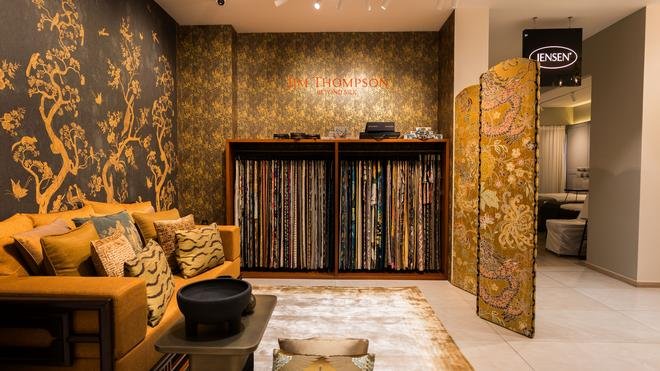
Jim Thompson, the renowned Thai luxury textile and lifestyle brand, has expanded its presence in India with a new launch in Chennai, bringing its distinctive interpretation of Thai craftsmanship, contemporary design and luxury interiors to South India.
The brand’s arrival at Decorgeous Lifestyle marks a notable moment for Chennai’s evolving luxury home and interiors market. Known internationally for its silk, richly patterned fabrics, wallpapers and home furnishings, Jim Thompson brings together traditional Asian textile heritage and a distinctly modern design language.
The Chennai launch also carries an unusual historical story. The brand takes its name from Jim Thompson, the American entrepreneur credited with helping revive Thailand’s silk industry in the mid-20th century. His influence turned Thai silk from a largely local craft into a product recognised by designers and luxury consumers around the world.
Yet Thompson’s legacy is accompanied by one of Asia’s most enduring mysteries. In 1967, he disappeared while walking in Malaysia’s Cameron Highlands, and his fate has never been conclusively established.
Why Jim Thompson’s Chennai entry matters
Luxury interiors in India have increasingly moved beyond conventional definitions of opulence. Consumers are becoming more interested in distinctive materials, craftsmanship, heritage, design provenance and products that can give a home a strong visual identity.
That shift creates an attractive environment for brands such as Jim Thompson.
Rather than positioning itself simply as a traditional silk house, the brand has evolved into a broader luxury lifestyle label encompassing textiles and interiors. Its aesthetic often combines elaborate motifs with contemporary colour palettes, allowing traditional craftsmanship to work within modern residential and hospitality spaces.
For Chennai, the launch adds another international design house to a market where interest in premium furniture, fabrics, lighting, art and interior styling is growing.
From Thai silk to a global design house
The story of Jim Thompson begins with an American who became deeply involved in Thailand’s textile heritage.
Thompson was an architect by training and later served in the U.S. military and intelligence services. After spending time in Southeast Asia, he developed a strong interest in Thailand and its traditional silk-making practices.
At the time, Thai silk was primarily produced by local communities and had limited international visibility. Thompson believed that the country’s silk traditions could become commercially sustainable while retaining their distinctive craftsmanship.
He worked with Thai weavers and helped develop markets for Thai silk, encouraging improvements in production, design presentation and international distribution.
His efforts helped bring Thai silk to a much wider audience, including international designers and luxury consumers.
The Broadway connection that helped make Thai silk famous
One of the pivotal moments in the history of Thai silk came through the stage production of The King and I.
Costumes incorporating Thai silk helped introduce the material to American audiences and contributed to the perception of Thai textiles as sophisticated luxury materials rather than simply regional handicrafts.
Thompson’s work subsequently became closely associated with the international promotion of Thai silk.
What began as a mission to revive a traditional industry eventually became a globally recognised luxury brand.
The mystery behind the name
Jim Thompson’s business legacy is unusually intertwined with mystery.
In March 1967, Thompson disappeared during a holiday in Malaysia’s Cameron Highlands. He had reportedly gone for a walk and never returned.
Despite extensive searches and numerous theories, his disappearance remains unresolved.
No definitive explanation has ever established what happened to him, and the mystery has continued to surround the name decades after his disappearance.
For a luxury brand built around a real historical figure, that unusual story adds another layer to its identity. Yet the company’s continued development has ultimately rested on design, craftsmanship and the enduring appeal of Thai textiles rather than the mystery alone.
What Jim Thompson brings to Chennai
The Chennai offering at Decorgeous Lifestyle focuses on luxury home furnishings, extending the brand’s presence beyond its traditional association with silk.
Textiles play an important role in the character of an interior. Curtains, upholstery, cushions, wall coverings and other fabric elements can transform a room without requiring structural changes.
This is where a specialist textile brand can make a significant difference.
Jim Thompson’s design vocabulary often combines botanical patterns, geometric forms, Asian-inspired motifs and expressive colours. Depending on the collection, fabrics can range from understated contemporary textures to highly decorative statement designs.
For interior designers, architects and homeowners, such textiles can function as both finishing materials and visual focal points.
Why textiles are becoming central to luxury interiors
Furniture tends to dominate conversations about luxury interiors, but textiles can have an equally powerful effect on how a space feels.
A carefully selected fabric can introduce colour, soften architectural lines, create contrast and establish continuity between different areas of a home.
Luxury textile brands also offer something increasingly valued by design-conscious consumers: provenance.
Knowing where a textile tradition originated, how it was produced and what design philosophy informs it gives the material a story beyond its appearance.
Jim Thompson’s heritage provides precisely that combination of craftsmanship and narrative.
Traditional craft meets contemporary interiors
The challenge for heritage textile houses is avoiding the impression that traditional craftsmanship belongs only in traditional interiors.
Jim Thompson’s international design identity has evolved partly by placing Thai textile heritage within contemporary settings.
A richly patterned fabric can work in a modern apartment when used selectively. A traditional-inspired motif can become a striking accent against minimalist furniture. Similarly, textured fabrics can add warmth to spaces dominated by stone, glass and metal.
This flexibility is particularly relevant to Indian interiors, where contemporary architecture increasingly exists alongside strong regional design traditions.
Why Chennai is an interesting market
Chennai has a deep relationship with textiles and craftsmanship. Tamil Nadu has long been associated with weaving traditions, silk production and handloom communities, giving the city’s consumers a natural familiarity with the cultural and tactile value of fabric.
At the same time, Chennai’s luxury market has expanded beyond traditional jewellery and fashion into architecture, interiors, hospitality and lifestyle.
The arrival of an international Thai textile house therefore creates an interesting cultural intersection: a Thai silk heritage brand entering a South Indian city with one of India’s strongest textile traditions.
For designers, the appeal may lie not in replacing local craft but in creating new combinations between international and Indian design languages.
What the launch says about India’s luxury market
International luxury brands are increasingly recognising that India’s premium consumer is interested in more than visible logos.
In interiors especially, purchasing decisions can be driven by craftsmanship, individuality, material quality and the ability to create spaces that feel personal rather than mass-produced.
Luxury home furnishings also have an advantage over some categories of luxury consumption: they become part of the environment in which people live.
A high-end textile can therefore communicate taste without functioning like conventional branded fashion.
This could make specialist interior brands increasingly relevant as India’s luxury market matures.
More than silk: the evolution of a lifestyle brand
Although Jim Thompson remains strongly associated with Thai silk, its contemporary identity extends across a wider design universe.
The brand’s home collections can include fabrics and decorative materials intended for residential and hospitality environments, allowing its signature aesthetic to appear across an entire interior rather than in a single textile.
This evolution reflects a broader trend among heritage luxury companies.
Instead of selling one product category, established design houses increasingly build complete lifestyle ecosystems. The objective is to allow consumers to experience the brand through multiple touchpoints.
For Jim Thompson, that means the original silk story becomes the foundation for a wider conversation about colour, pattern, craftsmanship and Asian-inspired design.
What designers may find particularly interesting
For architects and interior designers, the Chennai launch could be particularly relevant because textiles provide a relatively flexible way to introduce personality into a project.
Compared with changing architectural finishes or large furniture pieces, fabrics can be updated more easily and can dramatically influence the atmosphere of a room.
They can also be layered.
- Statement upholstery can create a focal point in a living room.
- Decorative cushions can introduce colour without overwhelming a space.
- Curtains and drapery can alter the perceived scale and softness of a room.
- Wall coverings can turn a plain surface into a major design feature.
- Textured fabrics can add depth to minimalist interiors.
The versatility of textiles makes them especially useful for designers trying to balance luxury with restraint.
A meeting of two textile cultures
Perhaps the most interesting cultural aspect of Jim Thompson’s Chennai launch is the meeting of Thai and Indian textile traditions.
Thailand and India both have long histories of weaving, natural fibres, intricate motifs and regional craft communities. Their design languages are different, but the underlying appreciation for textile craftsmanship creates common ground.
In Chennai, that connection could encourage designers to explore combinations rather than strict cultural categories.
Thai-inspired silk and Indian handloom fabrics, for example, need not compete. Used thoughtfully, contrasting textile traditions can create interiors that feel both international and rooted in place.
The larger significance of the launch
Jim Thompson’s arrival in Chennai is ultimately about more than opening another luxury retail presence.
It reflects the growing sophistication of India’s interiors market and the increasing appetite for design brands with a strong story, distinctive craftsmanship and international credibility.
It also brings the legacy of one of Thailand’s most influential modern silk entrepreneurs into a city with its own extraordinary textile history.
That makes the launch particularly fitting.
Jim Thompson helped transform Thai silk from a regional craft into an internationally recognised luxury material. Decades later, the brand bearing his name is entering a new Indian market where textiles already carry deep cultural and commercial significance.
Conclusion: a new chapter for Thai luxury in South India
Jim Thompson’s launch in Chennai at Decorgeous Lifestyle introduces South Indian consumers and design professionals to a luxury textile house whose identity combines Thai craftsmanship, international design and an extraordinary historical story.
The brand’s evolution from a Thai silk pioneer into a broader home and lifestyle label makes its Chennai entry particularly relevant to India’s expanding luxury interiors sector.
Its arrival also creates an intriguing cultural dialogue between two countries with rich textile traditions. For Chennai’s designers and luxury homeowners, the opportunity is not simply to bring Thai design into Indian interiors, but to explore how different craft traditions can coexist within contemporary spaces.
And behind it all remains the remarkable story of Jim Thompson himself: the American entrepreneur who helped put Thai silk on the global map and then disappeared without explanation in the Malaysian highlands.
His disappearance remains a mystery. His influence on Thai silk, however, is anything but.
For breaking news and live news updates, like us on Facebook or follow us on Twitter and Instagram. Read more on Latest Lifestyle on thefoxdaily.com.





COMMENTS 0