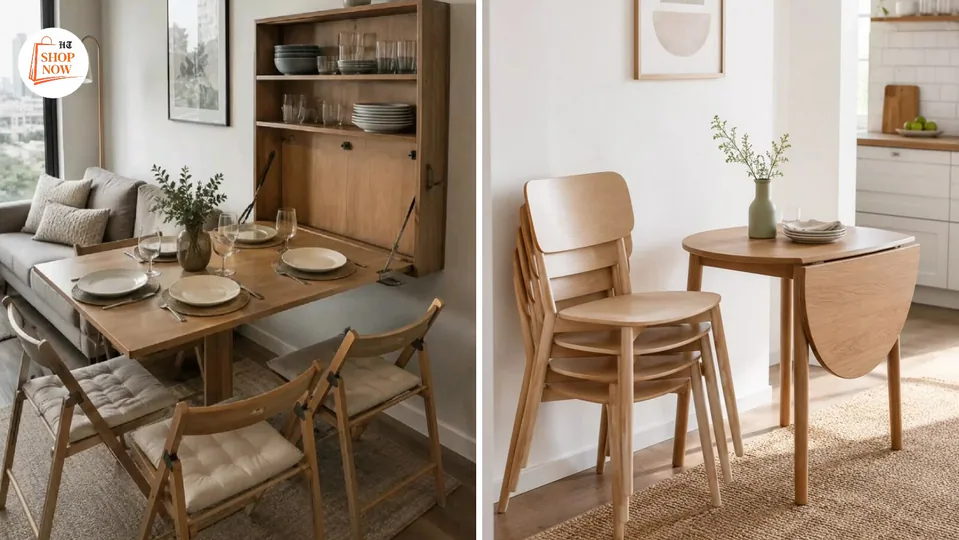
Living in an urban apartment often means making compromises when it comes to furniture. Whether you are moving from a paying guest accommodation to a rented flat or settling into a compact city home, limited floor space can make it difficult to accommodate everything you want. A dining table, for instance, may seem like a luxury when the living room, kitchen and bedroom already compete for space.
But having a small home does not mean giving up on a comfortable dining area. Furniture designs have evolved to offer practical alternatives that can be folded, tucked away, expanded or used for multiple purposes. From wall-mounted folding tables and drop-leaf designs to compact round tables and multipurpose desks, there are several ways to create a dining space without permanently occupying valuable floor area.
Foldable furniture has also become increasingly visible across Home Decor inspiration platforms, with designs that combine functionality and contemporary aesthetics. Even chairs are available in foldable versions, making it easier to create a dining setup when required and put everything away afterwards.
If you are struggling to fit a conventional dining table into your apartment, here are six space-saving alternatives worth considering.
1. Wall-mounted folding tables: Make use of unused wall space
A wall-mounted folding table is one of the most practical options for a compact home. Instead of occupying floor space throughout the day, the table remains attached to the wall and can be folded down when you need a surface for meals. Once you finish eating, simply fold it back to create more room for movement.
This design can work particularly well in studio apartments, narrow kitchens, small dining corners and homes where every square foot matters. It can also be installed near a kitchen counter or against an otherwise unused wall, depending on the layout.
Some wall-mounted models come with additional shelves or compartments that can hold small dining essentials. Others feature simple, minimal designs that blend into the wall when folded. You can also pair the table with lightweight folding chairs that can be stored separately.
However, installation deserves careful attention. The table must be attached to a suitable wall using appropriate mounting hardware. A weak mounting arrangement can make the furniture unstable, especially when it is carrying plates, glasses and serving dishes.
What to look for: Choose a sturdy folding mechanism, a stable tabletop, suitable mounting hardware and dimensions that fit the intended wall. Check the recommended load capacity and ensure that the table can be opened and closed without difficulty.
2. Drop-leaf dining tables: Expand only when you need more space
A drop-leaf dining table is a useful choice if you want the flexibility of a conventional dining table without committing to its full size all the time. These tables feature hinged sections, or leaves, that can be raised to increase the tabletop area and lowered when they are not required.
For example, you can keep one side folded down and position the table against a wall when using it alone or with one other person. When guests arrive, the additional leaf can be raised to create more room for dining.
Drop-leaf tables are available in different shapes, sizes and materials. Some designs have a central base with hinged sections, while others feature legs that move into position to support the extended tabletop. Certain models also include shelves or drawers for storing cutlery, napkins and other dining accessories.
One advantage of this design is that it can adapt to changing household needs. It is suitable for people living alone, couples and small families who occasionally need extra seating space. However, the table’s stability depends on the quality of its hinges, support structure and legs.
What to look for: Check the strength of the hinges, stability of the legs, tabletop dimensions and ease of operation. Make sure the extended surface is adequately supported and that the folded design fits comfortably into your available space.
3. Compact round dining tables: Create a cosy dining corner
If you prefer a more traditional dining setup, a compact round table may be worth considering. Its curved edges can make a small dining corner feel less visually crowded, while the absence of sharp corners may make it easier to navigate in a tight layout.
A small round table can be placed in a kitchen corner, beside a window or in an available section of the living room. Depending on its design, it can accommodate two or more people without looking as bulky as a large rectangular dining table.
Round tables can also create a more relaxed arrangement because everyone sits around the same central surface. For a couple or a small household, a compact design may provide enough room for everyday meals without dominating the room.
However, it is important not to assume that every round table saves more space than a square or rectangular one. The overall footprint, including the chairs and the room needed to pull them out, matters more than the shape alone. A round table with a wide base may also take up more usable space than expected.
To make the arrangement more efficient, consider chairs that can be tucked completely underneath the tabletop when they are not being used.
What to look for: Select a tabletop size suited to your household, a stable base, adequate legroom and chairs that can be tucked underneath. Measure the complete arrangement rather than just the tabletop.
4. Breakfast counters and bar-height tables: Turn your kitchen into a dining area
If your kitchen already has a counter, island or peninsula, you may not need a separate dining table at all. A section of the existing counter can serve as a convenient place for breakfast, quick meals or even a cup of coffee.
Another option is to introduce a narrow breakfast table or bar-height table if your kitchen layout allows it. These designs can create a dedicated dining spot without requiring the footprint of a conventional dining set. They may be particularly useful in open-plan apartments where the kitchen and living room share the same space.
Bar-height tables are generally paired with stools rather than regular dining chairs. Since some stools can be pushed underneath the table, the arrangement may leave more room when it is not being used. However, comfort should remain a priority, especially if you plan to use the counter for longer meals.
Before choosing this option, consider how much space is needed for cooking and moving around the kitchen. A dining counter should not obstruct cabinet doors, appliance access or the main working area.
What to look for: Pay attention to table height, knee clearance, stable stools and sufficient space around the kitchen work area. Choose seating that is comfortable enough for the amount of time you expect to spend there.
5. Nesting tables: A flexible option for occasional dining
Nesting tables are usually associated with living rooms, where they are used to hold coffee cups, books or decorative objects. However, they can also work as flexible surfaces for occasional meals, snacks and informal dining in compact homes.
A typical nesting table set includes two or more tables of different sizes. The smaller tables slide underneath the larger one when they are not needed, allowing the entire set to occupy the space of a single table.
This arrangement is useful when you do not need a permanent dining area but occasionally want additional surfaces. For example, a larger nesting table can hold a meal, while the smaller ones can be pulled out to accommodate snacks or drinks. They can also be moved around the home depending on the activity.
However, nesting tables are not necessarily a complete replacement for a proper dining table. Their height, surface area and stability may not be suitable for regular meals, particularly when serving multiple people. It is important to choose a design intended for the kind of use you have in mind.
What to look for: Look for a stable frame, practical table heights, easy-to-store sizes and surfaces that are simple to clean. Check whether the tables can support the weight of everyday dining essentials.
6. Multipurpose desks that double as dining tables
When space is limited, furniture that serves more than one purpose can be especially useful. A compact desk can double as a dining table, helping you avoid buying separate pieces for work, study and meals.
This arrangement can work well for people who live alone, work from home or have a small apartment without a dedicated dining area. A narrow desk placed against a wall can provide enough surface area for a meal while also serving as a workstation during the day.
Once you finish eating, the tabletop can be cleared and used for a laptop, books or other work essentials. Some desks also come with drawers or shelves that help keep everyday items organised.
There are a few practical considerations, though. A desk covered with cables, documents and electronic equipment may not be convenient for dining. You will need enough space to clear the surface and keep food away from work equipment. The tabletop should also be deep enough to accommodate plates, glasses and cutlery comfortably.
What to look for: Choose a wipeable tabletop, sufficient depth for dining, comfortable seating clearance and storage options for keeping work items organised. Consider how easily you can switch between the two uses.
Don’t forget foldable chairs and stools
Choosing a space-saving table is only half the task. Chairs can occupy a considerable amount of floor space, even when the table itself is compact. This is why foldable seating can make a difference in small apartments.
Foldable chairs can be opened when you need additional seating and stored in a cupboard, behind a door or in another suitable corner afterwards. They are particularly useful for people who live alone or in small households but occasionally invite friends and family over.
Stackable chairs are another option. Unlike foldable models, they are designed to be placed one on top of another, reducing the floor area needed for storage. Compact stools can also be pushed underneath a table or counter when they are not being used.
When selecting foldable furniture, do not compromise on comfort or stability. Check the locking mechanism, frame strength, seat design and weight capacity. A chair that folds easily but feels unstable when occupied may not be a practical choice for everyday use.
What should you consider before choosing a dining table alternative?
Before buying space-saving dining furniture, take a closer look at your home’s layout and daily requirements. A table may appear compact in a product photograph but still become inconvenient once it is installed or opened. Measuring the available area beforehand can help you avoid choosing furniture that obstructs movement.
1. Measure the available floor space
Start by measuring the area where you plan to place the table. Consider its dimensions when fully opened, not just when folded or stored. You should also account for the space needed to pull out chairs and move around comfortably.
Check whether the table could obstruct a doorway, kitchen cabinet, wardrobe or passage when in use. In a compact apartment, even a small obstruction can make everyday movement inconvenient.
2. Consider how many people will use it
Your household size should influence the type of table you choose. A small folding table may be sufficient for someone living alone or a couple. A family, on the other hand, may need a larger surface or an expandable design that can accommodate additional people during gatherings.
Think about how frequently you entertain guests. If you regularly host friends or relatives, a drop-leaf table or a flexible dining arrangement may be more useful than a permanently small tabletop.
3. Check the installation requirements
Wall-mounted tables can save considerable floor space, but they require secure installation. If you live in a rented flat, check your rental agreement or speak to your landlord before drilling into walls. You may need permission to install furniture that requires permanent fixtures.
If drilling is not permitted, consider freestanding folding tables, drop-leaf furniture or compact desks that can be moved without making structural changes to the home.
4. Prioritise stability and durability
A dining table should provide a reliable surface for plates, glasses and serving dishes. Check the quality of the frame, hinges, legs and folding mechanism. For wall-mounted models, ensure that the mounting system is suitable for the wall type and the manufacturer’s recommended load.
Read product specifications carefully and, where possible, inspect the furniture before purchasing. A space-saving design should make daily life easier rather than introduce concerns about stability.
5. Choose easy-to-clean materials
Dining furniture is exposed to food spills, oil, water and everyday wear. A tabletop that is easy to wipe clean can make maintenance simpler, especially if the same surface is used for work or study.
Consider the material, finish and care instructions before making a purchase. A design that looks attractive but requires extensive maintenance may not be ideal for a busy household.
6. Think about how often you will fold or move it
A folding table is useful only if its mechanism is convenient enough for regular use. If you need to assemble or move several parts every time you eat, you may eventually find the arrangement inconvenient.
Choose a design that matches your routine. If you eat at the table every day, a compact freestanding model may be more practical. If you need a dining surface only occasionally, a wall-mounted or foldable option could be a better fit.
How to create a functional dining space in a small apartment
You do not need a separate dining room to enjoy a comfortable place to eat. A little planning can help you create a functional dining corner without making your apartment feel crowded.
Start by identifying an underused area, such as a kitchen wall, a corner near a window or a section of the living room. Choose furniture that fits the available dimensions and complements the way you use the space. Avoid adding too many decorative accessories, as they can make a small area feel cluttered.
Lighting can also help define the dining area. A small pendant light or a wall-mounted fixture, where installation is permitted, can visually separate the dining corner from the rest of the room. If you rent your home, portable lamps may offer a more flexible alternative.
Finally, keep the arrangement adaptable. Foldable chairs, stackable stools and tables with storage can help you change the layout whenever required. The aim is to make the dining area comfortable without allowing furniture to dominate the apartment.
Frequently Asked Questions (FAQs)
1. What is the best dining table alternative for a small apartment?
Wall-mounted folding tables, drop-leaf tables and compact round tables are useful options for small apartments. The right choice depends on the available floor space, household size and how frequently you use the dining area.
2. Do wall-mounted folding tables save space?
Yes. Wall-mounted folding tables can be folded against the wall when they are not in use, freeing up floor space. They need secure installation and appropriate mounting hardware to remain stable.
3. What is a drop-leaf dining table?
A drop-leaf dining table has hinged sections that can be raised to increase the tabletop area or lowered when additional space is not required. It is useful for homes where dining needs change throughout the day.
4. Are round dining tables suitable for small spaces?
Compact round tables can work well in small dining corners because their curved edges may make movement easier. However, compare the complete footprint, including chairs and clearance space, before choosing one.
5. Can a kitchen counter replace a dining table?
A kitchen counter, peninsula or breakfast bar can serve as an informal dining area if it has sufficient surface space and comfortable seating. Check the counter height, knee clearance and available movement space.
6. Are nesting tables suitable for dining?
Nesting tables can be used for occasional meals, snacks and informal dining. However, check their height, stability and tabletop size before using them as a regular dining surface.
7. Which chairs are best for a small dining area?
Foldable chairs, stackable chairs and compact stools can help save space. Choose models that are stable, comfortable and easy to store when they are not being used.
8. What should I check before buying space-saving dining furniture?
Measure the available area, check the table’s open and folded dimensions, consider chair clearance and assess stability, durability and ease of cleaning. If you rent your home, check whether wall drilling is permitted before buying a wall-mounted table.
Disclaimer: At Hindustan Times, we help you stay up to date with the latest trends and products. Hindustan Times has an affiliate partnership, so we may get a part of the revenue when you make a purchase. We shall not be liable for any claim under applicable laws, including but not limited to the Consumer Protection Act, 2019, with respect to the products. The products listed in this article are in no particular order of priority.
For breaking news and live news updates, like us on Facebook or follow us on Twitter and Instagram. Read more on Latest Lifestyle on thefoxdaily.com.




COMMENTS 0