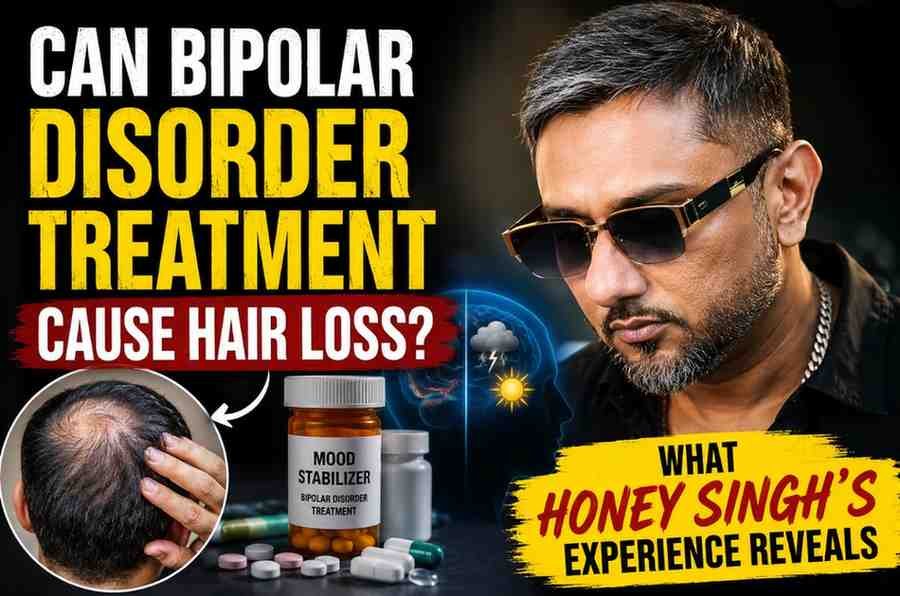
When popular rapper Yo Yo Honey Singh spoke candidly about experiencing hair loss during treatment for bipolar disorder, it sparked widespread curiosity and concern. Was it the illness itself? The medication? Or something deeper happening inside the body?
This conversation highlights a critical but often overlooked issue: the connection between mental Health, medication, and physical side effects like hair loss.
Who: Honey Singh and individuals undergoing Mental Health treatment
What: Hair loss linked to bipolar disorder treatment
When: During prolonged treatment and recovery phases
Where: Globally relevant across mental healthcare systems
Why: Due to medication effects, stress, and biological changes
How: Through hormonal shifts, nutrient imbalance, and drug side effects
The Bigger Picture: Mental Health and Physical Symptoms
Bipolar disorder is a complex mental health condition characterized by extreme mood swings ranging from depressive lows to manic highs. While most discussions focus on emotional and behavioral symptoms, the physical side effects of treatment often go unnoticed.
Hair loss, medically known as telogen effluvium, is one such side effect. It occurs when a large number of hair follicles prematurely enter the resting (shedding) phase.
Insight: The body does not separate mental and physical health—what affects one often impacts the other.
What Causes Hair Loss During Bipolar Disorder Treatment?
1. Medication Side Effects
Many medications used to treat bipolar disorder—such as mood stabilizers and antidepressants can affect hair growth cycles.
- Mood stabilizers may disrupt normal follicle activity
- Some drugs alter nutrient absorption
- Others impact hormone levels
Scientific explanation: Hair follicles are highly sensitive to biochemical changes. Even small disruptions can shift them into the shedding phase.
2. Chronic Stress and Cortisol Levels
Mental health conditions often involve prolonged stress. Elevated cortisol (stress hormone) can interfere with hair growth.
- Reduces blood flow to hair follicles
- Disrupts growth cycle
- Triggers shedding
Research insight: Studies show stress induced hair loss can appear 2–3 months after a triggering event.
3. Nutritional Deficiencies
During depressive phases, appetite and eating patterns can change significantly, leading to deficiencies.
- Low iron levels
- Vitamin D deficiency
- Protein insufficiency
Why it matters: Hair is a non essential tissue when nutrients are limited, the body prioritizes vital organs over hair growth.
4. Hormonal Imbalance
Bipolar disorder and its treatments can influence endocrine function.
- Thyroid dysfunction (common with some medications)
- Changes in estrogen/testosterone balance
Key insight: Hormones play a crucial role in regulating hair growth cycles.
5. Sleep Disruption
Irregular sleep patterns are a hallmark of bipolar disorder.
- Poor sleep affects cell repair
- Reduces melatonin production
- Impacts overall hair health
Experiment-based observation: Sleep deprivation has been linked to increased hair follicle stress and delayed regeneration.
Comparison: Hair Loss Causes in Mental Health vs General Cases
| Factor | Mental Health Related Hair Loss | General Hair Loss |
|---|---|---|
| Primary Trigger | Medication, stress, hormonal shifts | Genetics, aging |
| Onset | Sudden, diffuse shedding | Gradual thinning |
| Reversibility | Often reversible | Sometimes permanent |
| Pattern | All-over hair loss | Patterned (e.g., male/female pattern baldness) |
Why This Matters: Beyond Appearance
Hair loss may seem cosmetic, but its psychological impact can be significant especially for individuals already dealing with mental health challenges.
- Can affect self esteem
- May increase anxiety or depression
- Can impact social confidence
This creates a feedback loop where mental health affects physical appearance, which in turn affects mental well-being.
Can Hair Loss Be Prevented or Managed?
1. Medical Supervision
Always consult a doctor before changing or stopping medication. Sometimes dosage adjustments or alternative treatments can help.
2. Nutritional Support
- Iron-rich foods
- Protein intake
- Vitamin supplementation if needed
3. Stress Management
- Mindfulness practices
- Therapy or counseling
- Breathing exercises
4. Gentle Hair Care
- Avoid harsh chemicals
- Limit heat styling
- Use mild shampoos
5. Patience and Recovery
In many cases, hair regrows once the underlying cause is addressed.
A Unique Insight: The Body’s “Energy Allocation System”
One overlooked explanation for treatment related hair loss is how the body allocates energy. During periods of stress or illness, the body diverts resources toward survival functions brain stability, heart function, and immune response.
Hair growth, being non-essential, is temporarily “paused.”
This isn’t failure—it’s adaptation.
Future Outlook: Better Treatments with Fewer Side Effects
Mental health research is evolving rapidly. Newer medications aim to reduce side effects while maintaining effectiveness. Personalized medicine based on genetics and individual biology is also becoming more common.
This means future treatments may minimize issues like hair loss while improving mental health outcomes.
Conclusion
Honey Singh’s revelation has brought attention to an important but under discussed issue: the physical side effects of mental health treatment. Hair loss during bipolar disorder treatment is usually temporary and caused by a combination of medication, stress, and biological changes.
Understanding the root causes can reduce fear and help individuals take informed steps toward recovery.
Final thought: Healing is not always linear and sometimes, visible changes like hair loss are part of the body’s deeper recovery process.
For breaking news and live news updates, like us on Facebook or follow us on Twitter and Instagram. Read more on Latest Health on thefoxdaily.com.






COMMENTS 0